Select Language:
A 45-day extension to the ceasefire between Israel and Lebanon has been agreed upon, following negotiations facilitated by the United States. The talks, the third round since Israel increased airstrikes on Lebanon after Hezbollah launched missiles at Israel on March 2, concluded on Friday with plans for future discussions.
“The ceasefire established on April 16 will be extended for an additional 45 days to allow for further progress,” said U.S. State Department spokesperson Tommy Pigott on X. He mentioned the negotiations were “highly productive,” with the original ceasefire set to expire this Sunday.
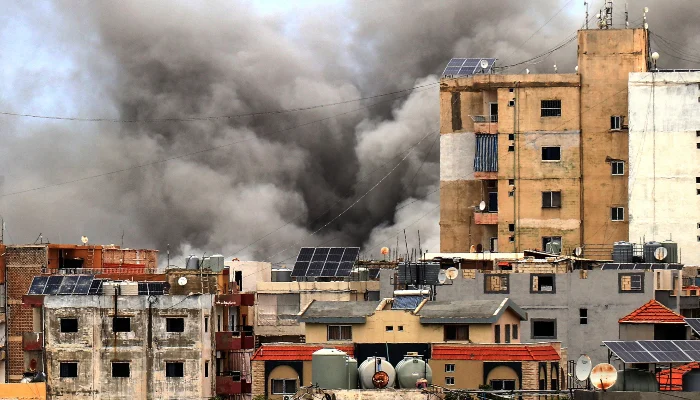
Both Lebanese and Israeli representatives expressed optimism about the talks, which aim to resolve long-standing conflicts. Since the escalation, Israel’s bombing and ground operations in southern Lebanon displaced approximately 1.2 million people. A ceasefire was announced last month after initial diplomatic efforts involving U.S. and Israeli ambassadors in Washington.
Despite ongoing exchanges of fire primarily in southern Lebanon—where Israeli forces maintain a self-declared security zone—both sides continue to engage in negotiations. Lebanon’s delegation, participating despite Hezbollah’s objections, emphasizes a need for hostilities to end. Israel maintains that disarming Hezbollah is essential for any durable peace agreement.
These high-level meetings mark the most significant contact between Lebanon and Israel in decades, expanding to include security and military officials. Pigott announced that a new “security track” of negotiations will commence at the Pentagon on May 29, with another political session scheduled in Washington from June 2-3.
“The goal is to foster lasting peace, mutual recognition of sovereignty and territorial integrity, and secure borders,” Pigott stated.
Lebanon’s delegation highlighted their desire to convert the ceasefire’s momentum into a comprehensive peace agreement, asserting that the extension creates vital space to bolster institutions and develop a stable political path.
Israeli ambassador to the U.S., Yechiel Leiter, described the negotiations as “frank and constructive,” emphasizing that although challenges remain, the chances for success are promising. “Our main priority throughout these talks is the safety of our citizens and soldiers,” he said.
 ChatGPT
 Perplexity
 Gemini AI
 Grok AI