

Select Language:
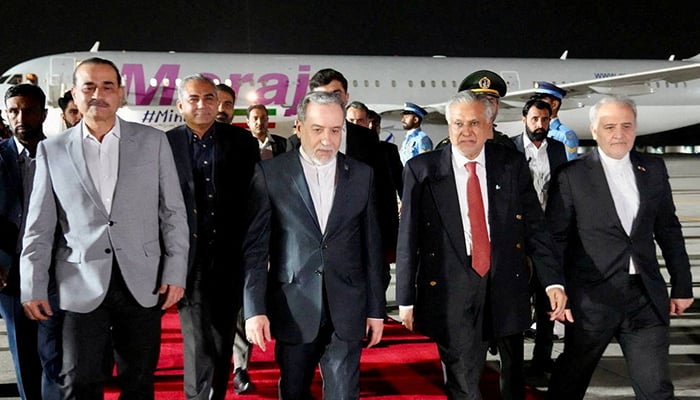
- Araghchi suggests postponing nuclear talks during Islamabad meetings.
- Advises mediators that there is no consensus on how to handle U.S. demands.
- The proposal includes extending or turning the ceasefire into a permanent peace agreement.
According to Axios, citing an American official and two knowledgeable sources, Iran has pitched a new plan through Pakistani mediators to reopen the Strait of Hormuz and end the ongoing conflict, with nuclear negotiations postponed for a later time.
The chances of reviving diplomatic efforts diminished on Saturday when President Donald Trump canceled a planned visit to Islamabad by his envoys, Steve Witkoff and Jared Kushner.
On Sunday, Iranian Foreign Minister Abbas Araqchi traveled between Pakistan and Oman, then headed to Russia, with remaining disagreements on Iran’s nuclear intentions and access through the vital Strait of Hormuz.
Trump stated Iran could reach out if they wish to negotiate an end to their two-month war.
“If they want to talk, they can come to us, or they can call us. We have secure lines,” Trump told “The Sunday Briefing” on Fox News.
“They know what’s in the deal. It’s straightforward: They can’t have a nuclear weapon; if they do, there’s no reason to meet,” Trump added.
Iran has long demanded that Washington recognize its right to enrich uranium, which Tehran claims is solely for peaceful purposes, though Western nations believe it’s aimed at developing nuclear weapons.
While a ceasefire has temporarily paused the fighting that began with U.S.-Israeli strikes on Iran on February 28, no comprehensive agreement exists to end the conflict, which has resulted in thousands of deaths, increased oil prices, inflation, and an uncertain global outlook.
Axios reports that the Iranian foreign minister proposed bypassing the nuclear issue during discussions in Islamabad.
One source indicated that Araqchi communicated that Iranian leadership currently lacks consensus about how to approach U.S. demands.
The proposed plan prioritizes reopening the Strait of Hormuz and lifting the blockade before tackling broader negotiations.
It suggests extending or transforming the current ceasefire into a permanent resolution to the conflict, with nuclear talks scheduled for a later phase after maritime access and blockade concerns are resolved.
The White House has received the proposal, but it’s uncertain if the U.S. is willing to consider or act on this framework.
“These discussions are delicate, and the U.S. will not negotiate through the media. As the President has stated, the United States holds the cards and will only strike a deal that prioritizes American interests—never allowing Iran to acquire a nuclear weapon,” White House spokesperson Olivia Wales told Axios.
Facing declining approval ratings, President Trump encounters domestic pressure to end an unpopular war.
Iran’s leadership, though less militarily strong, has leverage by potentially disrupting shipping in the Strait, which normally accounts for about 20% of global oil trade.
Tehran has largely closed the strait, while the U.S. has imposed a port blockade against Iran.
Major disagreements between the U.S. and Iran
Conflicts extend beyond Iran’s nuclear program and control of the Strait of Hormuz.
Trump seeks to limit Iran’s support for regional proxies like Hezbollah in Lebanon and Hamas in Gaza, as well as reduce Iran’s ability to target U.S. allies with ballistic missiles.
Iran, on the other hand, wants sanctions lifted and an end to Israeli military actions against Hezbollah.
Recent Israeli strikes in Lebanon killed 14 people and wounded 37, according to the health ministry, with the Israeli military warning residents in certain towns to evacuate beyond the “buffer zone.”
 ChatGPT
 Perplexity
 Gemini AI
 Grok AI

