Select Language:
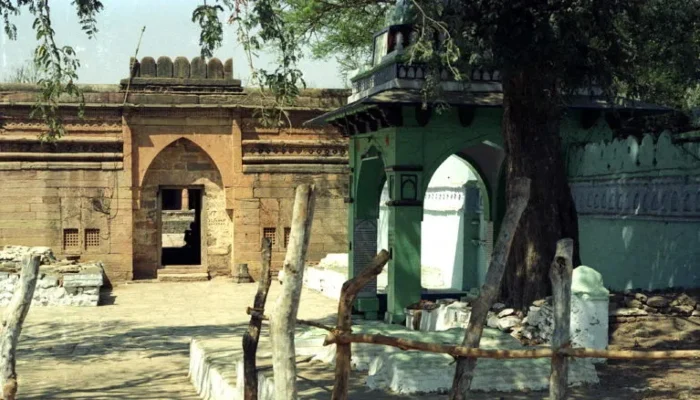
A court ruling has terminated a 20-year-old worship agreement at the Bhojshala-Kamal Maula mosque complex in Madhya Pradesh, India, allowing daily Hindu prayers to resume. The Madhya Pradesh High Court’s Indore bench declared the site a Hindu temple dedicated to goddess Vagdevi (Saraswati), based on a 2024 Archaeological Survey of India (ASI) report indicating the structure was built using fragments of older temples, with the mosque constructed centuries later.
Following the decision, the ASI issued a directive on May 16 permitting Hindu devotees unrestricted access for daily worship, replacing prior arrangements that limited Hindu worship to Tuesdays and Muslim Friday prayers. Advocate Vishnu Shankar Jain, representing Hindu petitioners, emphasized that Hindus can now visit and worship at the site freely.
The site remains a protected monument under India’s 1958 law, with worship timings set by the superintending archaeologist in consultation with local authorities. The court’s ruling notes that the complex was built using remnants from earlier temples, reinforcing its status as a Hindu religious site. The Muslim community was offered an alternative location for building a mosque, but Dhar city Qazi Waqar Sadiq stated that Muslim petitioners plan to appeal to the Supreme Court and have expressed opposition to relocating.
This site has long been a flashpoint, with Hindu groups claiming it is a Saraswati temple, while Muslims insist it is the Kamal Maula mosque. The decision effectively restricts Muslim access for prayer, placing the mosque off-limits. Legal, historical, and political voices from the Muslim community have criticized the ruling, warning it jeopardizes protections for Muslim religious sites in India. Lawyer Ashhar Warsi labeled it a “misjudgment” and a violation of established law, while politician Asaduddin Owaisi warned that the verdict poses a “serious threat” to Muslim worship rights and suggested it could set a precedent for similar claims, echoing concerns about the aftermath of the Babri Masjid verdict.
Historian Audrey Truschke commented that this trend of targeting Islamic places of worship reflects deep-seated Islamophobia rooted in Hindu nationalism. The dispute is part of a broader movement to challenge medieval mosques and Islamic-era monuments across India, with claims that many were built over Hindu temples, a narrative that has gained momentum since Prime Minister Narendra Modi took office in 2014.
 ChatGPT
 Perplexity
 Gemini AI
 Grok AI