Select Language:
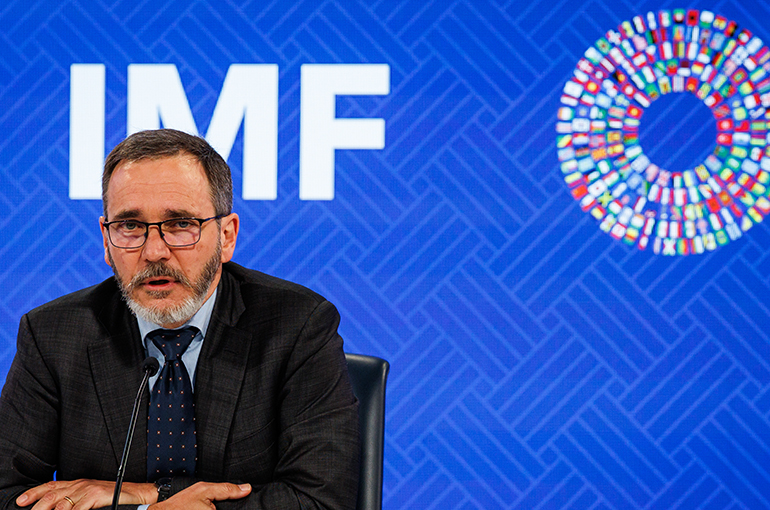
The International Monetary Fund has revised its global economic growth forecast downward for this year, indicating that the outlook could deteriorate further if the Middle East conflict persists. The new estimate predicts a 3.1% growth rate through December 31, compared to an earlier projection of 3.3% issued in January. This revised figure falls notably below the long-term average of 3.7% between 2000 and 2019.
Initially, the IMF was optimistic about increased growth, but ongoing tensions in the Middle East have dampened expectations. The chief economist explained that unless a durable resolution is achieved soon, disruptions like the closure of the Strait of Hormuz and significant damage to vital energy infrastructure could trigger a major energy crisis.
The organization warned that in severe cases where energy facilities in conflict zones sustain extensive damage, there could be prolonged negative impacts on global growth. Under such circumstances, growth might dip to around 2%, with inflation rising above 6% by next year. Emerging markets and developing economies would suffer nearly twice the setbacks experienced by more developed countries.
The IMF also adjusted its outlook for China, lowering its economic growth prediction for this year from 4.5% to 4.4%. This reduction is relatively modest compared to the global forecast change and represents a slight upward revision of 0.2 percentage points from its October projection.
The report noted that China’s economy performed strongly in the last quarter of the previous year, a trend that has continued into this year, partly influenced by uncertainties related to the Middle East situation. The revision was also supported by factors such as tariff modifications. Specifically, the U.S. Supreme Court’s ruling invalidated tariffs imposed under the International Emergency Economic Powers Act, effectively lowering the tariff rate faced by China. While some tariffs were replaced by Section 122 measures, the overall impact remains beneficial for China’s economy. Additionally, increased fiscal support has contributed to the revised growth outlook.
 ChatGPT
 Perplexity
 Gemini AI
 Grok AI