Select Language:
The first commercial carbon storage project off Norway’s coast has successfully injected CO2 into the North Sea seabed during its initial operation, according to the Northern Lights consortium. This initiative, led by major oil companies Equinor, Shell, and TotalEnergies, focuses on capturing CO2 emissions from smokestacks across Europe and storing them underground to prevent their release into the atmosphere, thus aiming to combat climate change.
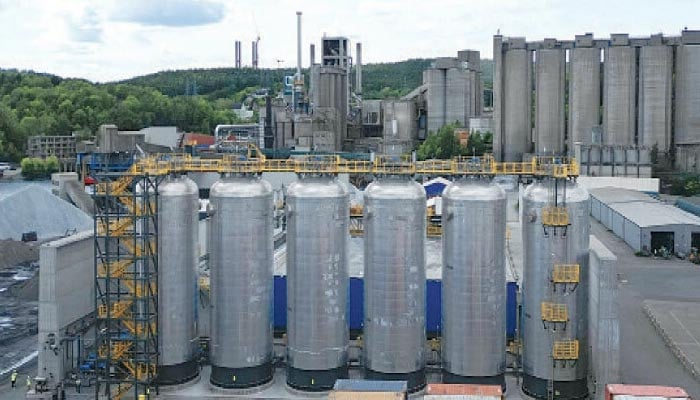
Managing Director Tim Heijn stated, “We have safely injected and stored the first batch of CO2 in the reservoir. Our ships, facilities, and wells are now active.” After capture, the CO2 is liquefied and transported by ship to Norway’s Oygarden terminal near Bergen. There, it is transferred into large storage tanks before being pumped through a 110-kilometer pipeline into the seabed at about 2.6 kilometers deep for permanent containment.
CCS, or carbon capture and storage, has been recognized by both the UN’s IPCC and the International Energy Agency as a vital tool for reducing industrial CO2 emissions, particularly in sectors like cement and steel manufacturing that are hardest to decarbonize. The first injection at Northern Lights came from Heidelberg Materials’ cement plant in Brevik.
However, CCS remains a complex and expensive technology. Currently, many industries find it more financially advantageous to buy carbon credits on the European market rather than invest in capturing, transporting, and sequestering their emissions. To date, Northern Lights has secured just three commercial contracts across Europe, including agreements with a Yara ammonia plant in the Netherlands, two biofuel facilities operated by Ørsted in Denmark, and a thermal power plant managed by Stockholm Exergi in Sweden.
Funded mostly by Norway’s government, Northern Lights has an initial capacity of 1.5 million tonnes of CO2 annually, which is projected to grow to five million tonnes by 2030.
 ChatGPT
 Perplexity
 Gemini AI
 Grok AI