Select Language:
Joint statement: countries impacted by Trump’s Greenland tariffs unite in response
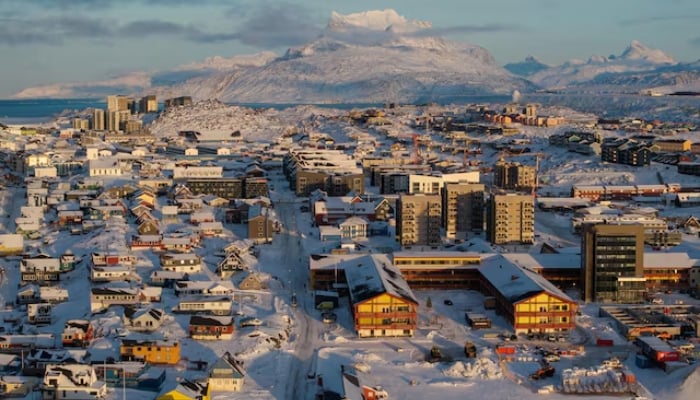
In a collective statement released Sunday, Britain, Denmark, Finland, France, Germany, the Netherlands, Norway, and Sweden affirmed their solidarity in facing US President Donald Trump’s tariff threats aimed at countries opposing his Greenland ambitions.
They emphasized that such threats harm transatlantic relations and could trigger a dangerous downward spiral. The nations pledged to remain coordinated and resolute, asserting their commitment to sovereignty.
Ireland’s Foreign Minister Helen McEntee condemned Trump’s tariffs as “completely unacceptable” and expressed regret. She reiterated that the future of Greenland should be decided by Denmark and its people, consistent with democratic principles and international law.
President Emmanuel Macron’s team announced plans to ask the European Union to activate its novel “anti-coercion instrument” if tariffs are imposed, which would include measures like restricting imports, a tool dubbed the EU’s trade “bazooka.” This mechanism has never been used before but could be employed to counteract US actions over Greenland.
Italy’s Prime Minister Giorgia Meloni dismissed Trump’s tariff threats as a “mistake.” During a visit to Seoul, she conveyed that imposing new sanctions would be ill-advised, adding she had discussed her views with Trump and NATO leaders. Meloni downplayed tensions, citing misunderstandings or communication issues concerning Arctic policy.
Trump has threatened tariffs up to 25% on imports from Denmark, Norway, Sweden, France, Germany, the UK, the Netherlands, and Finland—countries opposed to his Greenland plans.
Meloni underscored NATO’s role in managing the crisis, noting that it should help organize deterrence against hostile interference in strategic regions. She suggested that European actions might have been misinterpreted as anti-American, which she said was not the case.
From her perspective, clearer communication was necessary, and she maintained that the US perceives Greenland differently for reasons linked to national security.
 ChatGPT
 Perplexity
 Gemini AI
 Grok AI