Select Language:
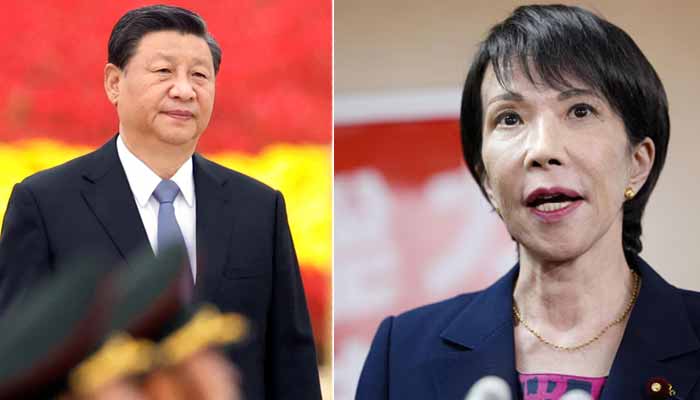
China has issued a warning to Japan, stating that any attempt to intervene militarily over Taiwan would result in a devastating defeat for Japan. Beijing also cautioned Chinese citizens against visiting Japan, following Japanese Prime Minister Sanae Takaichi’s comments regarding Taiwan, which China claims as its own territory.
On Friday, Japan summoned China’s ambassador to protest remarks made by a senior Chinese diplomat on social media about Takaichi. The dispute stems from Takaichi’s parliamentary comments last week, in which she suggested that a Chinese attack on Taiwan could threaten Japan’s survival and provoke a military response from Tokyo.
Last Saturday, China’s Consul General in Osaka, Xue Jian, shared a news article about Takaichi’s Taiwan remarks on social media, accompanied by a comment calling for the “cutting off” of a “dirty neck,” a now-deleted post. Japan responded by calling in the Chinese ambassador to express its displeasure over Xue’s statements.
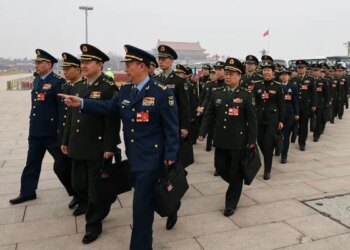
Some prominent Japanese politicians have called for Xue’s expulsion, but the government has only requested Beijing to “take appropriate measures,” without specifying further actions. Chinese Defense Ministry spokesperson Jiang Bin criticized Takaichi’s statements as highly irresponsible and dangerous, warning that if Japan refuses to learn from history and takes risks or even uses force over Taiwan, it will face a crushing defeat against the resolute People’s Liberation Army and suffer significant consequences.
On Thursday, China’s foreign ministry summoned Japan’s ambassador in Beijing to formally protest Takaichi’s comments — the first such summons in over two years, since Beijing reprimanded Japan over Fukushima’s wastewater discharge earlier this year. The Chinese government also expressed concerns about Japan’s recent military and security policies, including its ambiguity on nuclear armament. Spokesperson Lin Jian indicated that Japan’s reluctance to rule out acquiring nuclear submarines signifies a concerning policy shift.
Late Friday, China advised its citizens to avoid traveling to Japan due to worsening relations and the potential risks posed by the diplomatic tensions stemming from Takaichi’s remarks.
The situation is further inflamed by Chinese media, which has launched harsh editorial attacks on Takaichi, fueled by historic grievances over Japan’s wartime actions and China’s sensitive stance on Taiwan. An editorial in the Communist Party’s People’s Daily criticized Japan’s efforts to potentially revise its post-World War II pacifist constitution and pursue a more assertive military presence, accusing Japan of trying to whitewash its past aggression, citing visits to Yasukuni Shrine, denial of the Nanjing Massacre, and hyping the “China threat” theory.
Historical disputes over Japan’s wartime invasion of China and the broader regional tensions continue to influence current relations. China asserts sovereignty over Taiwan, which is just over 110 kilometers from Japan, and relies heavily on maritime routes around the island for trade. Japan hosts the largest overseas U.S. military contingent, adding strategic complexity.
Additionally, China’s embassy in Tokyo has reportedly advised its employees to stay indoors amid rising anti-China sentiment. Japan’s government reiterated its desire for a peaceful resolution to Taiwan’s status through dialogue, as tensions persist.
In other developments, Chinese authorities criticized Taiwan’s Democratic Progressive Party lawmaker Puma Shen for visiting Berlin recently, claiming China was threatening to have him arrested abroad. Shen, however, dismissed these threats, asserting Taiwan’s independence efforts are nearing their end.
Meanwhile, China issued a bounty for Taiwanese social media influencers accused of “separatism,” which they responded to humorously, with one influencer attempting to turn himself in to authorities in a viral video.
 ChatGPT
 Perplexity
 Gemini AI
 Grok AI