Select Language:
Tensions Escalate Between the U.S. and Brazil as Trump Announces Tariffs
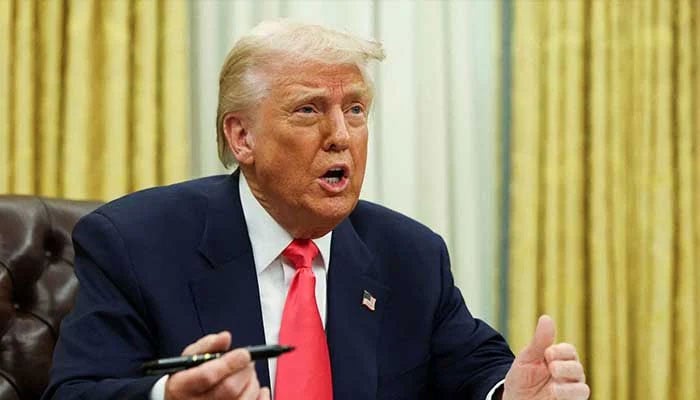
WASHIGNTON/BRASILIA: U.S. President Donald Trump has implemented a staggering 50% tariff on all imports from Brazil, following a contentious exchange with Brazilian President Luiz Inácio Lula da Silva.
This unexpected decision comes amid growing discord between the two leaders, with Trump openly criticizing Brazil’s approach to free speech and expressing support for former President Jair Bolsonaro. Lula, in turn, labeled Trump an unwelcome “emperor,” further escalating the situation.
In a letter explaining the tariffs, Trump tied the new duties to Brazil’s treatment of Bolsonaro, who is currently facing trial over allegations of conspiracy to prevent Lula from assuming office in 2023.
The letter emphasized that the tariffs were enacted “in part due to Brazil’s insidious attacks on Free Elections and the fundamental Free Speech Rights of Americans.”
Reacting swiftly to Trump’s announcement, Brazil threatened to retaliate. Lula took to social media platform X to state, “Any unilateral tariff increases will be addressed according to the Brazilian Law of Economic Reciprocity.”
Following Trump’s declaration, Brazil’s real suffered a decline of over 2% against the dollar. Major companies like planemaker Embraer and oil giant Petrobras saw their shares drop sharply in the U.S. stock market, indicating potential economic distress for Brazil due to the tariffs.
The Brazilian government has not yet issued a formal response to the tariffs, but an emergency meeting was convened in Brasília with Lula, his vice president, and finance minister to discuss the implications.
The U.S. is Brazil’s second-largest trading partner, after China, and these new tariffs represent a significant increase from the previous 10% imposed in April. According to Trump’s letter, the 50% tariff is set to take effect on August 1 and will be separate from other sectoral tariffs.
Earlier this week, Lula had criticized Trump for threatening an additional 10% tariff on countries within the BRICS coalition, which he described as “anti-American” during their summit in Rio de Janeiro.
“The world has changed. We don’t want an emperor,” Lula stated when questioned about the potential BRICS tariffs. He added, “We are sovereign nations. If he believes he can impose tariffs, other countries are entitled to do the same.”
Bolsonaro’s “Witch Hunt”
The rift between the U.S. and Brazil was deepened this past Wednesday when Brazil’s foreign ministry summoned the acting U.S. ambassador following a statement defending Bolsonaro.
At a White House event with West African leaders, Trump remarked that Brazil “has not been good to us, not good at all,” and indicated that the tariff decision was based on “very, very substantial facts” and historical context.
The U.S. Embassy in Brasília confirmed that its acting ambassador met with officials from Brazil’s foreign ministry, though details of that conversation were not disclosed.
Trump’s staunch support for Bolsonaro reflects his backing of other right-wing leaders worldwide embroiled in legal controversies, such as French far-right leader Marine Le Pen and Israeli Prime Minister Benjamin Netanyahu. Trump has referred to the legal challenges faced by these leaders as a “witch hunt,” a phrase he often uses regarding his own legal issues in the U.S. after leaving office.
He also stated on social media that Bolsonaro is a victim of a similar “witch hunt.” The American Embassy echoed this sentiment in a statement, calling the political persecution of Bolsonaro and his associates “shameful” and a disrespect to Brazil’s democratic traditions.
In addition to the tariffs, Trump directed U.S. Trade Representative James Greer to investigate what he deemed unfair trade practices by Brazil, especially concerning digital trade with U.S. companies. He also criticized Brazil’s Supreme Court for what he described as censorship against social media companies.
Brazil’s Supreme Court has faced backlash from Bolsonaro’s supporters for mandating the removal of content from far-right leaders on social media platforms, along with imposing additional responsibilities on these companies last month.
Impact on Food Exports
The tariffs on Brazil will likely have a notable effect on food prices in the United States. Brazil supplies about a third of the coffee consumed in the U.S., making it a crucial player in the global coffee market. The nation’s annual coffee exports to the U.S. are nearly 8 million bags, according to industry estimates.
More than half of the orange juice consumed in the U.S. is imported from Brazil, which dominates 80% of the global juice trade. The South American agricultural powerhouse also exports sugar, beef, and ethanol to the U.S., among other goods.
“This measure affects not just Brazil, but the entire U.S. juice industry that relies heavily on Brazilian supplies for decades,” stated Ibiapaba Netto, executive director of the Brazilian orange juice industry group CitrusBR.
 ChatGPT
 Perplexity
 Gemini AI
 Grok AI