Select Language:
Richest Countries by Natural Resource Value in 2025
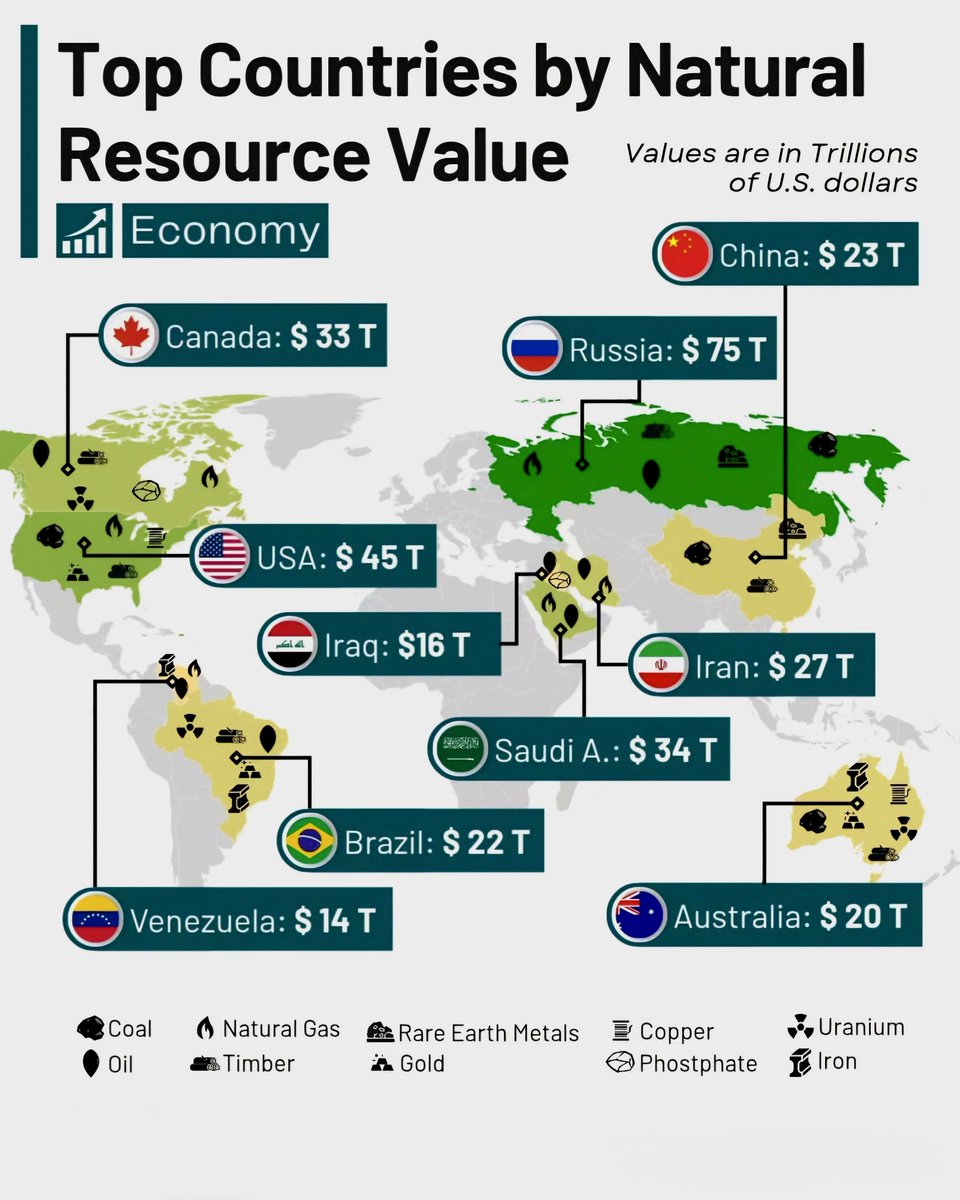
1. Russia Leads with the Highest Natural Resource Wealth
Russia remains the top holder of natural resource value in 2025, with an estimated total worth of approximately $75 trillion. The nation’s vast expanse includes an abundance of oil, natural gas, minerals, and forests, contributing to its economic strength. The country’s strategic position as a major energy supplier to Europe and Asia further amplifies its resource advantage. Russia’s resource-rich territories continue to serve as critical economic assets, underpinning its influence in global markets.
2. The United States Maintains a Strong Position in Natural Resources
The United States secures the second spot, boasting a resource value totaling around $45 trillion. Its diverse landscape includes significant reserves of oil, natural gas, coal, minerals, and agricultural resources. The U.S. energy boom over recent years, especially in shale oil and gas, has significantly boosted its resource valuation. These natural assets have propelled the country to stay competitive in international energy markets and support its economic resilience.
3. Saudi Arabia Holds Its Place at No. 3
With a resource valuation of approximately $34 trillion, Saudi Arabia remains one of the most resource-rich countries globally. Its vast oil reserves continue to be a key driver of its economy, accounting for a significant portion of global oil exports. The nation has also made efforts to diversify its economy through Vision 2030 initiatives, but hydrocarbons still underpin its wealth. The strategic importance of Saudi oil resources keeps it in a prime position worldwide.
4. Canada’s Extensive Natural Wealth
Canada’s resource value stands at roughly $33 trillion, making it a crucial player in global natural resources. Its vast natural wealth includes abundant minerals, oil sands, forests, and freshwater resources. The country’s well-developed mining and energy sectors contribute extensively to its economy. As a leading supplier of minerals and energy products, Canada’s prudent resource management continues to sustain its high valuation.
5. Iran’s Significant Resource Reserves
Iran holds approximately $27 trillion in natural resource value, primarily due to its massive oil and natural gas reserves. The country is a key player in the global energy market, though recent geopolitical sanctions have affected its exports. Nonetheless, Iran’s substantial underground resources remain a vital aspect of its economic potential and strategic importance in the Middle East.
6. China’s Growing Resource Portfolio
With a resource valuation of around $23 trillion, China ranks sixth among the world’s top resource holders. Its vast territory includes significant reserves of coal, rare earth elements, minerals, and water. China’s resource wealth supports its manufacturing and technological sectors, fueling economic growth despite environmental and geopolitical challenges. Chinese investments abroad continue to bolster its resource access and strategic position.
7. Brazil’s Rich Natural Landscape
Brazil’s resource value is estimated at $22 trillion, owed largely to its extensive forests, minerals, and agricultural land. The Amazon rainforest is a critical asset, providing a wealth of biodiversity and renewable resources. The country is also a major exporter of iron ore, soy, and other commodities. Sustainable resource management remains crucial for Brazil’s ongoing economic development.
8. Australia’s Mineral and Energy Endowment
Australia, with a resource valuation near $20 trillion, is renowned for its rich deposits of minerals, coal, and natural gas. The nation’s mining sector is a global leader, especially in iron ore and lithium production. Its abundant resources support both domestic industries and export markets, strengthening Australia’s economic standing.
9. Iraq’s Oil Dominance
Iraq’s resource value is around $16 trillion, primarily driven by its immense oil reserves. Although political instability has impacted economic growth, Iraq remains one of the world’s top oil producers. The country’s vast underground hydrocarbon resources are central to its future economic prospects, with ongoing efforts to attract foreign investment in its energy sector.
10. Venezuela’s Oil Reserves at the Forefront
Venezuela maintains a resource valuation of about $14 trillion, mainly due to its sizeable oil reserves—among the largest globally. Despite recent economic and political challenges, the country’s natural resource wealth positions it as a key energy supplier, especially for regional markets. Future resource management reforms could unlock further economic potential.
The data reflects estimates based on the latest reports from Statista and other industry sources as of 2025, highlighting the crucial role natural resources play in global economic powerhouses.
 ChatGPT
 Perplexity
 Gemini AI
 Grok AI