Select Language:
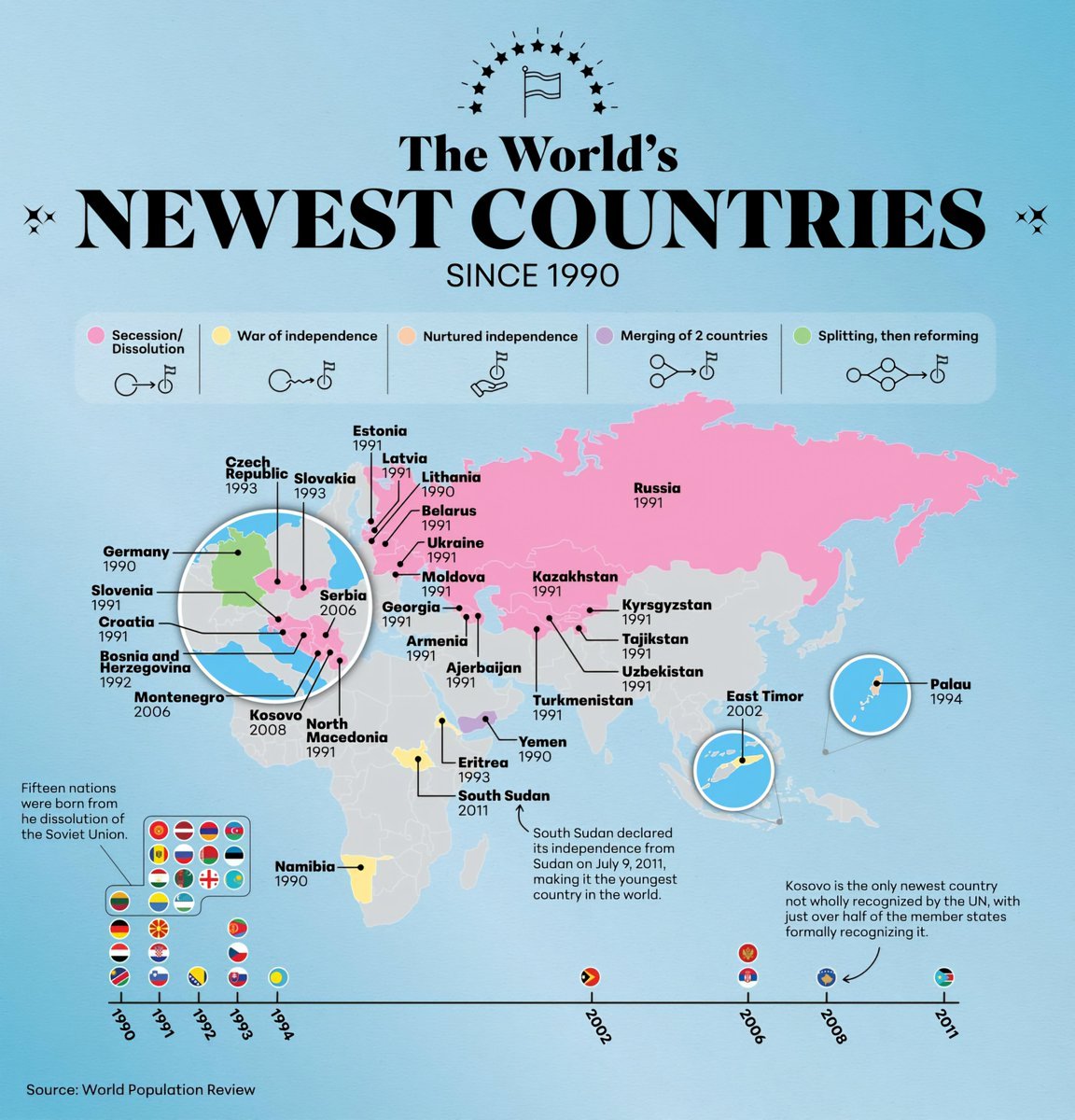
Top 10 Recent New Nations That Reshaped the World Map
1. South Sudan – The Youngest Nation (2011)
South Sudan, the most recent addition to the global roster of independent countries, declared independence from Sudan in 2011 after decades of civil war. Today, it stands as Africa’s newest nation, facing significant challenges including political instability and economic development hurdles. Its formation marked a historic step toward self-determination and regional stability in East Africa.
2. Kosovo – A Contested Breakaway (2008)
In 2008, Kosovo unilaterally declared independence from Serbia. While more than 100 countries recognize Kosovo as an independent state, notable nations, including Russia and Serbia, contest its sovereignty. The region remains a focal point of diplomatic discussions, with ongoing efforts towards international recognition and stability.
3. Montenegro – The Balkan Breakaway (2006)
Following a peaceful referendum, Montenegro separated from the State Union of Serbia and Montenegro in 2006. This move made Montenegro a fully independent nation, economically driven by tourism and natural resources. It has since gained recognition on the international stage and joined several global organizations, including NATO.
4. Serbia – Re-Establishment Post-Breakup (2006)
Though Serbia lost Kosovo as a province, it remains a sovereign nation recognized worldwide. The country’s political landscape continues to evolve amid ongoing negotiations related to Kosovo’s status and its aspirations to join the European Union.
5. East Timor (Timor-Leste) – Southeast Asia’s Breakaway (2002)
East Timor gained independence from Indonesia after a prolonged struggle marked by conflict and international intervention. Recognized as a sovereign nation in 2002, East Timor faces economic challenges but remains a symbol of successful self-determination in Southeast Asia.
6. Palau – Pacific Island Independence (1994)
Palau became independent from the United States in 1994. Located in the western Pacific, this island nation is known for its unique biodiversity, vibrant marine life, and ecological conservation efforts, making it a popular spot for eco-tourists.
7. Eritrea – Africa’s Newest Country (1993)
Eritrea declared independence from Ethiopia in 1993 after a prolonged war. Its strategic location along the Red Sea and rich cultural heritage have positioned it as a significant player in regional geopolitics, despite ongoing internal challenges.
8. Slovakia & Czech Republic – Velvet Separation (1993)
Following the peaceful Velvet Divorce, Czechoslovakia split into two nations in 1993. Slovakia emerged as a new, independent country with a burgeoning economy, establishing its identity in Central Europe.
9. Armenia & Azerbaijan – Post-Soviet Independence (1991)
Both Armenia and Azerbaijan declared independence following the collapse of the Soviet Union. Their emergence set the stage for ongoing regional conflicts, especially over Nagorno-Karabakh, influencing geopolitics in the Caucasus.
10. Estonia, Latvia, Lithuania – Baltic Independence Triumph (1991)
The Baltic states reasserted their independence from the Soviet Union in 1991. These nations quickly transitioned to democratic governance, becoming member states of the European Union and NATO, and showcasing resilience and regional cooperation.
Overall Trend:
Between 1990 and 2011, the world experienced a prolific era of country formations, primarily driven by the dissolution of larger sovereign states such as the Soviet Union and Yugoslavia, alongside regional independence movements. These new nations have played crucial roles in shaping current geopolitics, economic development, and international diplomacy.
Source: World Population Review 2025
 ChatGPT
 Perplexity
 Gemini AI
 Grok AI