Select Language:
7 Key Countries Controlling the World’s Rare Earth Reserves in 2025
The global landscape of rare earth mineral reserves remains a critical factor powering the technology, defense, and renewable energy sectors. As of 2025, the distribution of these vital resources reveals significant disparities among countries. Here’s a detailed breakdown of where the world’s rare earth reserves stand and the elements currently being mined.
China Dominates the Reserve Landscape with Unmatched Stockpiles
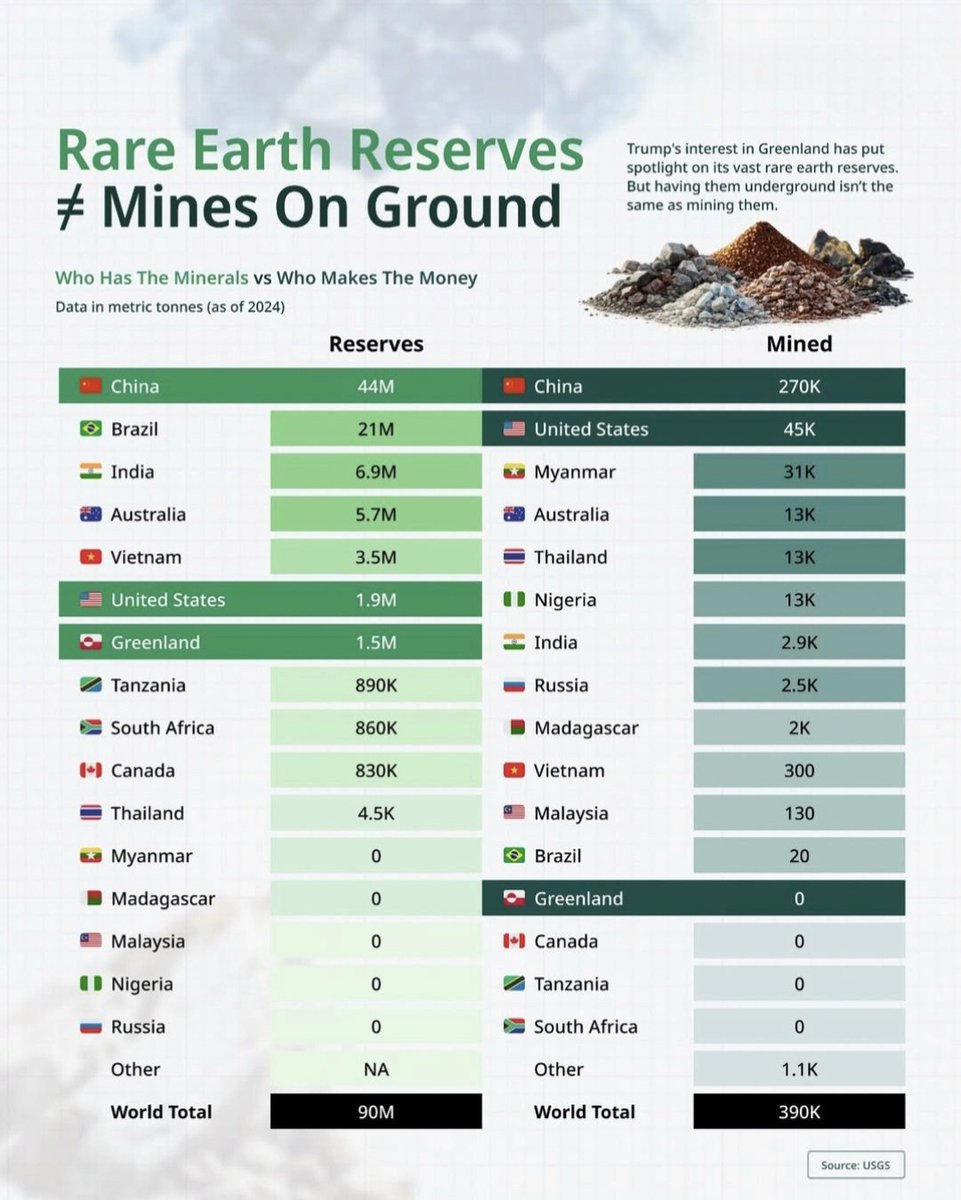
Leading the pack is China, home to approximately 44 million tonnes of identified rare earth reserves, making it the undisputed heavyweight in the industry. China’s vast reserve base gives it a strategic edge, allowing the nation to influence supply chains across multiple high-tech sectors. Despite this, China’s annual mining output is at about 270,000 tonnes, representing roughly 69% of the world’s mined rare earth elements in 2024. This vast reserve pool continues to fuel China’s dominance in the global rare earth supply chain, positioning it as both a resource titan and a pivotal player in global technology markets.
Brazil and India: Significant but Smaller Reserves
Brazil holds around 21 million tonnes of reserves, ranking second globally. The country is ramping up exploration efforts, aiming to harness its considerable deposits for economic growth. India, with approximately 6.9 million tonnes, is also a notable player, though its mining output is modest at around 2,900 tonnes annually. Both nations aim to diversify and strengthen their positions in the rare earth market, reducing global dependency on China.
Australia and Vietnam: Strong Reserves with Growing Mining Activity
Australia possesses about 5.7 million tonnes of reserves, with substantial mining activity contributing roughly 13,000 tonnes annually. The nation is increasingly seen as a key alternative source, especially as geopolitical tensions impact China’s supply chain dominance. Vietnam, meanwhile, maintains 3.5 million tonnes of reserves and contributes approximately 300 tonnes in mineral extraction, highlighting its emergence as an important regional source.
The United States and Greenland: Remaining Reserves and Mining Data
The United States has approximately 1.9 million tonnes of reserves but mines only about 45,000 tonnes per year, indicating potential for increased exploitation. Greenland’s reserves stand at about 1.5 million tonnes, but extraction remains minimal. These regions are being reassessed for their strategic importance amidst rising global demand.
Countries with Limited or No Reserves
Tanzania (890,000 tonnes) and South Africa (860,000 tonnes) possess significant reserves, yet their mining operations are relatively modest. Conversely, nations like Thailand, Myanmar, Madagascar, Malaysia, Nigeria, and Russia currently show no identified reserves or mining activity. This disparity highlights the uneven distribution of rare earth mineral resources and the potential for future exploration. Notably, Russia has yet to identify commercially viable reserves or mining output.
Global Rare Earth Element Production
In terms of actual mineral extraction, China leads substantially, supplying about 270,000 tonnes annually. The United States and Myanmar follow with 45,000 and 31,000 tonnes, respectively. Other notable contributors include Australia, Thailand, and Nigeria, each producing between 13,000 to 20,000 tonnes per year. The total amount mined globally hovers around 390,000 tonnes annually, underscoring China’s dominance in both reserves and production.
The Future of Rare Earth Supply and Security
The concentrated reserves in a handful of nations pose ongoing supply chain risks, especially amidst geopolitical tensions and export restrictions. Countries are increasingly investing in exploration and domestic mining projects to bolster self-sufficiency. Meanwhile, technological advancements aim to improve recycling and alternative materials to reduce reliance on traditional rare earth sources.
Visual Snapshot of Rare Earth Reserves and Mining in 2025
Key Takeaways:
- China leads with most rare earth reserves and production.
- The U.S., Greenland, and African nations possess considerable resources but face challenges in mining output.
- Global reliance on a handful of countries underscores the strategic importance of developing diversified supply chains.
- Exploration efforts are intensifying worldwide to unlock additional reserves and secure future supplies.
As demand for high-tech gadgets, electric vehicles, and renewable energy storage surges, understanding the distribution of rare earth resources becomes vital for policymakers, industries, and stakeholders alike. The 2025 landscape suggests that strategic investments in exploration, recycling, and alternative materials are essential to ensure a stable and sustainable supply of these critical minerals moving forward.
 ChatGPT
 Perplexity
 Gemini AI
 Grok AI