Select Language:
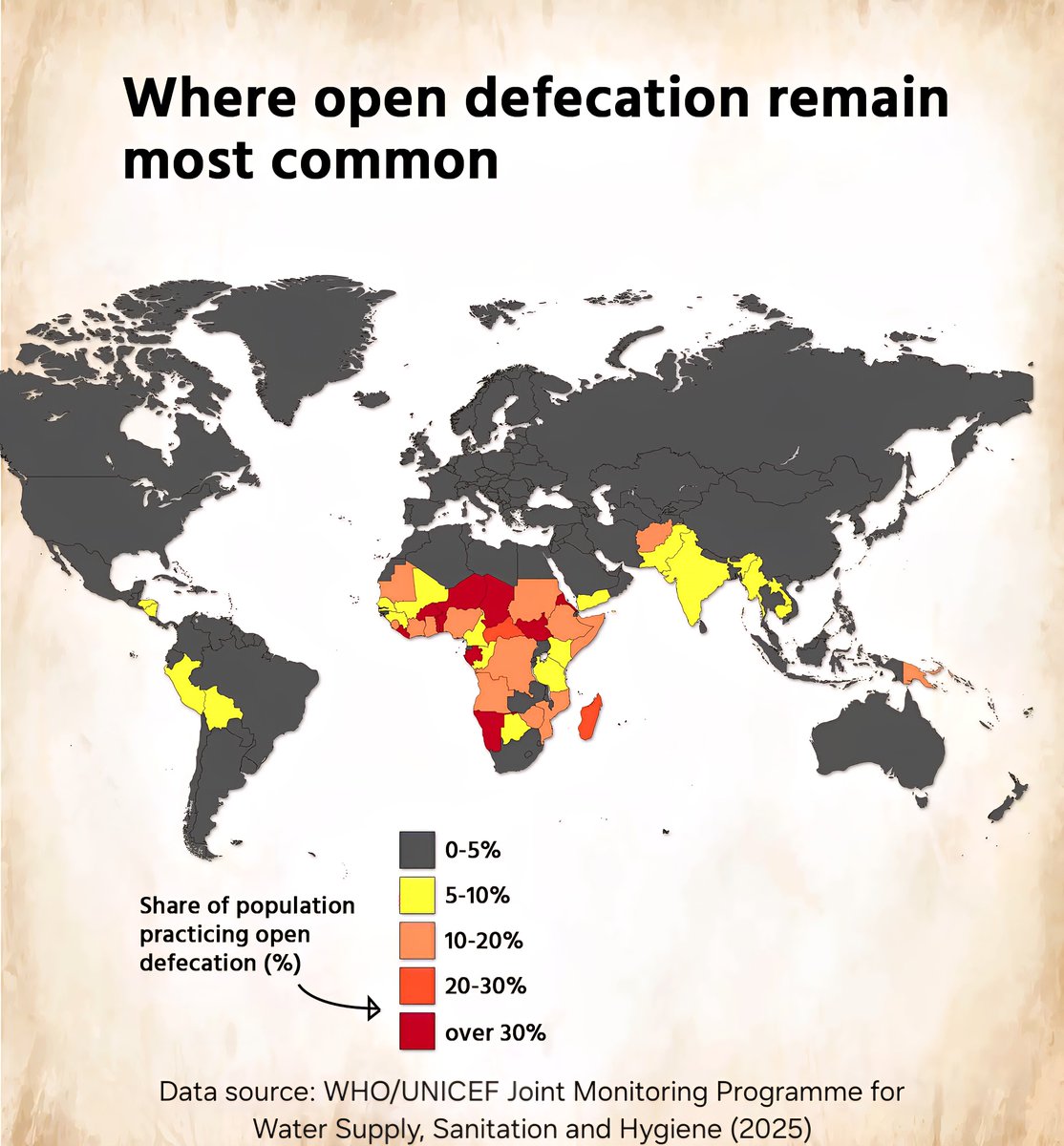
Top Areas Where Open Defecation Continues to Be a Major Issue in 2025
1. Rural India: Enduring Challenges in Sanitation
Despite numerous government initiatives over the past decade, rural India remains one of the most prominent regions where open defecation persists. In states like Bihar, Madhya Pradesh, and Uttar Pradesh, a significant percentage of households continue to lack access to proper sanitation facilities. Economic constraints, cultural practices, and lack of awareness contribute to the ongoing struggle. Many villagers resort to open defecation due to the absence of nearby toilets, affecting public health and sanitation standards.
2. Sub-Saharan Africa: Sanitation Insecurity in Low-Income Nations
Sub-Saharan African countries, including Nigeria, Ethiopia, and Mali, face a pressing sanitation crisis. Rapid urbanization and population growth surpass the extension of sanitation infrastructure. Many urban slums and rural villages still lack access to hygienic toilet facilities. The result is widespread open defecation, which heightens risks of waterborne diseases such as cholera, diarrhea, and typhoid. The lack of government resources and cultural barriers hinder efforts to eradicate the practice.
3. Southeast Asia: Cultural Norms and Infrastructure Gaps
In parts of Southeast Asia, including Cambodia, Myanmar, and parts of Indonesia, open defecation persists due to deep-rooted cultural taboos and insufficient sanitation infrastructure. Rural communities often view toilets as unclean or unnecessary, leading to resistance against constructing proper facilities. Despite government programs promoting sanitation, behavioral change is slow, and open defecation remains a common practice, especially in remote villages.
4. Parts of the Middle East and North Africa: Water Scarcity and Sanitation
Regions like Yemen, Sudan, and rural areas of Morocco struggle with sanitation challenges compounded by water scarcity. In conflict-affected zones and drought-prone areas, access to clean water and sanitation services is limited. Many residents resort to open defecation, which exacerbates health issues and hampers efforts for recovery and development. Humanitarian agencies continue to prioritize sanitation projects amid ongoing crises.
5. Indigenous Communities in Latin America
Certain indigenous communities in countries such as Guatemala, Bolivia, and Peru are still grappling with sanitation deficits. Remote rural areas often lack infrastructure, and traditional practices sometimes oppose modern sanitation facilities. Additionally, poverty and marginalization hinder access to hygiene services. The lack of culturally sensitive approaches has slowed progress toward eliminating open defecation in these regions.
6. Remote Mountainous Areas and Hard-to-Reach Regions
In geographically isolated places, such as the Himalayan belt in Nepal and northern Pakistan, terrain and accessibility issues make sanitation infrastructure difficult to establish. This results in continued open defecation in these communities. Despite international aid and government efforts, logistical challenges remain, making it difficult to provide sustainable solutions.
This persistent practice of open defecation impacts millions worldwide, undermining health, dignity, and economic development. Addressing this issue requires tailored strategies that combine infrastructure development with cultural education and community engagement. progress in tackling open defecation hinges on sustained political will, innovative solutions, and active participation from local communities.
(Note: The image embedded is a visual representation of rural sanitation challenges and community health-related issues.)
 ChatGPT
 Perplexity
 Gemini AI
 Grok AI