Select Language:
Countries That Jailed Their Leaders Since 1900
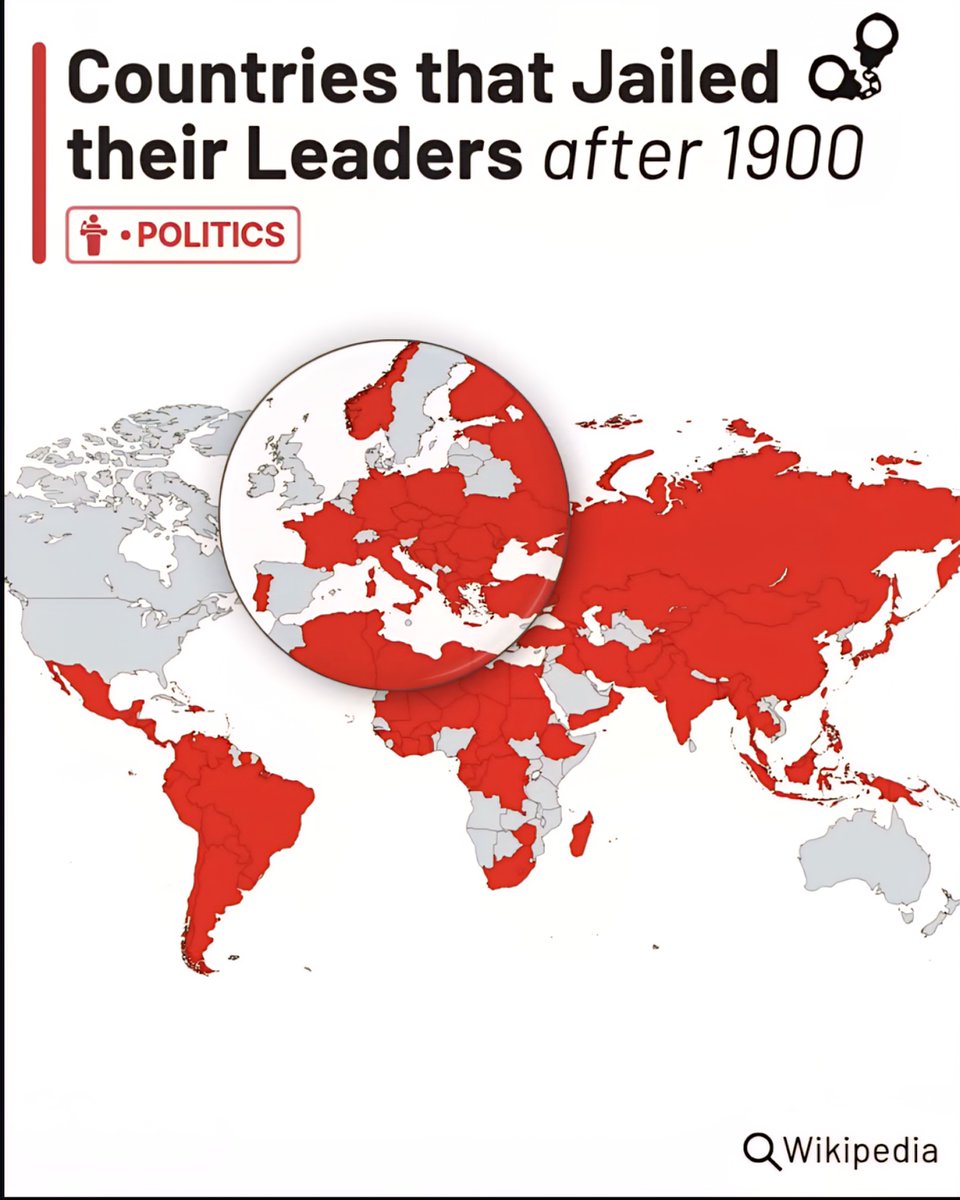
Throughout modern history, political upheaval, corruption, and power struggles have led some nations to take the extraordinary step of imprisoning their own leaders. From dictators to democratically elected officials, the list spans continents and political ideologies. Here’s a detailed look at some notable countries that have jailed their leaders since 1900, highlighting the circumstances and implications of each case.
1. South Korea: The Imprisonment of Park Geun-hye (2017)
In 2017, South Korea made headlines when President Park Geun-hye was sentenced to prison amid a massive corruption scandal. She was accused of colluding with a confidante to extort money and influence from major conglomerates, including Samsung. Her arrest stunned the nation, highlighting the country’s commitment to holding even its highest officials accountable in the face of widespread public protests. Park Geun-hye was eventually sentenced to over 20 years, marking a rare instance of a sitting president convicted and jailed for misconduct.
2. Brazil: The Imprisonment of Lula da Silva (2018)
Former Brazilian President Luiz Inácio Lula da Silva, popularly known as Lula, was imprisoned in 2018 after being convicted of corruption and money laundering. His jailing was part of the sweeping Operation Car Wash investigation, which uncovered widespread corruption involving top politicians and business executives. Lula’s imprisonment sparked heated debates nationally and internationally about judicial fairness and political persecution, especially given his subsequent release in 2019.
3. Egypt: The Detention of Hosni Mubarak (2011)
The 2011 Egyptian Revolution saw longtime President Hosni Mubarak ousted from power amid mass protests demanding political reform and economic change. Shortly after stepping down, Mubarak was arrested and tried on charges of corruption, abuse of power, and complicity in the killing of protesters. He was convicted in 2012 and sentenced to life imprisonment, though his sentence was later overturned, reflecting ongoing political turmoil and the country’s complex path toward stability.
4. Myanmar: The Arrest of Aung San Suu Kyi (2021)
In a striking development in 2021, Myanmar’s military seized power in a coup, detaining the country’s de facto leader, Aung San Suu Kyi. She was charged with various offenses, including violating import-export laws and sedition, charges widely seen as politically motivated to suppress her influence. The detention has since led to ongoing unrest, international condemnation, and a wider civil disobedience movement seeking democratic restoration.
5. Greece: The Imprisonment of Andreas Papandreou (1989)
Although rare, Greece’s political history includes a period where then-Prime Minister Andreas Papandreou faced legal issues. In 1989, he was briefly detained on charges related to accusations of misuse of public funds. Despite the charges, he was later acquitted, but the legal proceedings underscored the turbulent political environment in Greece during the late 20th century, where allegations of corruption often led to high-profile arrests.
6. Zambia: The Jailing of Kenneth Kaunda (1997)
Zambia’s first president, Kenneth Kaunda, was detained in 1997 during a period of political unrest. Although he was not convicted of any crime, his detention was part of efforts by the then-president, Frederick Chiluba, to suppress opposition. Kaunda’s detention was widely seen as politically motivated and drew international criticism, emphasizing how political transitions can sometimes be marred by imprisonments of former leaders.
7. Argentina: The Arrest of Isabel Perón (2000)
Maria Estela Martínez de Perón, the former president and widow of Juan Perón, was detained in Argentina in 2000 on charges of corruption and abuse of power. Although she was released shortly afterward, her brief detention reflected ongoing demands for accountability within the country’s political elite. Her case remains a significant chapter in Argentina’s relentless pursuit of justice for past leaders.
8. Ethiopia: The Detention of Mengistu Haile Mariam (1991)
Mengistu Haile Mariam, Ethiopia’s former military dictator, was forced to flee the country in 1991 amid a popular uprising. He was subsequently captured and sentenced to life imprisonment in absentia for genocide, political repression, and war crimes. His imprisonment symbolizes the shift from authoritarian rule to reform, although he remains in exile, and his case underscores the challenging pursuit of justice for victimized populations.
9. Russia: The Imprisonment of Mikhail Khodorkovsky (2003)
While not a sitting leader, Mikhail Khodorkovsky, then Russia’s richest man and political opposition figure, was imprisoned in 2003 on charges of fraud and tax evasion. His detention highlighted the complex relationship between business, politics, and power in Russia. Khodorkovsky’s case sparked international outrage and debates about political repression, leading to his eventual release in 2013.
10. Venezuela: The Detention of Nicolás Maduro’s Political Rivals (Various)
Although Venezuelan President Nicolás Maduro himself has not been jailed, his government has detained numerous political opponents and opposition leaders over the years, including Juan Guaidó, who declared himself interim president in 2019. These detentions have been widely condemned as assaults on democratic freedoms, illustrating how the imprisonment of rivals can shape a nation’s political landscape.
This list highlights the extraordinary lengths some nations have gone to in their political histories — imprisoning leaders, former leaders, and opposition figures alike. These cases reflect broader themes of justice, power struggles, and accountability that continue to influence global politics in 2025. The trend underscores a complex relationship between authority and law, often leaving lasting scars on national histories and political cultures.
 ChatGPT
 Perplexity
 Gemini AI
 Grok AI