Select Language:
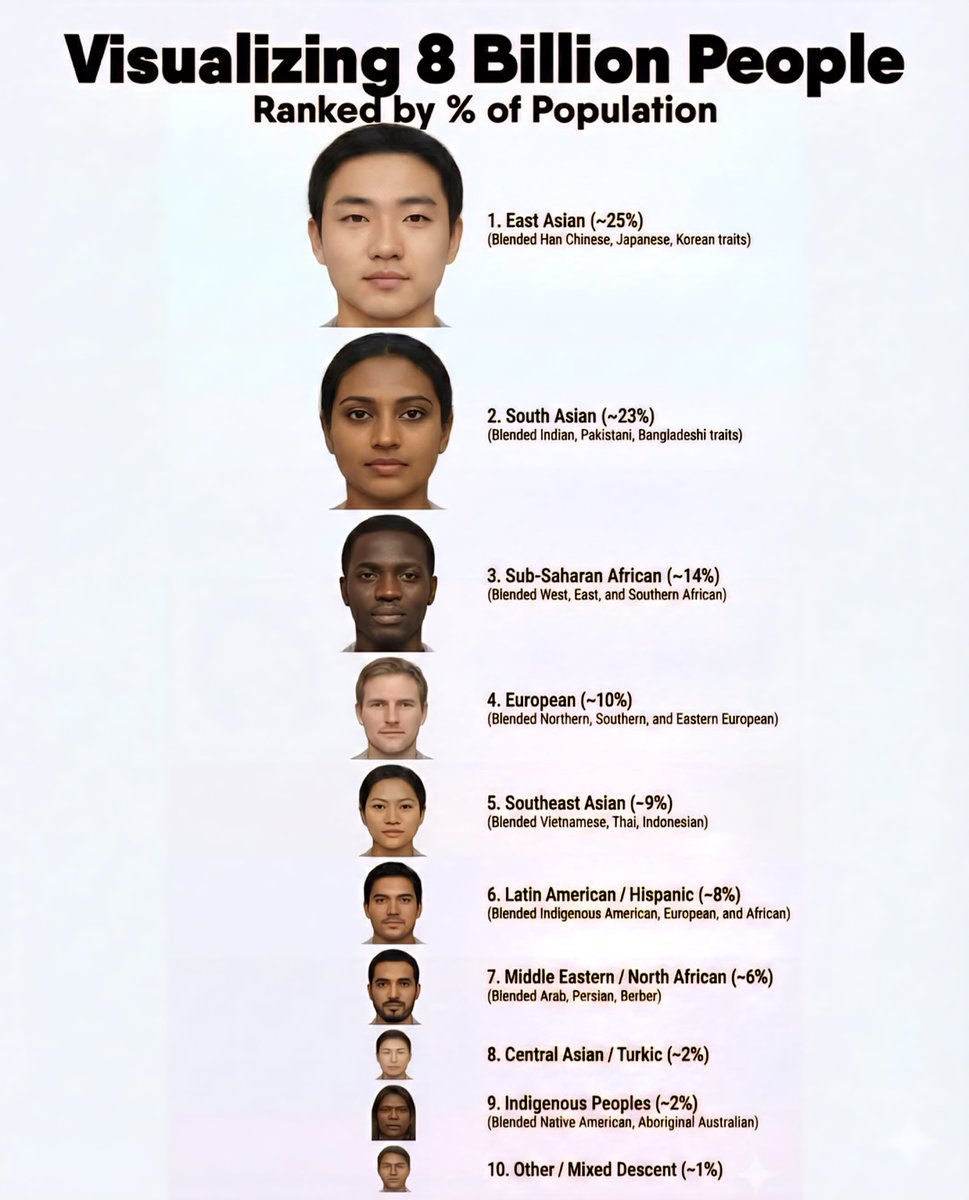
Top Ethnic Groups Comprising the Global Population in 2025
1. East Asian – Nearly a Quarter of the World Population
Making up approximately 25% of all people on Earth, East Asians include a diverse group with roots in China, Japan, Korea, and neighboring countries. These populations share common features and cultural traits, but also have unique histories and languages that distinguish them within this large geographic region. This ethnicity encompasses millions of individuals with ancestry tracing back thousands of years, shaping the cultural and technological landscapes of East Asia.
2. South Asian – Nearly One-Quarter of Humanity
Representing about 23% of the global population, South Asians encompass communities from India, Pakistan, Bangladesh, Nepal, Bhutan, and Sri Lanka. This demographic is characterized by a rich tapestry of languages, religions, and cultural traditions. The population growth in this region continues to influence global economics, geopolitics, and cultural exchanges, making South Asia a vital part of the world’s fabric.
3. Sub-Saharan African – Over One Tenth of Humanity
Accounting for approximately 14%, Sub-Saharan Africa is known for its vast ethnic diversity, with groups from West, East, Central, and Southern Africa. Populations here have historical roots stretching back to some of the earliest human civilizations. The region’s young demographic profile, rapid urbanization, and cultural richness significantly impact global trends and developmental patterns.
4. European – About 10% of the Global Population
Europe’s roughly 10% share includes people from Northern, Southern, and Eastern European nations. The continent boasts a broad spectrum of languages, cultures, and histories, from the ancient civilizations of the Mediterranean to the modern innovations of Western Europe. European populations continue to influence global politics, economics, and culture through enduring institutions and cultural exports.
5. Southeast Asian – Around 9%
Representing approximately 9% of the world’s population, Southeast Asia consists of nations like Vietnam, Thailand, Indonesia, Myanmar, and the Philippines. Known for their vibrant cultures, diverse languages, and dynamic economies, Southeast Asians play a vital role in global trade and cultural exchange.
6. Latin American and Hispanic Communities – Close to 8%
Comprising communities from Mexico, Central and South America, and the Caribbean, Latin American and Hispanic populations represent about 8% of the global population. Their diverse mix of Indigenous American, European, and African ancestries creates rich cultural traditions, music, cuisine, and vibrant societies that continue to influence global culture.
7. Middle Eastern and North African – Slightly More Than 6%
Making up approximately 6% of the global total, populations from the Middle East and North Africa include Arabs, Persians, Berbers, and others. Their historical significance, from ancient civilizations to modern geopolitics, underscores their importance in world affairs.
8. Central Asian and Turkic – Around 2%
This group represents roughly 2% of the global population and includes nations like Kazakhstan, Uzbekistan, Turkmenistan, and others. Their cultures are deeply rooted in nomadic traditions, Islamic history, and rich Turkic heritages, making them a unique part of the world’s demographic mosaic.
9. Indigenous Peoples – About 2%
Indigenous populations, including Native Americans, Aboriginal Australians, and other aboriginal groups worldwide, collectively account for approximately 2% of humanity. Their cultures are deeply connected to their ancestral lands and have faced significant historical challenges, but they continue to influence cultural diversity globally.
10. Other and Mixed-Descent Populations – Approximately 1%
This category includes individuals of mixed ethnic backgrounds and smaller ethnic groups not categorized elsewhere. Their diversity reflects the interconnectedness and migration patterns that define modern global society.
As of 2025, understanding these demographic distributions helps grasp the world’s social fabric, with each group contributing uniquely to cultural, economic, and political landscapes.
 ChatGPT
 Perplexity
 Gemini AI
 Grok AI