Select Language:
The 2025 List of the Wealthiest Cities Around the Globe
Tokyo Tops the Chart with $2.55 Trillion
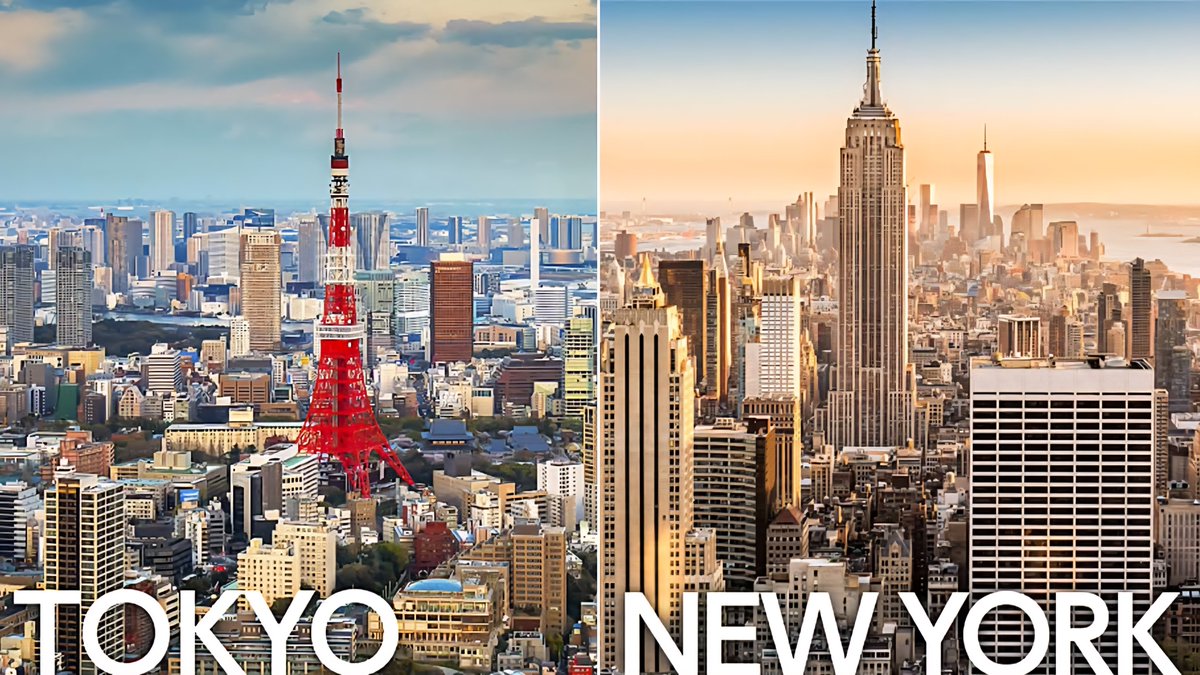
Spearheading the list, Tokyo, Japan’s bustling metropolis, continues its dominance with an impressive estimated nominal GDP of $2.55 trillion. As the world’s leading economic hub, Tokyo remains vital in global finance, technology, and innovation. Its sprawling urban landscape boasts a mix of high-tech industries and traditional cultural centers, making it a powerhouse of economic activity.
New York and Los Angeles Hold Strong as American Economic Giants
The United States takes a commanding presence with New York–Newark trailing closely behind Tokyo at $2.49 trillion. Known globally for its financial sector, media, and corporate headquarters, New York City maintains its position as the financial capital of the world.
Los Angeles–Long Beach–Anaheim ranks third with a combined GDP of $1.62 trillion, driven primarily by entertainment, aerospace, and international trade through the Port of Los Angeles. Both cities exemplify the diverse economic landscape of America’s most populous country.
The Eurozone’s Financial Hub: London
Despite ongoing global economic shifts, London remains Europe’s wealthiest city with an estimated GDP of $1.47 trillion. The city’s financial services sector, coupled with thriving tech startups and cultural sectors, sustains its economic significance in the 2025 landscape.
Seoul Continues Its Asian Ascent
South Korea’s capital, Seoul, boasts an impressive $1.42 trillion in GDP, propelled by technological innovation, manufacturing, and export-driven industries. As a central hub for global tech giants, Seoul exemplifies Asia’s economic resilience.
Paris and Other European Powerhouses
The Paris metropolitan area maintains its position with a GDP of $1.39 trillion, rooted in finance, luxury goods, and culture. Other notable European cities include Berlin, Frankfurt, and Madrid, which, while not in the top 50, continue to bolster Europe’s economy through robust service and industrial sectors.
Chinese Cities Seize a Bigger Share
Shanghai and Beijing both feature prominently on the list, with GDP estimates of $1.15 trillion and $1.10 trillion respectively. These cities serve as manufacturing, financial, and technological centers, reflecting China’s rapid economic growth over the past decades.
Major U.S. Cities Continue to Thrive
Beyond those in the top five, American cities such as Chicago ($1.25 trillion), Dallas ($1.08 trillion), and Houston ($1.01 trillion) showcase the country’s diverse economic strength. The Midwest and South remain vital in sectors like energy, manufacturing, and finance.
Emerging Asian and Oceanian Cities Rise
Singapore, with a GDP of nearly $988 billion, continues to be Southeast Asia’s leading financial hub. Australian cities like Sydney ($855 billion) and Melbourne ($772 billion) participate actively in global markets with thriving finance and tech sectors.
Other Notable Cities in the Top 50
- Moscow ($975.8 billion) – Russia’s financial and energy sector remains robust.
- Toronto ($917.49 billion) – Canada’s economic window into North America.
- Miami ($880.14 billion) – Growing as a finance and tourism hub.
- San Jose ($872.4 billion) – Center of the Silicon Valley tech industry.
- Taipei ($867.83 billion) – Technology and manufacturing dominance.
Cities Highlighting Rapid Growth
Jakarta, Indonesia ($760.25 billion), and Wuhan, China ($718.68 billion), are among the cities experiencing swift economic expansion, fueled by infrastructure development and industrial output.
Rising Powers and Trends
Mumbai and the Indian National Capital Region, with GDPs of roughly $724 billion and $716 billion respectively, illustrate Asia’s continuing rise. Meanwhile, cities in Latin America, such as São Paulo ($701.64 billion), remain key financial hubs for their regions.
The Global Economic Map in 2025
The list clearly illustrates that economic power remains distributed across the continents, with Asia leading the charge through megacities like Tokyo, Shanghai, and Seoul. Western cities maintain their relevance through financial and cultural industries. Additionally, emerging markets are rapidly closing the gap, propelled by infrastructure investments and urban development.
Sources: CEOWORLD Magazine, November 2025
Note: These figures are estimated based on the nominal GDP of major metropolitan areas.
Image:
 ChatGPT
 Perplexity
 Gemini AI
 Grok AI