
Select Language:
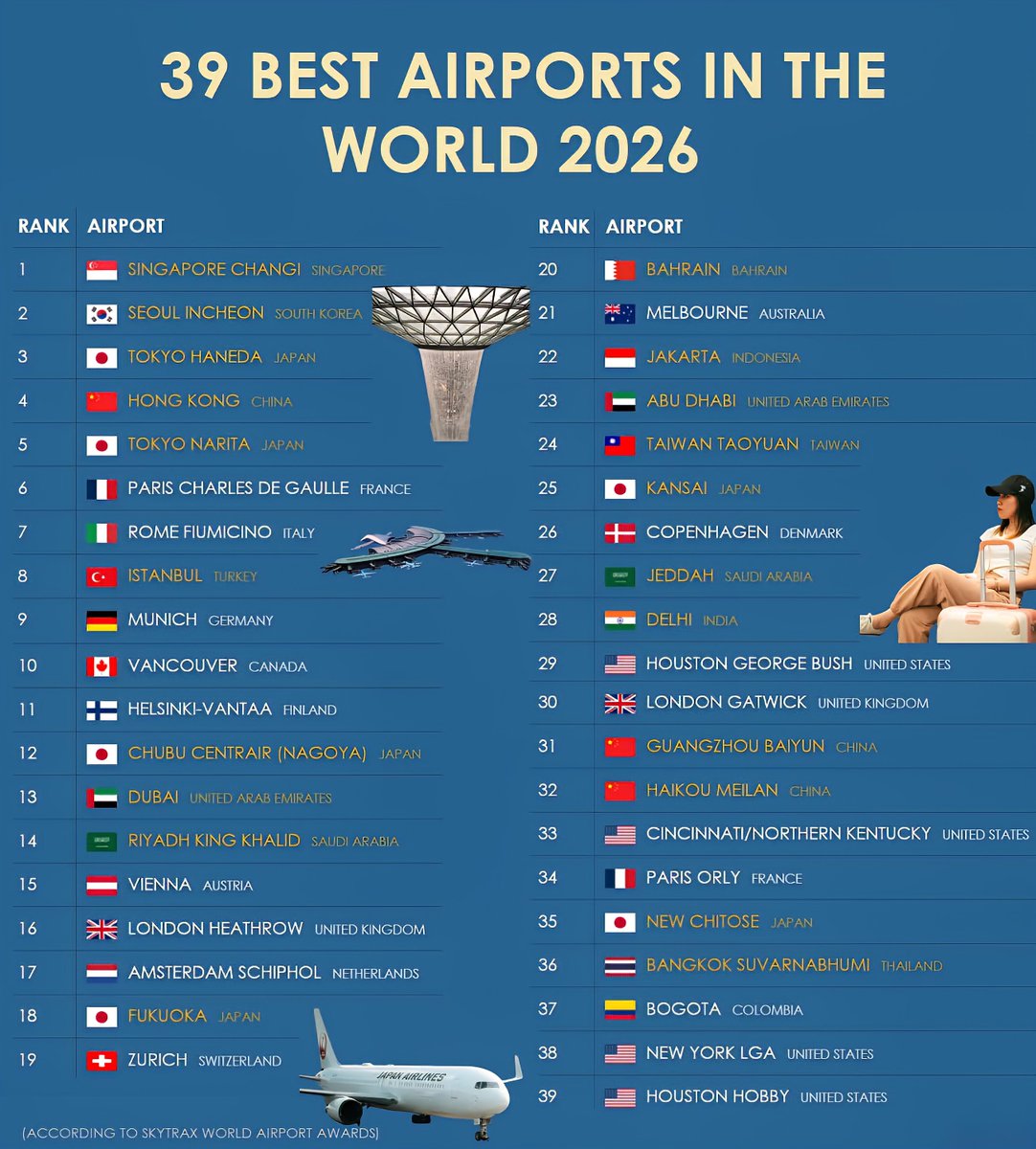
Top 39 Airports in the World for 2025: The Ultimate Travel Destinations
Travel enthusiasts and frequent flyers alike are always eager to know which airports make the list of the world’s best. The 2025 edition of the Skytrax World Airport Awards has unveiled the top-performing airports across the globe, showcasing key hubs that excel in customer experience, amenities, innovation, and connectivity. Here’s a detailed breakdown of the most outstanding airports that are redefining air travel this year:
Singapore Changi Dominates as the World’s Best Airport
Topping the list once again, Singapore Changi continues its reign as the premier airport globally. Known for its exceptional customer amenities, lush indoor gardens, 24/7 entertainment options, and impeccable service, this airport stands out as a shining example of excellence. Travelers rave about the seamless transit experiences, innovative terminal designs, and numerous dining options, making it more than just a transit point – it’s an experience.
Seoul Incheon: Asia’s Leading Hub for Modern Travel
South Korea’s Seoul Incheon secures its spot among the elite, recognized for its cutting-edge facilities, excellent transit services, and efficient customs processes. The airport features state-of-the-art technology, a variety of cultural attractions, and luxurious lounges. Its excellent connectivity to the Korean Peninsula and beyond has cemented its reputation as a top-tier gateway to Asia.
Tokyo Haneda and Narita – Japan’s Aviation Powerhouses
Japan continues to impress with not one but two of its airports making the list. Tokyo Haneda is celebrated for its punctuality, cleanliness, and user-friendly facilities, making it a favorite among domestic travelers. Meanwhile, Tokyo Narita excels in international connectivity, offering travelers a smooth transit experience with a wide array of shopping and dining options.
Hong Kong International Airport Setting Standards in China
Hong Kong’s International Airport remains a global leader, appreciated for its efficiency and exceptional customer service. Its strategic location and extensive flight network allow it to serve as a vital logistics hub, while passenger amenities—like wellness zones and art installations—enhance traveler satisfaction.
Paris Charles de Gaulle – France’s Landmark Gateway
Europe’s bustling Charles de Gaulle Airport maintains its position as a top European hub. Known for its vast terminal complexes and rich cultural displays, it offers travelers high-end shopping and gourmet dining. Improvements in retail, technology, and transit operations continue to elevate the passenger experience.
Rome Fiumicino and European Excellence
Italy’s Fiumicino Airport combines Italian charm with modern efficiency. Its excellent passenger service, comfortable lounges, and art exhibitions make it a go-to gateway for travelers exploring Italian culture and history. Upgrades in infrastructure and customer-focused innovations elevate its global standing.
Istanbul Airport: The Gateway Between Continents
Istanbul Airport marks its rise as a leading international hub connecting Europe, Asia, and Africa. Its futuristic design, extensive retail offerings, and impressive capacity have distinguished it as a standout. The airport’s strategic expansion plans aim to further boost its global profile in 2025.
European Powerhouses: Munich, Amsterdam, Copenhagen, and Vienna
Germany’s Munich Airport, the Netherlands’ Schiphol, Denmark’s Copenhagen, and Austria’s Vienna continue to excel in providing seamless travel experiences, modern facilities, and customer-centric services. These airports are recognized for their efficiency, innovation, and commitment to passenger comfort.
Middle Eastern Giants: Dubai, Abu Dhabi, and Bahrain
Dubai International remains a globally renowned hub, celebrated for its luxurious amenities, vast retail spaces, and exceptional transit options. Abu Dhabi and Bahrain also rank highly, thanks to strategic investments in infrastructure and service quality, positioning the Middle East as a key player in global aviation.
Australia’s Leading Airport: Melbourne
Down under, Melbourne Airport stands out for its sustainable initiatives, passenger comfort, and modern design. As Australia’s busiest hub, it continues to innovate, offering travelers an exceptional experience with quality eateries, art displays, and thoughtful amenities.
Rising Stars from Asia: Jakarta, Fukuoka, and Kansai
Asian airports like Jakarta Soekarno-Hatta, Fukuoka, and Kansai have shown remarkable growth and modernization efforts. Their focus on connectivity, infrastructure updates, and customer service have helped them climb the rankings in 2025.
United States and the Americas: Houston, Cincinnati, and New York
In North America, Houston George Bush, Cincinnati/Northern Kentucky, and New York LaGuardia improve their rankings through renovations, expanded facilities, and enhanced passenger services. These airports aim to serve as vital transit points with increased capacity and streamlined processes.
Chinese and Thai Airports: Guangzhou, Haikou, and Bangkok
Chinese airports like Guangzhou Baiyun and Haikou Meilan continue to develop as major aviation hubs, focusing on modernization and passenger comfort. Bangkok Suvarnabhumi remains a critical gateway for Southeast Asia, with advancements in service quality boosting its rating.
South American and Caribbean Airports
Bogota and other regional airports are increasingly investing in infrastructure and customer experience initiatives, aiming to attract more international travelers and boost regional connectivity.
The 2025 rankings reveal a global aviation landscape focused on innovation, sustainability, and passenger experience. As airports continue to upgrade and compete, travelers can expect more seamless, comfortable, and enjoyable transit experiences in the years ahead. These top-ranked airports are setting the standards that others worldwide aspire to follow, ensuring global travel remains a dynamic and ever-evolving industry.
Source: Skytrax World Airport Awards 2025
 ChatGPT
 Perplexity
 Gemini AI
 Grok AI