Select Language:
1. Venezuela: Struggling Amid Economic Collapse
Venezuela continues to grapple with a severe economic crisis that has left millions facing shortages of basic necessities such as food, medicine, and clean water. Hyperinflation has destabilized daily life, leading to widespread poverty and unemployment. Citizens frequently cite deteriorating infrastructure and collapsing public services as key factors contributing to their declining quality of life.
2. Zimbabwe: Economic and Political Instability
Zimbabwe’s ongoing economic challenges and political unrest have deeply impacted its residents. Persistent shortages of fuel, electricity, and essential goods have become commonplace. Many Zimbabweans endure frequent power outages, limited healthcare access, and a struggling education system, all of which significantly diminish living standards.
3. Haiti: Enduring Crisis and Poverty
Haiti remains one of the poorest countries in the Western Hemisphere. The nation faces recurrent natural disasters, political corruption, and inadequate healthcare, which hamper efforts to improve living conditions. Violence and instability further restrict economic growth, leaving citizens vulnerable and underserved.
4. Syria: War-Torn and Uncertain
Decades of conflict in Syria have devastated communities and infrastructure. Many Syrians live in refugee camps or besieged areas with limited access to food, clean water, healthcare, and education. The ongoing civil war continues to hinder recovery efforts, creating an environment where safety and stability are scarce.
5. South Sudan: Post-Conflict Challenges
South Sudan’s civil conflict has left millions displaced and struggling with extreme poverty. Basic services are virtually non-existent in many areas, with healthcare facilities overrun and clean water scarce. The ongoing violence and economic hardship have severely compromised quality of life.
6. Sudan: Economic Crisis and Political Turmoil
Sudan faces significant hurdles, including economic collapse, inflation, and political instability. These issues have led to food shortages, inadequate healthcare, and unreliable utilities. Citizens often live in daily uncertainty, with limited access to essential services.
7. North Korea: Isolated and Struggling
North Korea remains one of the most isolated nations, with widespread shortages of food and medicine. The government’s strict control over information and economy results in limited opportunities for its citizens to improve living standards. Poverty and malnutrition are common issues.
8. Yemen: Humanitarian Crisis
Yemen is embroiled in ongoing conflict, leading to one of the worst humanitarian crises worldwide. Malnutrition, disease outbreaks, and lack of medical supplies are endemic, and millions of Yemenis depend on aid for survival. Infrastructure destruction hampers recovery efforts.
9. Afghanistan: Post-Taliban Challenges
Following the Taliban’s return to power, Afghanistan faces economic sanctions, political instability, and humanitarian issues. Access to healthcare, education, and employment opportunities remains limited, adversely affecting the population’s overall quality of life.
10. Central African Republic: Ongoing Violence
This landlocked country continues to experience violent conflicts and political unrest. Healthcare and education systems are overburdened, infrastructure is underdeveloped, and many residents suffer from food scarcity, all contributing to a low standard of living.
11. Democratic Republic of the Congo: Persistent Instability
The DRC struggles with ongoing conflict, inadequate healthcare, and extreme poverty. Infrastructure is poorly developed, and a lack of clean water and sanitation facilities impacts health and well-being across the population.
12. Liberia: Recovery from Civil War
Liberia is still recovering from devastating civil war and Ebola outbreaks. Healthcare and education infrastructure remain fragile, and economic opportunities are scarce. Poverty rates stay high, limiting access to quality living conditions.
13. Chad: Poverty and Security Challenges
Chad faces persistent poverty and ongoing security threats from insurgency groups. Access to healthcare, education, and reliable utilities is limited, especially in rural areas, creating a tough environment for residents.
14. Burundi: Political and Economic Difficulties
Burundi’s political instability and poverty have led to low living standards. Healthcare and education services are underfunded, and food insecurity is widespread, impacting daily life for many citizens.
15. Madagascar: Developmental Hurdles
Madagascar suffers from high poverty levels, frequent cyclones, and poor healthcare infrastructure. These issues hinder economic growth and diminish overall quality of life for its residents.
16. Mali: Security and Developmental Issues
Ongoing conflict and insecurity in Mali have limited development efforts. Food insecurity, limited healthcare, and inadequate infrastructure are common, affecting millions.
17. Niger: Poverty and Food Insecurity
Niger faces extreme poverty, frequent droughts, and widespread malnutrition. Healthcare and educational services are limited, causing a significant impact on daily life.
18. Liberia: Economic Hardship
Liberia continues to face economic hardships due to lingering effects from past conflicts and health crises. The lack of basic infrastructure and services makes daily survival a challenge for many.
19. Central African Republic: Conflict and Poverty
Conflict continues to plague the Central African Republic, with many residents living in poverty with limited access to healthcare, education, and clean water.
20. Somalia: Ongoing Conflict and Humanitarian Issues
Somalia’s prolonged instability and conflicts have left its infrastructure in ruins. Food shortages, droughts, and security concerns prevent residents from enjoying stable living conditions.
21. Mozambique: Post-Disaster Recovery Struggles
Mozambique recovers from natural disasters like cyclones and floods, which devastate communities and hinder development efforts. Healthcare and infrastructure are under-resourced.
22. South Sudan: Extreme Poverty
South Sudan’s situation remains dire, with ongoing conflict, economic turmoil, and limited access to healthcare, clean water, and education, perpetuating the cycle of poverty.
23. Malawi: Underdeveloped Infrastructure
Malawi continues to face health and educational challenges, with insufficient infrastructure and economic opportunities, affecting its residents’ quality of life.
24. Guinea: Political Instability and Poverty
Guinea struggles with political unrest and economic hardship, which have negatively impacted access to healthcare, education, and basic utilities.
25. Sierra Leone: Post-Ebola Recovery
While Sierra Leone is slowly recovering from the Ebola outbreak, significant challenges remain, including poverty, underdeveloped infrastructure, and limited healthcare access.
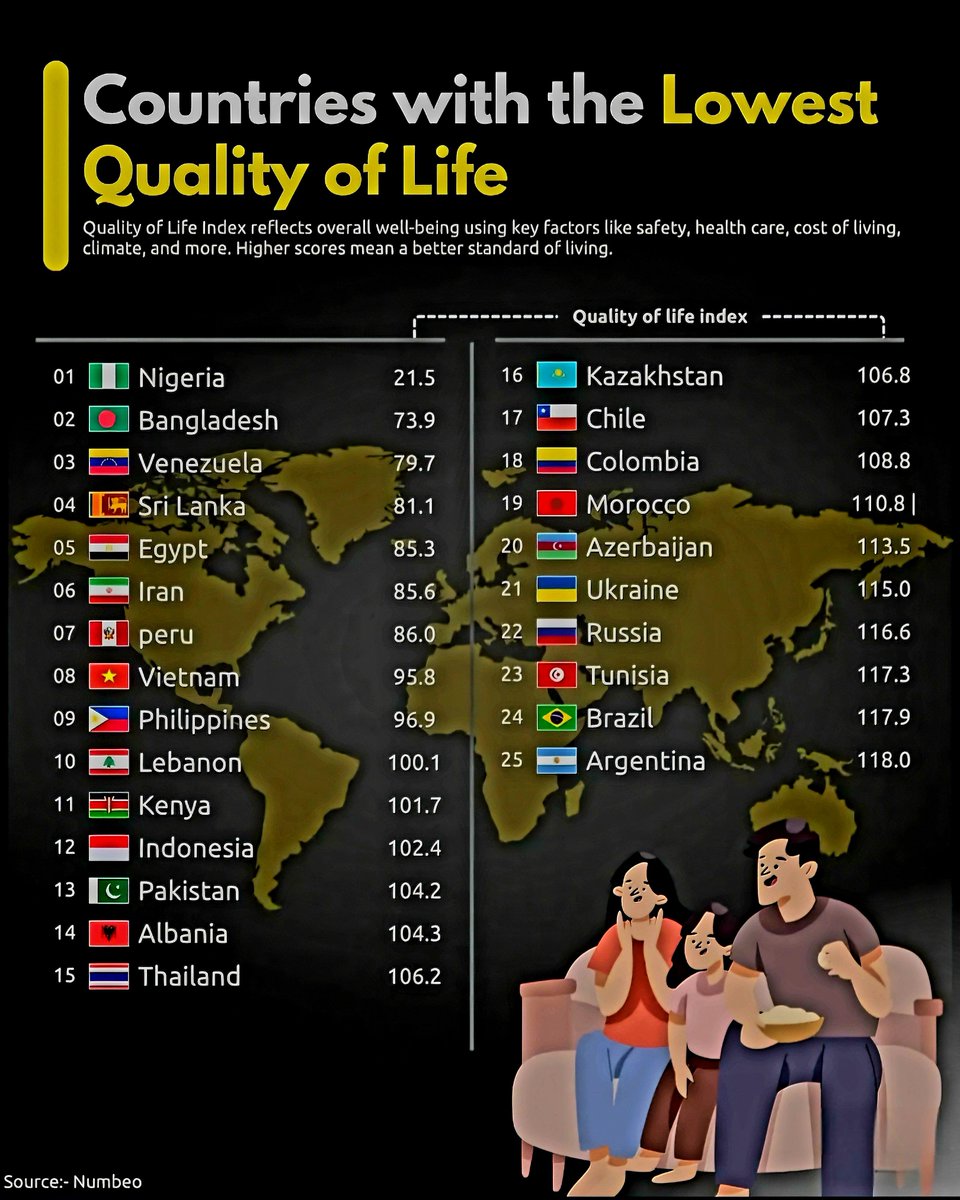
Image Credit: Top 25 Countries with the Lowest Quality of Life
In 2025, these nations continue facing immense challenges that hinder their populations from experiencing a high quality of life. International aid, policy reforms, and sustainable development are crucial for fostering improvements in these countries.
 ChatGPT
 Perplexity
 Gemini AI
 Grok AI