Select Language:
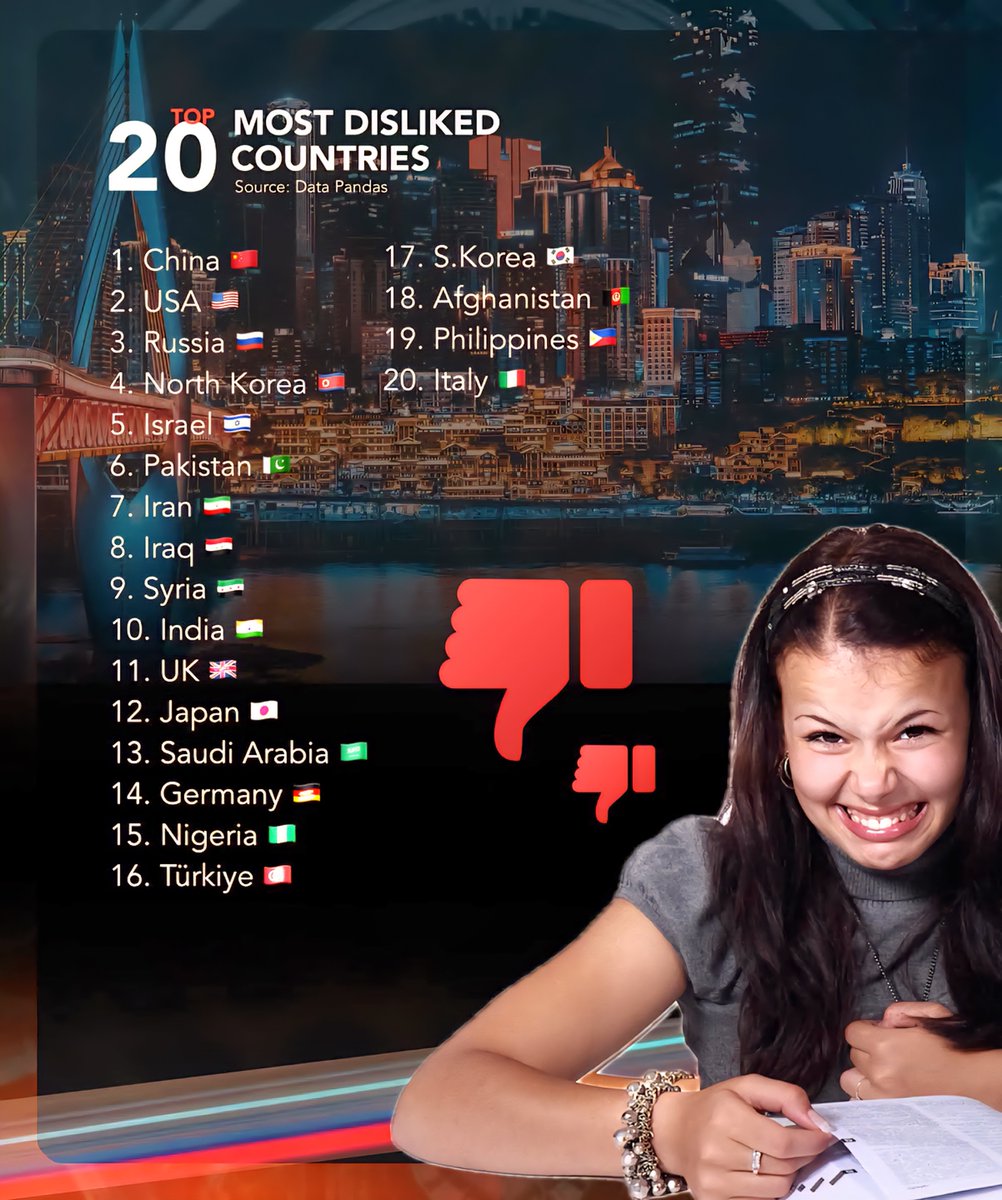
1. China
China remains at the top of the list as the most disliked country in 2025. The ongoing issues related to human rights, territorial disputes, and concerns over technological dominance continue to shape a largely negative perception globally. Despite its economic influence and cultural contributions, geopolitical tensions and concerns about transparency have fueled skepticism and dislike among certain populations worldwide.
2. United States
The US maintains its position among the most disliked countries, primarily due to its foreign policies, military interventions, and cultural influences. While the country is lauded for innovation and freedoms, its approaches to global diplomacy and economic policies often face criticism, influencing international perceptions negatively.
3. Russia
Russia’s international reputation remains strained, mainly due to conflicts such as the ongoing situation in Ukraine, cyber activities, and political tensions with Western nations. These factors contribute heavily to its unfavorable image among a broad spectrum of countries.
4. North Korea
North Korea’s isolated political stance and nuclear program continue to foster distrust and negative views. Its human rights record and secretive governance make it a focal point for international criticism.
5. Israel
Despite strong alliances with some nations, Israel is often disliked in certain countries due to ongoing conflicts and disputes with Palestine. These geopolitical issues significantly impact its global reputation and perception.
6. Pakistan
Security concerns, regional conflicts, and political instability contribute to Pakistan’s position on the disliked list. While it is a vital partner in regional politics, internal challenges affect its international image.
7. Iran
Iran remains controversial due to its nuclear program, regional influence, and human rights issues. These aspects have resulted in widespread skepticism and criticism from the international community.
8. Iraq
Decades of conflict, political instability, and ongoing insurgencies have damaged Iraq’s international perception, making it one of the most disliked countries in the region by 2025.
9. Syria
The ongoing civil war, humanitarian crises, and government actions have contributed to sustained negative perceptions about Syria. Its complex geopolitical situation continues to polarize opinions worldwide.
10. India
While India is celebrated for its history and culture, certain policies and issues related to human rights, environmental concerns, and border disputes have led to mixed perceptions, placing it on the disliked list.
11. United Kingdom
Despite its historical influence and cultural heritage, recent political shifts, break from the European Union, and international policies have influenced negative attitudes towards the UK.
12. Japan
Japan experiences a balanced perception—admired for technology and culture, yet faced with criticisms related to historical issues and regional diplomatic disputes, particularly with neighboring countries.
13. Saudi Arabia
With ongoing concerns related to human rights and its role in regional conflicts, Saudi Arabia’s reputation remains complex. Its strategic importance and economic power are often countered by criticism and dislike.
14. Germany
As Europe’s economic powerhouse, Germany’s policies on immigration, climate, and international relations have generated both praise and criticism, affecting its global perception.
15. Nigeria
Security issues, corruption, and economic challenges contribute to Nigeria’s negative image. Nonetheless, its rich culture and growing influence are recognized worldwide.
16. Turkey
Political instability, human rights concerns, and regional conflicts have impacted Turkey’s reputation. However, its strategic position continues to heighten its significance on the global stage.
17. South Korea
Strong economic growth and technology advancements have earned South Korea admiration, but territorial disputes and historical issues continue to influence some negative perceptions.
18. Afghanistan
Continued conflict, political instability, and security concerns keep Afghanistan widely disliked, though efforts for peace and stability are ongoing.
19. Philippines
Domestic issues like political corruption, human rights concerns, and socio-economic challenges have affected the perception of the Philippines beyond its tourism and cultural appeal.
20. Italy
While renowned for its history and culture, Italy’s political uncertainties and economic issues have contributed to mixed feelings and perceptions on the global front.
Note: These rankings are intended solely for educational insights and do not promote hate or discrimination. Attitudes are shaped by complex global factors, including alliances, conflicts, cultural exchanges, and historic relationships.
For further insights, visit Data Pandas’ official website.
Source: Data Pandas, 2025
 ChatGPT
 Perplexity
 Gemini AI
 Grok AI