Select Language:
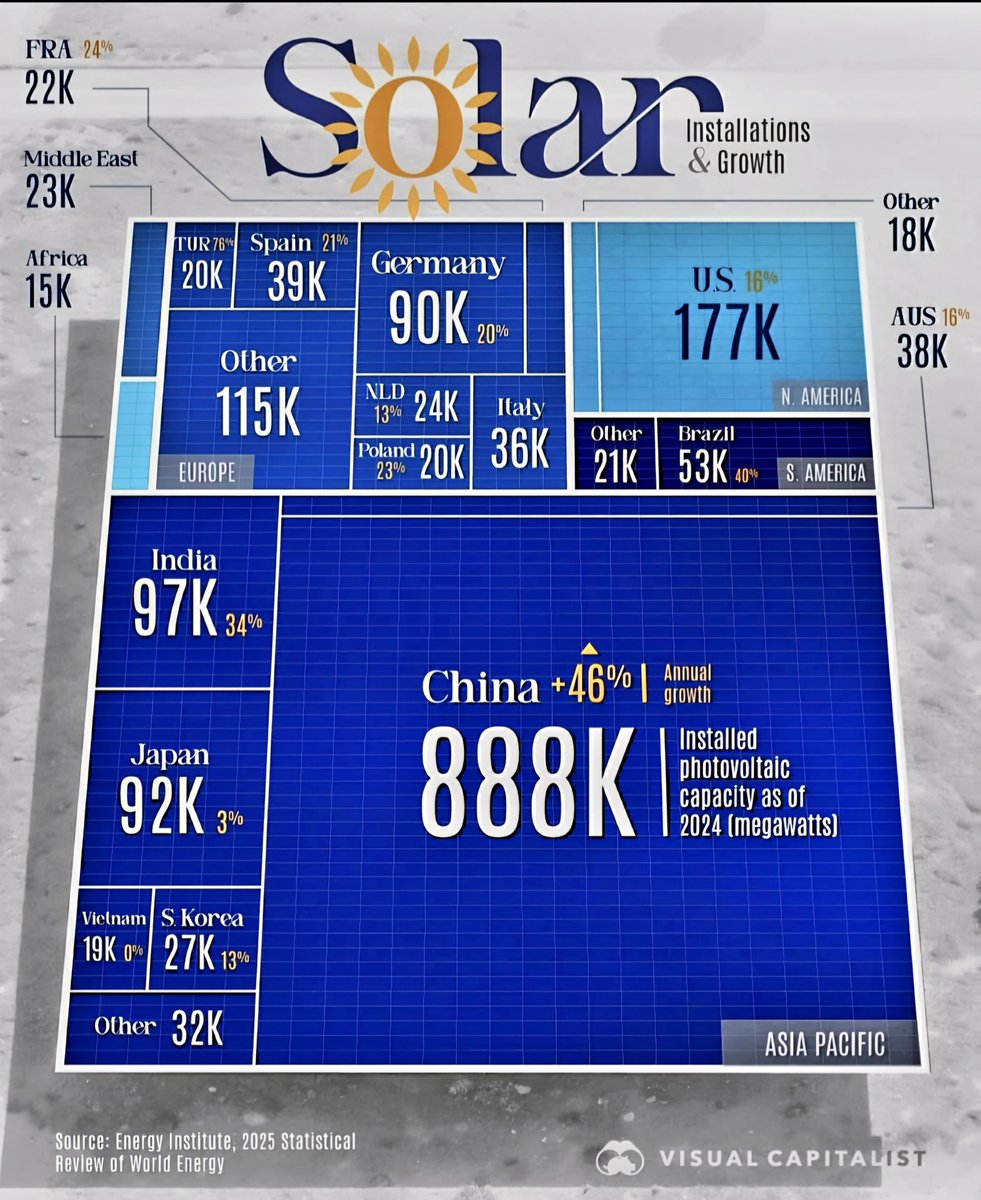
Top 15 Countries Leading the World in Solar Power Capacity in 2024
1. China Dominates Global Solar Power Capacity
China continues to lead the world with an imposing 888,000 megawatts of installed solar capacity. The country’s aggressive investment in renewable energy over the past decade has cemented its position at the forefront of the global solar industry. China’s rapid infrastructural development and policy support have propelled its solar sector into an unstoppable growth trajectory. From sprawling solar farms in the deserts of Xinjiang to sophisticated rooftop projects across bustling cities, China’s solar capacity is unmatched.
2. The United States Expands Its Solar Footprint
The United States secured the second spot with approximately 177,000 megawatts installed as of 2024. Over recent years, the US has significantly ramped up its solar infrastructure, benefiting from federal incentives, state programs, and increasing consumer interest. Notable solar farms across California, Texas, and Florida have contributed extensively to this capacity, reflecting the nation’s commitment to transitioning towards cleaner energy sources.
3. India’s Rapid Solar Growth
India ranks third with around 97,000 megawatts. The country’s expansive population and rising energy demands have propelled investments in solar energy. The Indian government’s ambitious goals under the National Solar Mission, along with declining costs for solar technology, have made solar power a key component of its energy mix. Major projects in Rajasthan and Gujarat exemplify India’s dedication to renewable energy expansion.
4. Japan’s Steady Solar Expansion
Japan has reached approximately 92,000 megawatts, underscoring its ongoing efforts to reduce dependency on fossil fuels. After the Fukushima disaster, Japan accelerated its renewable energy initiatives, investing heavily in solar power. Urban solar installations and large-scale solar parks now contribute significantly to Japan’s renewable energy portfolio.
5. Germany’s Leadership in Sustainable Energy
Germany, with about 90,000 megawatts of solar capacity, remains a pioneer in renewable energy adoption. The country’s Energiewende policy emphasizes a shift towards sustainable power sources, making solar a vital part of its energy landscape. Germany’s innovative solar solutions and widespread adoption in residential and commercial sectors have maintained its position in the top five globally.
6. Brazil’s Growing Solar Market
Brazil has installed 53,000 megawatts and is rapidly expanding its solar infrastructure. As one of the leading economies in South America, Brazil taps into its abundant sunlight to diversify its energy sources, reducing reliance on hydroelectric power and fossil fuels.
7. Spain’s Sunny Surplus Power
Spain’s solar capacity has reached 39,000 megawatts, driven by its favorable climate and supportive policies. Solar projects spanning from coastal regions to inland plains highlight Spain’s commitment to renewable energy, with plans for further expansion in the coming years.
8. Australia’s Sunlit Capital
Australia boasts around 38,000 megawatts of solar capacity. The country’s vast and arid landscapes provide ideal conditions for large-scale solar farms, especially in Western Australia and Queensland, making solar a key part of Australia’s future energy plans.
9. Italy’s Solar Adoption
Italy has achieved 36,000 megawatts of installed capacity. The country’s picturesque landscapes and government incentives have fostered widespread rooftop solar and utility-scale projects, helping Italy keep pace with its European counterparts.
10. South Korea’s Renewable Drive
South Korea has installed approximately 27,000 megawatts, emphasizing its move towards cleaner energy. The island nation is investing heavily in solar infrastructure to reduce its dependence on imported fossil fuels and meet its climate targets.
11. Netherlands’ Solar Investment
With about 24,000 megawatts installed, the Netherlands is positioning itself as a solar power hub within Europe. Progressive policies, urban solar initiatives, and community projects are fueling this growth, contributing to Europe’s collective solar capacity.
12. France’s Solar Strategy
France has reached 22,000 megawatts, with a focus on integrating solar power into its energy grid. The country’s commitment to reducing greenhouse gases has led to strategic solar deployment across both rural and urban areas.
13. Poland’s Emerging Solar Sector
Poland’s solar capacity totals around 20,000 megawatts. As the country transitions from coal dependency, solar energy plays an increasingly vital role in its energy matrix, with numerous projects underway to expand capacity.
14. Turkey’s Bright Future
Turkey has also installed about 20,000 megawatts of solar capacity. Its geographical position offers ample sunlight, making solar a promising and economically viable alternative energy source.
15. Vietnam’s Solar Surge
Vietnam rounds out the top 15 with 19,000 megawatts. The Southeast Asian nation has experienced a boom in solar projects, driven by government incentives and a growing middle class seeking sustainable energy solutions.
Global Solar Capacity Overview
Additional regions and continents are also making steady progress, with Europe and the Asia-Pacific region collectively reaching hundreds of gigawatts in installed capacity—115,000 megawatts in Europe and 32,000 megawatts in the Asia-Pacific, for example. Africa, the Middle East, and Latin America are also climbing their shares in the renewable energy landscape, contributing to worldwide carbon reduction efforts.
Source: Energy Institute, 2025 Statistical Review of World Energy
 ChatGPT
 Perplexity
 Gemini AI
 Grok AI