Select Language:
The 25 Most Disliked Dishes Around the Globe in 2025
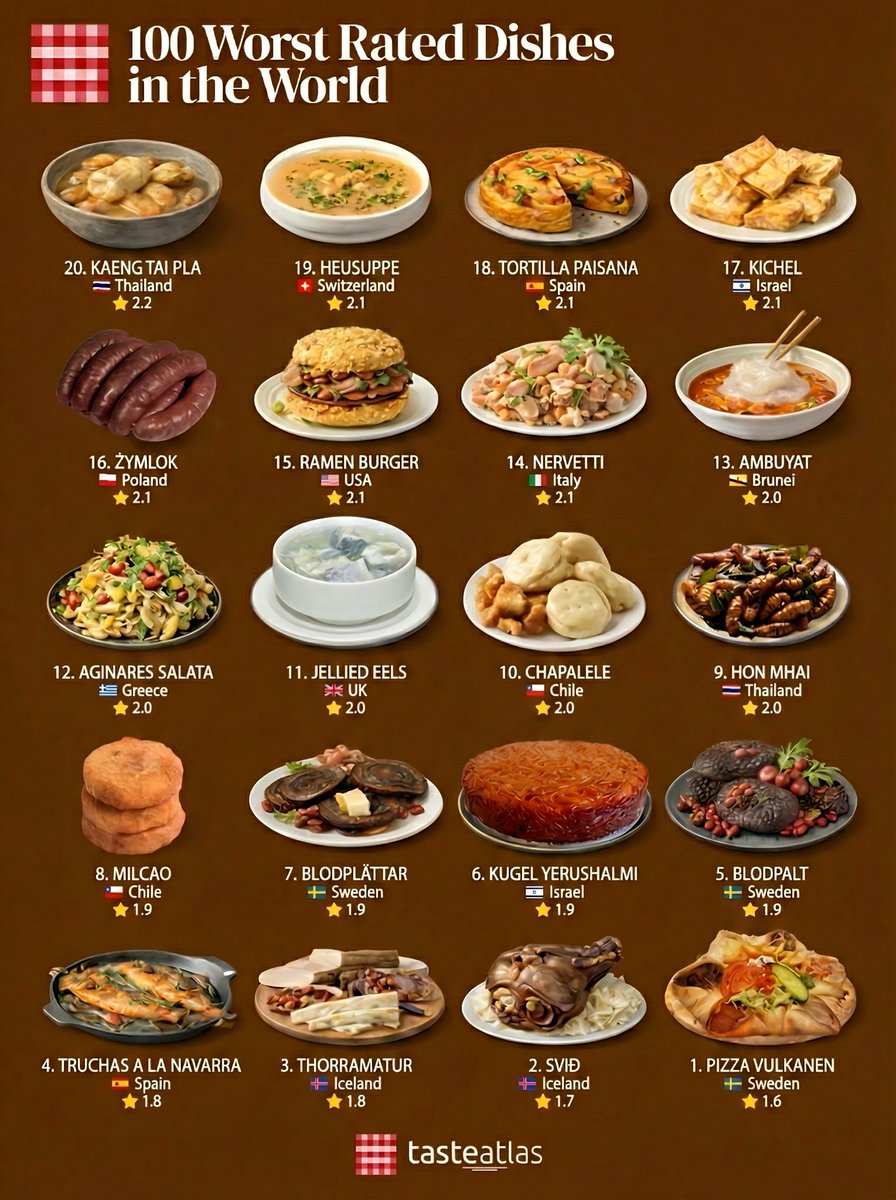
Discover which dishes have earned the least popularity worldwide, according to TasteAtlas ratings. From icy delicacies to savory oddities, these foods have sparked strong reactions—mainly negative. Here’s a detailed look at the top 25 worst-rated dishes in 2025.
1. Pizza Vulkanen (Sweden) — 1.6 Stars
Boasting a volcano-inspired presentation, Pizza Vulkanen has captured attention more for its looks than taste. Critics describe it as bland and overly greasy, making it a controversial favorite—or perhaps the worst.
2. Svið (Iceland) — 1.7 Stars
Traditional Icelandic sheep’s head, Svið is renowned for its pungent aroma. Many find it unappetizing due to its strong smell and chewy texture, which deter many tourists and locals alike.
3. Þorramatur (Iceland) — 1.8 Stars
This Icelandic ceremonial platter includes fermented meats that are heavily salted and fermented. Its acquired taste and strong smell have earned a low rating from unprepared palates.
4. Truchas a la Navarra (Spain) — 1.8 Stars
A local dish featuring river fish that often smells fishier than expected. Critics cite its strong flavor and overwhelming fishiness as major turn-offs.
5. Blodpalt (Sweden) — 1.9 Stars
Made from blood and potatoes, this dish’s dark hue and thick texture have been off-putting for many, despite its historical significance.
6. Kugel Yerushalmi (Israel) — 1.9 Stars
A sweet and savory potato pudding, Kugel Yerushalmi’s unusual texture and combination of flavors tend to alienate first-timers.
7. Blodplättar (Sweden) — 1.9 Stars
Blood pancakes are a Swedish delicacy with a dense and metallic taste that has garnered negative feedback from the modern palate.
8. Milcao (Chile) — 1.9 Stars
A dense potato cake from Chile, Milcao is known for its chewy consistency and earthy flavor—qualities that don’t resonate with many international diners.
9. Hon Mhai (Thailand) — 2.0 Stars
This fermented fish condiment has a pungent aroma and salty profile that often overwhelms or disgusts those unfamiliar with its flavor.
10. Chapalele (Chile) — 2.0 Stars
Another Chilean favorite, Chapalele is a potato dumpling with a chewy texture, often criticized for its blandness and heavy heaviness.
[Additional dishes include Jellied Eels from the UK, Aginares Salata from Greece, Ambuyat from Brunei, and many more, all with ratings between 2.0 and 2.6 stars.]
11. The Unpopular International Options
- Frog Eye Salad (USA) — 2.3 Stars
This gelatinous, sweet dish with tiny chewy balls is considered bizarre by many. - Gachas (Spain) — 2.5 Stars
A porridge-like dish often criticized for its bland taste and texture. - Boudin Noir (France) — 2.5 Stars
A dark blood sausage that some find too rich or metallic-tasting.
12. The Most Disliked in Asia and Europe
- Hongeo (South Korea) — 2.4 Stars
Fermented skate fish with a strong ammonia smell. Fans swear by its unique flavor, but most find it overpowering. - Kneippbrød (Norway) — 2.5 Stars
A dense bread with a bitter aftertaste that fails to appeal globally. - Gai Mei Bao (China) — 2.5 Stars
A steamed bun that many criticize for its blandness and floury texture.
13. The Controversial and Worst Ratings
- Poi (USA) — 2.6 Stars
A traditional Hawaiian dish made from fermented taro, it has a slimy texture and earthy flavor that many dislike. - Tête de Veau (France) — 2.6 Stars
Boiled calf’s head, often perceived as unappetizing due to its presentation and texture.
14. The Tasteatlas Ratings Breakdown
These dishes, with ratings averaging around 2.0 to 2.6 stars, showcase culinary adventures that often don’t meet the modern taste standards. While they hold cultural significance, their flavor profiles can be challenging for international audiences.
15. Why Do These Dishes Fail to Impress?
Many of these dishes are deeply rooted in tradition, prepared with ingredients that are highly regional or fermented. Their peculiar textures, smells, or appearances often clash with Western or modern palates, leading to their low ratings.
16. Final Thoughts
Food preferences are subjective, and what’s considered a delicacy in one culture can be disliked elsewhere. These dishes, despite their poor ratings, are cherished staples for their communities. However, their low ratings highlight the importance of flavor profiles and presentation in modern dining expectations.
Source: TasteAtlas (out of 5 stars)
Note: Ratings reflect global opinions and are continually evolving.
[End of article]
 ChatGPT
 Perplexity
 Gemini AI
 Grok AI