Select Language:
The Future of Global Economies: A Look at the Largest Countries in 2075
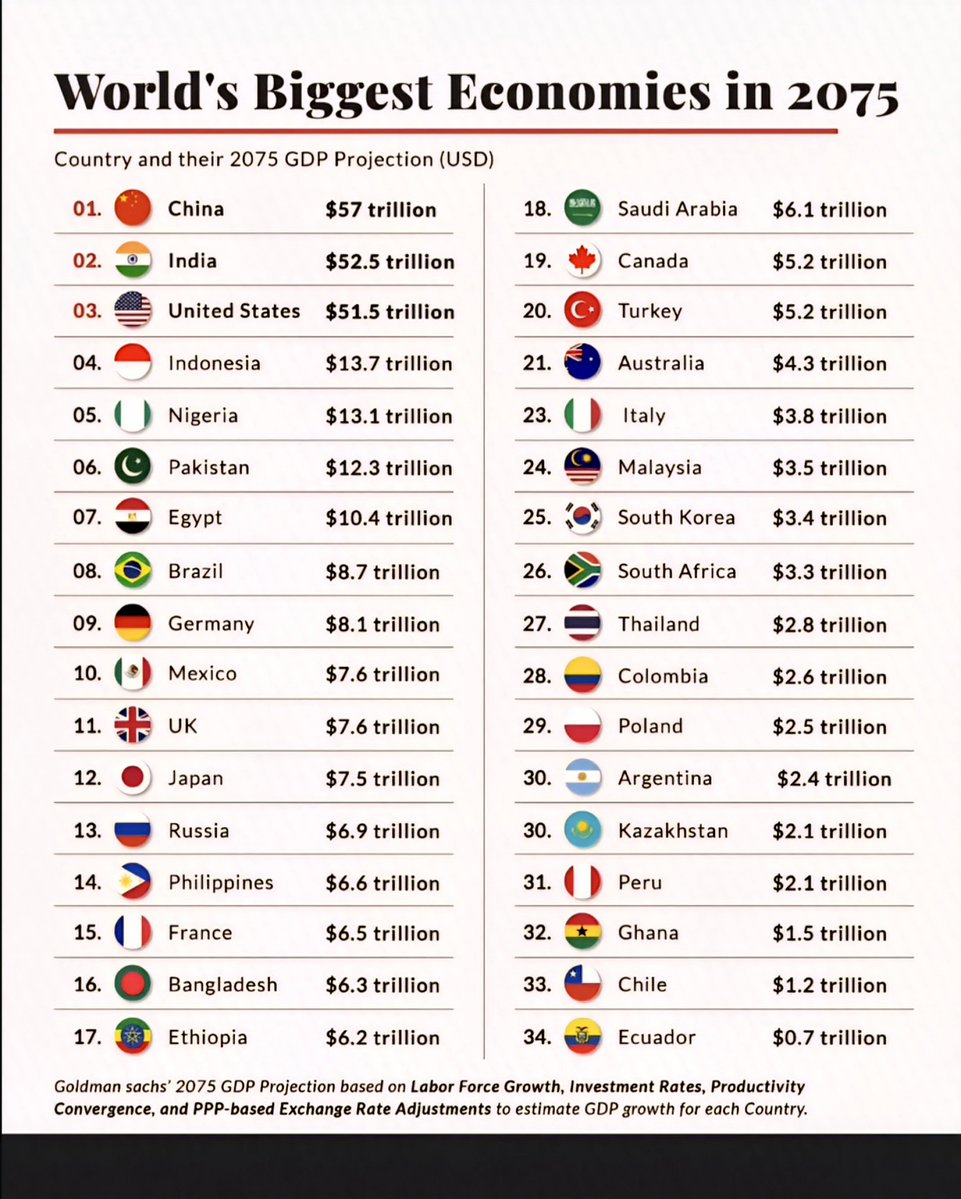
1. China: The Rising Superpower
By 2075, China is projected to solidify its position as the world’s most dominant economy. The nation’s rapid technological advancements, extensive infrastructure investments, and strong focus on innovation have propelled it far beyond traditional manufacturing roles. Its population, now stabilized at around 1.4 billion, continues to be a vital driver of growth, fueling consumer markets and technological development. The Chinese government’s strategic initiatives in artificial intelligence, green energy, and space exploration keep the country at the forefront of global progress. As a result, China’s GDP is expected to eclipse that of other countries, cementing its place as the economic leader in 2075.
2. India: The Rising Giant
India’s economy has experienced exponential growth over the past fifty years, emerging as a key global powerhouse by 2075. Its massive population, which now stands at approximately 1.8 billion, fuels a dynamic labor force and a burgeoning middle class. Revolutionary advances in digital infrastructure, education, and manufacturing have transformed India into a hub for emerging industries like biotech, green energy, and quantum computing. The government’s focus on sustainable development and technological innovation has enabled India to leapfrog traditional industrial stages, positioning it just behind China in economic ranking.
3. United States: The Evolving Leader
Although the United States faces stiff competition, it remains a significant player in the global economy in 2075. Unlike previous decades, its economy now emphasizes advanced services, cybersecurity, and space industries. With a population of over 400 million, the U.S. leverages its technological prowess and entrepreneurial spirit to maintain influence. The country has shifted toward renewable energy sources, making it a pioneer in environmental innovation. Its robust higher education system continues to supply top talent, and its financial markets remain among the most sophisticated worldwide, ensuring the U.S. retains its position among the top three economic giants.
4. Nigeria: The Emerging African Powerhouse
Nigeria’s rapid economic growth has propelled it into the top tier of global economies by 2075. Thanks to vast natural resources, especially oil and minerals, coupled with a large, young population of approximately 1.7 billion, Nigeria has transformed into Africa’s economic leader. Investments in infrastructure, technology, and agriculture have bolstered its industrial base, making it a crucial player in global trade. The nation’s focus on education and innovation has spurred a budding tech scene, gradually shifting from resource dependence to a diversified, sustainable economy.
5. Brazil: South America’s Economic Beacon
Brazil has maintained its position as South America’s economic powerhouse, thanks to its vast natural resources, agricultural exports, and growing technology sectors. By 2075, it has integrated advanced sustainability practices into its industries, becoming a leader in environmental innovation. Its diverse economy, combining agriculture, manufacturing, and services, along with a population of approximately 250 million, has helped Brazil secure a top-five ranking globally. Continued investment in infrastructure and education has further strengthened its position on the world stage.
6. Indonesia: The Southeast Asian Powerhouse
Indonesia’s strategic geographic location and demographic advantages have catapulted it into the global economic spotlight. With a population nearing 300 million, it has become a major center for manufacturing, digital economy, and renewable energy. The nation’s focus on technological innovation and sustainable development has attracted international investment. As a result, Indonesia now plays an influential role in regional and global economic affairs, promising continued growth and stability into the future.
7. Russia: The Energy and Innovation Leader
Russia’s economy in 2075 has evolved beyond traditional energy exports to encompass advanced technology sectors, including robotics, cybersecurity, and space exploration. Its vast landmass and natural resources provide a strong foundation, and its emphasis on innovation and strategic alliances have kept it competitive. With a population estimated at 150 million, Russia’s mix of resource wealth and technological investment ensures it remains a critical player in the global economy.
8. Germany: Europe’s Economic Anchor
Germany remains a powerhouse within Europe, leading innovation in engineering, automotive, and green technology sectors. By 2075, it has expanded its influence through extensive technological research, high-quality manufacturing, and sustainable development initiatives. Its population of around 130 million continues to support a resilient economy, and its leadership within the European Union drives regional stability and growth.
9. Japan: The Tech and Robotics Hub
Japan’s economy in 2075 reflects its specialization in robotics, automation, and advanced manufacturing. Despite demographic challenges, its focus on innovation keeps it among the top global economies. The nation’s population of about 100 million has adapted to a declining birth rate by embracing technological solutions to sustain productivity. Its contributions to space agriculture and environmental technologies position Japan as a vital leader in the future global economy.
10. Mexico: The North American Growth Engine
Mexico’s strategic economic reforms and growing technological sector have elevated it into the top 10 economies by 2075. Its close integration with the United States and Canada continues to offer advantages, while its expanding manufacturing, digital services, and renewable energy sectors bolster its growth. With around 200 million people, Mexico’s economic trajectory is expected to remain upward, making it a critical player in North America and beyond.
The evolving landscape of global economies in 2075 showcases vast shifts driven by technological innovation, demographic changes, and sustainable development. The countries outlined are expected to shape the future world order, each contributing uniquely to the fabric of global prosperity.
 ChatGPT
 Perplexity
 Gemini AI
 Grok AI