Select Language:
2025’s Top Economies in Asia: A Closer Look at the Giants
China Continues to Lead Asia’s Economy
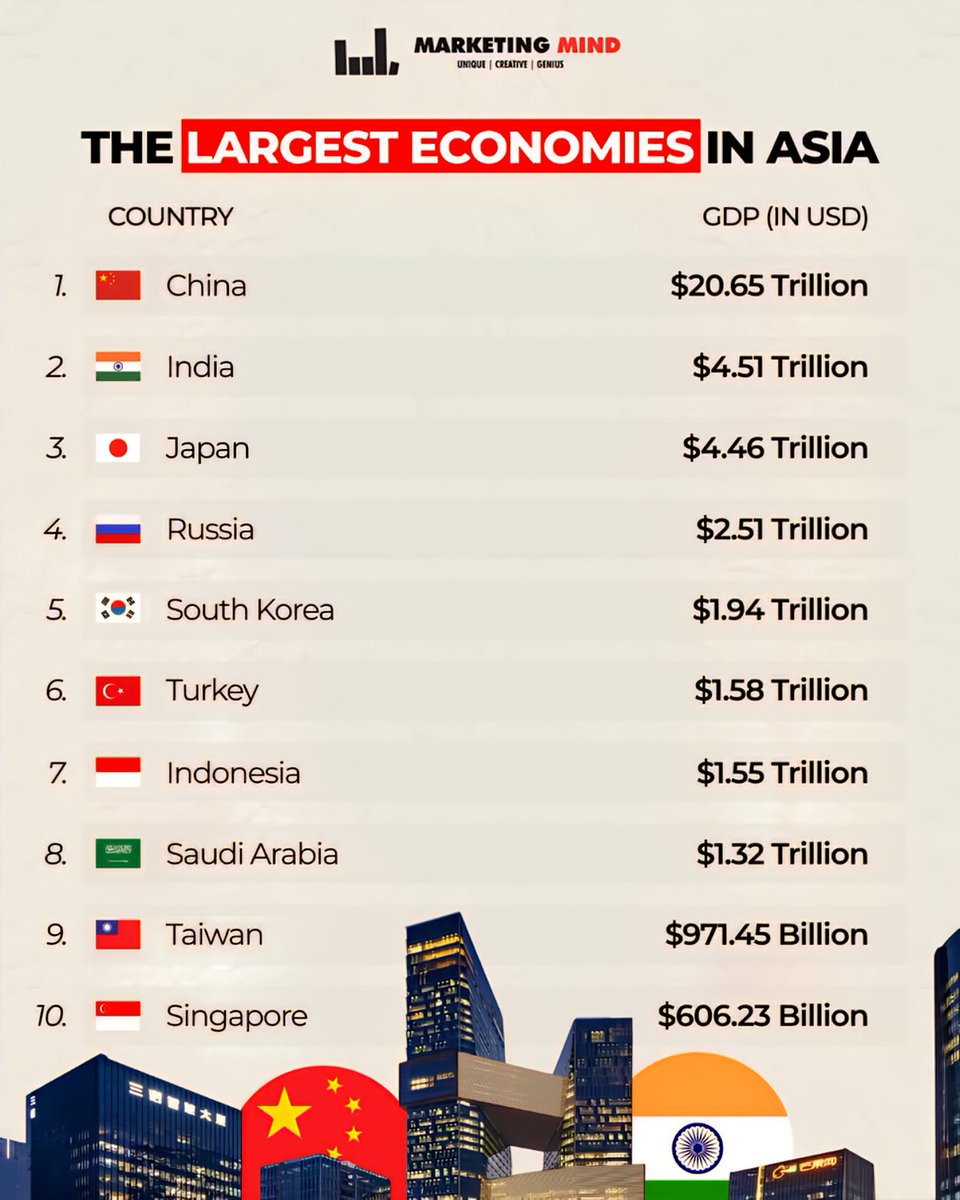
China remains by far the largest economy in Asia, with a nominal gross domestic product (GDP) reaching an impressive $20.65 trillion in 2025. This economic powerhouse continues to influence global markets and drive regional growth. China’s broad industrial base, technological advancements, and expanding consumer market have played pivotal roles in maintaining its top position. The nation’s infrastructure projects and investments in innovation have further strengthened its position as Asia’s economic leader.
India’s Rapid Growth Propels It Into the Second Spot
India’s economy has demonstrated remarkable growth, now valued at $4.51 trillion. The country’s expanding middle class, burgeoning technology sector, and increased foreign investment have contributed to this rapid economic rise.India’s push toward digital transformation and infrastructure development has unlocked immense potential across sectors like manufacturing, services, and agriculture, making it a formidable player in Asia’s economic landscape.
Japan Maintains Its Leadership at Number Three
Japan’s GDP stands at roughly $4.46 trillion, securing its place as the third-largest economy in Asia. Despite facing demographic challenges such as an aging population, Japan remains a global leader in technology, robotics, and manufacturing. Its innovative companies continue to influence various industries, and Japan’s resilience in adapting to economic changes has helped sustain its position on the list.
Russia’s Strategic Position in the Asian Market
Russia’s economy is valued at approximately $2.51 trillion, placing it among the top five in Asia. Its vast natural resources, especially energy exports, form the backbone of its economy. Russia’s strategic partnerships and involvement in key regional projects ensure its significance remains robust, despite geopolitical challenges.
South Korea’s Tech and Export Powerhouse
South Korea’s GDP is around $1.94 trillion, reflecting its strength as a global technology and export hub. Leading industries such as electronics, automobiles, and shipbuilding contribute significantly to its economy. South Korea’s focus on innovation and research continues to foster growth, making it a vital player in Asia’s economic hierarchy.
Turkey: Bridging Continents and Economies
Turkey’s economy has reached a valuation of $1.58 trillion. Positioned at the crossroads of Europe and Asia, Turkey benefits from its strategic location for trade and logistics. Heavy investments in infrastructure and tourism have helped diversify its economy, fueling ongoing development and regional influence.
Indonesia’s Steady Economic Ascent
With a GDP of $1.55 trillion, Indonesia is Southeast Asia’s largest economy. Its abundant natural resources, growing manufacturing sector, and a expanding middle class have fueled consistent growth. Indonesia’s commitment to infrastructure development and digital economy initiatives signals further upward trajectory.
Saudi Arabia’s Oil-Rich Economy
Saudi Arabia’s GDP stands at approximately $1.32 trillion in 2025. Known primarily for its vast oil reserves, the kingdom is diversifying through Vision 2030, aiming to develop tourism, entertainment, and renewable energy sectors. This strategic shift aims to reduce dependency on oil and foster sustainable growth.
Taiwan’s Tech Sector Stronghold
Taiwan boasts a GDP of nearly $971.45 billion, driven primarily by its semiconductor and electronics industries. The island’s technological innovations have cemented its role as a critical node in global supply chains. Ongoing investments in R&D continue to propel Taiwan’s tech dominance.
Singapore: Small but Mighty
Singapore rounds out the list with a GDP of $606.23 billion. Despite its small size, the city-state remains a global financial hub, with a strong emphasis on fintech, logistics, and biotechnology sectors. Its highly developed infrastructure and business-friendly policies sustain its economic relevance.
The global economic landscape in 2025 showcases the dynamic shifts and emerging strengths across Asia. While traditional giants like China and Japan continue to hold strong, new economic powerhouses such as India and Indonesia are rapidly closing the gap, redefining regional dominance. Meanwhile, countries like South Korea, Turkey, and Saudi Arabia demonstrate diverse strategies for growth, highlighting Asia’s complex and vibrant economic fabric.
Source: IMF, Nominal GDP, 2025.
 ChatGPT
 Perplexity
 Gemini AI
 Grok AI