Select Language:
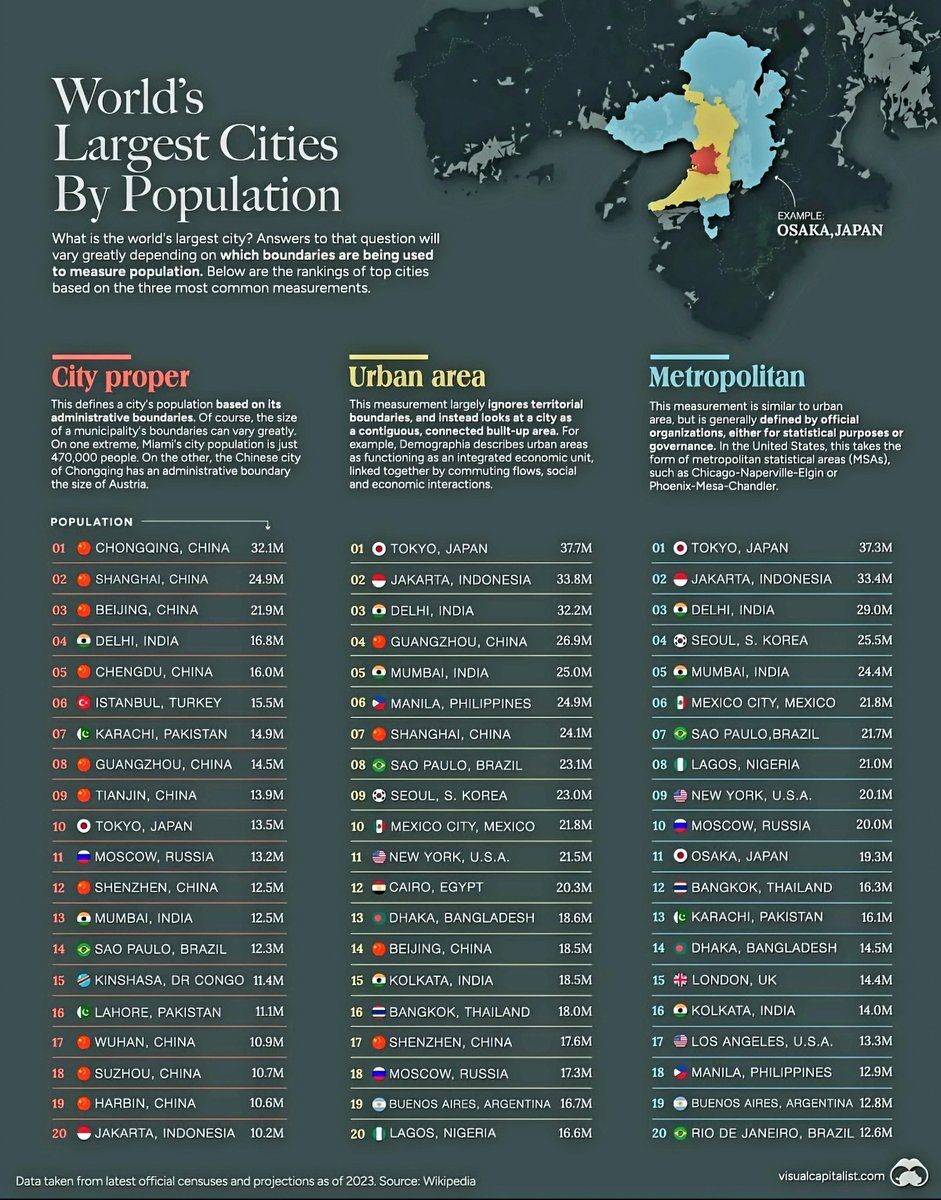
Top 20 Largest Cities Around the World in 2025: A Regional Breakdown
-
Chongqing, China — The Most Populous City in the World by City Proper
Leading the global list is Chongqing, China, with an incredible 32.1 million residents according to the city’s administrative boundaries. Known for its sprawling administrative area, Chongqing’s urban development and rapid growth underscore China’s urbanization trend. This city stands out not only for its size but for its strategic importance in southwestern China.
ADVERTISEMENT -
Tokyo, Japan — Dominating the World’s Largest Urban and Metro Areas
Tokyo continues to hold its crown as the most expansive urban and metropolitan area globally, with an urban population of 37.7 million and a metro population nearing 37.3 million. As a major financial hub, Tokyo exemplifies the dense interconnectedness of modern metropolises, blending tradition and innovation seamlessly.
-
Jakarta, Indonesia — A Growing Megacity
Jakarta ranks as the second-largest urban area worldwide, with a staggering 33.8 million residents in its built-up zone. The city faces significant challenges related to infrastructure and sustainability amidst its rapid expansion, making it a key focus for urban planners across Southeast Asia.
-
Shanghai, China — A Global Financial Powerhouse
With a city proper population of almost 24.9 million, Shanghai’s influence extends far beyond its borders. Its vibrant economy, cutting-edge infrastructure, and role as a cultural hub make it one of the world’s most dynamic Chinese cities.
-
Delhi, India — The Rising Megacity
Delhi’s metropolitan population has surged to about 29 million, cementing its status as one of the fastest-growing urban centers in Asia. Its expanding footprint reflects India’s broader urban migration trend, adding to its historical significance.
-
Mexico City, Mexico — Capital of a Major North American Megacity
With over 21.8 million residents in its metro area, Mexico City remains a vital political and economic center, contributing to the vibrant life of North America’s largest Spanish-speaking city.
-
New York City, USA — The Epicenter of Global Commerce
The metro area of New York has a population of approximately 20.1 million people. Its influence on finance, culture, and technology continues to shape global trends.
-
São Paulo, Brazil — Latin America’s Largest City
As Brazil’s economic powerhouse, São Paulo’s metro population has risen to about 21.7 million. Its diverse industries and cultural scene make it a key player on the global stage.
-
Lagos, Nigeria — Africa’s Fastest-Growing Megacity
With an estimated 21 million residents in its metro area, Lagos remains Africa’s largest urban center, booming with economic opportunities and cultural vibrancy despite infrastructure challenges.
Global City Size Insights: Breakdown by Type of Area
- City Proper (Administrative Boundaries): Focuses on the population within official city limits. For example, Beijing (21.9 million) and Karachi (14.9 million) fall under this category.
- Urban Area (Built-up Area): Encompasses the continuous urban fabric, capturing how cities spill into neighboring regions. Tokyo’s urban area hosts approximately 37.7 million residents, reflecting its sprawling development.
- Metropolitan Area (Official Metro Regions): Represents the broader functional region, including suburbs and commuter zones. Tokyo’s metro area, with 37.3 million residents, exemplifies the sprawling metropolis concept.
Key Observations as of 2025:
- Asian cities dominate the top ranks, with China, India, and Indonesia leading the charge.
- Cities like Tokyo and Jakarta highlight the difference between urban and metro population figures, emphasizing the sprawling nature of these urban spaces.
- Western cities like Los Angeles (13.3 million in the metro) and London (14.4 million in the metro) remain significant, yet their growth is comparatively steadier.
The Growth Trends Shaping Our Cities
Urbanization in the 21st century is driven by population migration, economic development, and infrastructure innovations. Rapid expansion in Asian megacities like Delhi and Jakarta presents both opportunities and challenges for sustainability, housing, transportation, and resource management.
Conclusion
As we analyze the demographics of the world’s biggest cities in 2025, it’s clear that urban growth continues unabated, especially in Asia. Cities like Chongqing, Tokyo, and Jakarta exemplify the new face of global urbanization—dynamic, diverse, and ever-expanding. Policymakers and urban planners worldwide are now more than ever focused on sustainable development to accommodate these booming populations and ensure livable environments.
Data sources include the latest official censuses and projections from 2023, with updates reflecting the rapid changes of 2025.
Note: All figures are based on official city and urban area data, highlighting the global shifts in population centers.
 ChatGPT
 Perplexity
 Gemini AI
 Grok AI