Select Language:
The Surprising Concentration of Global Wealth and Land
1. A Tiny Fraction of Land Holds Half of the World’s GDP
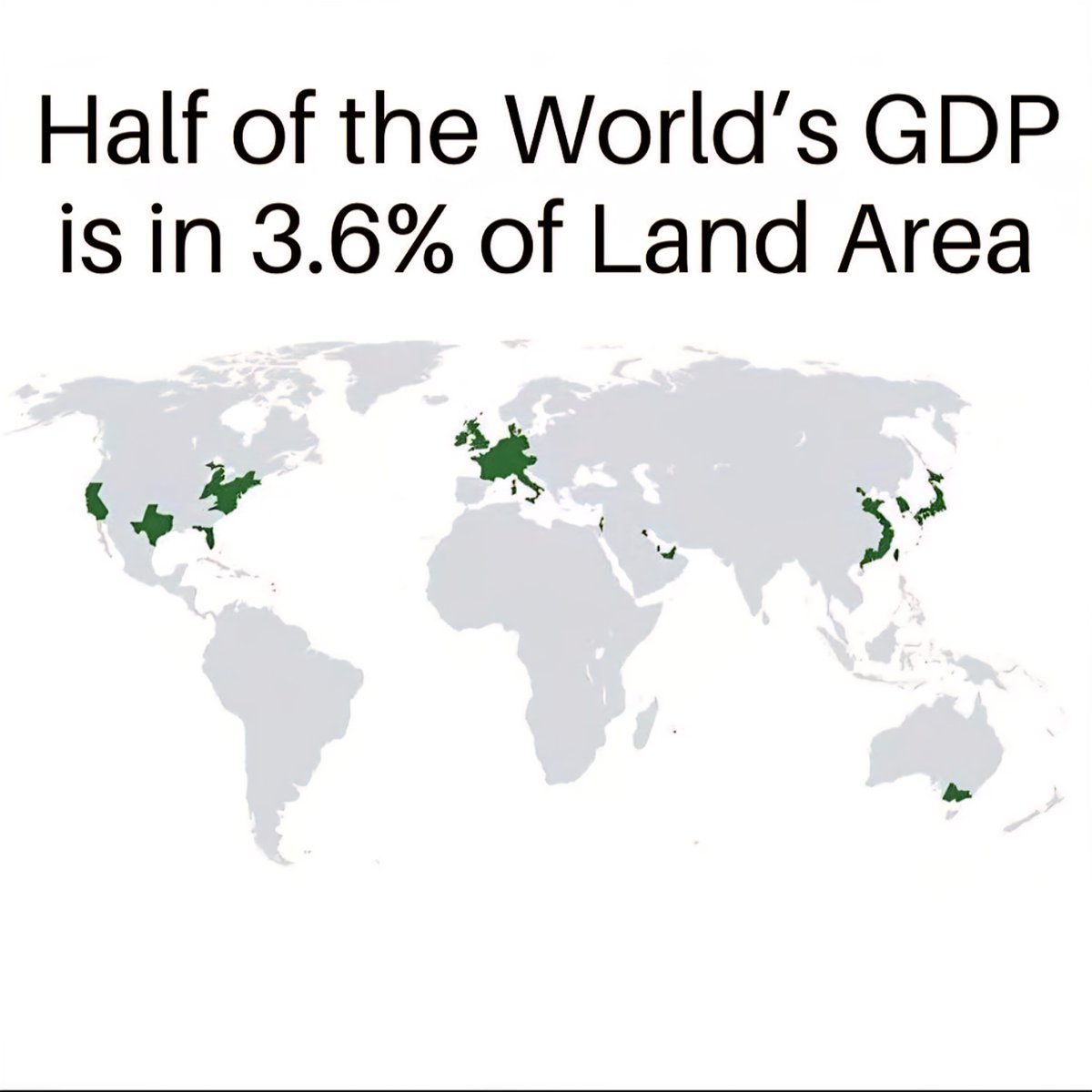
A recent report reveals a striking fact: just 3.6% of the world’s land area is responsible for producing half of the global GDP. This extraordinary concentration underscores the disparities in economic activity across different regions. While vast portions of the earth remain rural or underserved economically, a small fraction of land — often urban centers and industrial zones — generate the lion’s share of the world’s wealth. This poses important questions about resource distribution, urban planning, and economic development strategies worldwide.
2. Urban Mega-Cities as Global Wealth Hubs
The wealthiest parts of the world tend to be concentrated in sprawling urban centers, with cities like New York, London, Tokyo, and Shanghai leading the way. These cities serve as financial and technological hubs, where commerce, finance, and innovation flourish. Their dense infrastructure and access to global markets make them powerhouses of productivity, even though they occupy only a small part of the global landmass. This urban-centric development model contributes to the disproportionate economic output seen in the data.
3. Impact of Land Use on Wealth Distribution
Much of the land that isn’t contributing to a significant portion of GDP is often rural, underdeveloped, or environmentally protected. Agricultural regions and conservation areas occupy the majority of the Earth’s surface but generate relatively low economic activity, especially in comparison to urban areas. This imbalance influences global wealth distribution and accentuates disparities between urban and rural communities.
4. The Role of Infrastructure and Connectivity
Connectivity and infrastructure are critical to this concentration of wealth. Infrastructure investments in transportation, communication, and energy enable businesses and industries in these small land areas to connect seamlessly with global markets. This interconnectedness amplifies productivity and economic output, effectively making a small geographical footprint account for such a significant portion of the world’s wealth.
5. Challenges and Opportunities for Development
This uneven distribution creates both challenges and opportunities. Developing regions outside these wealthy land areas face obstacles such as limited infrastructure, political instability, and lack of access to capital. However, technological advancements like remote work, internet connectivity, and renewable energy provide promising avenues for expanding economic activity into less-developed areas, potentially reshaping this land-to-wealth ratio in the coming decades.
6. Environmental Considerations and Sustainable Growth
As urban centers grow and new regions potentially develop economically, environmental concerns become more prominent. High-density urban areas can strain resources, while rural development must balance economic growth with environmental preservation. Sustainable development strategies are vital for ensuring that future economic expansion does not come at the expense of environmental health.
7. The Future of Global Wealth Distribution
Looking ahead, shifts in technology, urbanization, and policy could alter this geographic concentration of wealth. Smart cities, green infrastructure, and investment in rural connectivity might distribute economic activity more evenly across the planet. Policymakers and businesses must collaborate on innovative solutions to ensure that the benefits of growth reach broader populations.
[Insert related image here]
8. Key Takeaways for Policymakers and Investors
- Recognize the untapped potential of underdeveloped regions outside major urban centers.
- Invest in infrastructure and technology to promote rural and small-town economic growth.
- Promote sustainable urban development to handle expanding populations without harming the environment.
- Balance economic ambitions with environmental conservation to ensure long-term resilience.
9. Conclusion
The startling statistic that a mere 3.6% of the world’s land accounts for half of its GDP highlights the importance of strategic development and resource allocation. As the world advances into 2025, understanding these dynamics is essential for building equitable economic policies and fostering sustainable growth across the globe. The challenge lies in bridging the gap between densely productive urban areas and the vast rural spaces that still largely remain economically underutilized.
 ChatGPT
 Perplexity
 Gemini AI
 Grok AI