Select Language:
Understanding Tariffs: The American Perspective
As global trade dynamics continue to shift, tariffs have become a focal point of economic discussion, particularly in the United States. Recent surveys indicate that a significant portion of the American populace is skeptical about the potential advantages of tariffs.
The Recent Survey Insights
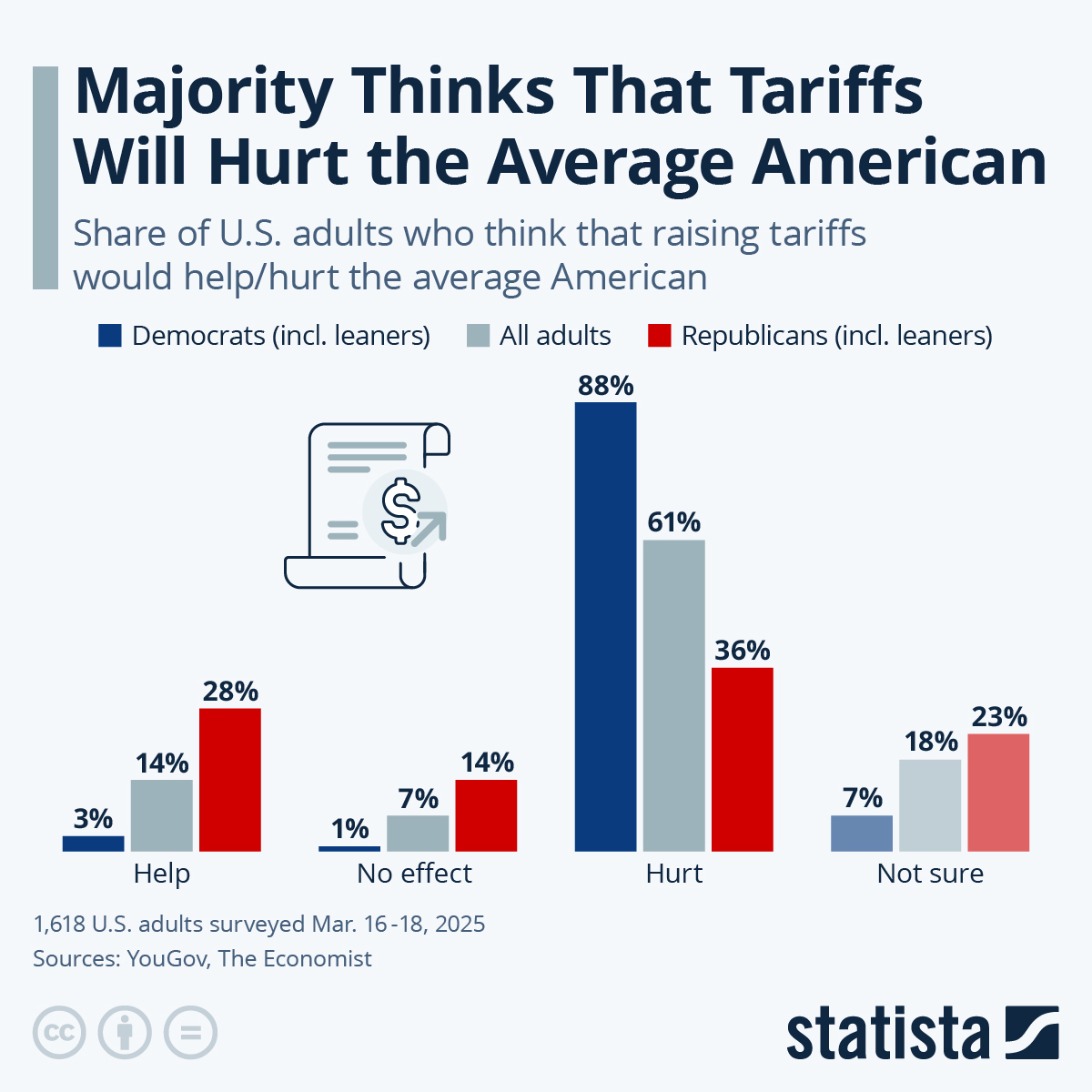
A compelling survey conducted by YouGov on behalf of The Economist reveals that a substantial 61% of U.S. adults believe that the implementation of higher tariffs will adversely affect average Americans. This statistic is striking, especially when considering that only 14% of respondents feel that increased tariffs would yield positive outcomes for them.
Public Sentiment on Inflation
Why are U.S. adults so wary of tariffs? A critical factor contributing to this sentiment is the recent history of inflation that has plagued American households. Over the past three years, rising prices have heightened financial concerns for many families. There is a pervasive fear that further tariffs will exacerbate this crisis, pushing prices even higher on essential goods and services.
Political Divide: Democrats vs. Republicans
The survey results highlight a notable division in political opinions regarding tariffs. Unsurprisingly, a majority of Democrats oppose the tariff strategies outlined by the Trump administration. However, what may come as a surprise is that a considerable percentage of Republicans also harbor similar concerns.
Republican Perspectives
About 36% of Republican respondents anticipate that the recent trade policies will harm the average American. In contrast, only 28% believe that these tariffs will provide some benefit. This reflects a growing bipartisan anxiety regarding the real-world implications of tariff policies.
The Broader Context of Tariff Impacts
Tariffs are essentially taxes imposed on imported goods, and while they are often intended to protect domestic industries, the immediate effects on consumers can be less favorable. Increased tariffs usually lead to higher prices as manufacturers and retailers pass their additional costs onto consumers, which can worsen inflation scenarios.
Economic Understanding of Tariffs
To comprehend the broader implications of tariffs on the economy, it is crucial to understand the balance between protecting domestic markets and the potential downstream effects on consumers. While protecting certain industries may lead to job preservation in the short term, the long-term repercussions often place a burden on the overall economy and consumer spending power.
The Future of Trade Policies
Looking ahead to upcoming tariff announcements—designated as "Liberation Day" by President Trump—economic analysts will undoubtedly watch public reaction and the unfolding consequences closely.
Consumer Behavior Predictions
With consumer confidence already shaken by inflation, it can be expected that news of new tariffs will affect purchasing behaviors further. Americans may begin tightening their belts, fostering a more cautious approach to spending, which can inevitably impact economic growth.
Conclusion
As the discourse surrounding tariffs continues to evolve, understanding public sentiment and the economic landscape becomes essential for navigating the complexities of trade policies. Whether through consumer opinions, political alignments, or economic forecasts, tariffs will undeniably influence the average American’s financial well-being in the foreseeable future.
 ChatGPT
 Perplexity
 Gemini AI
 Grok AI