Select Language:
Scientists in South Korea have found that a probiotic bacteria commonly present in kimchi could aid the body in eliminating tiny plastic particles called nanoplastics.
These discoveries point to the potential for microbes found in traditional fermented foods to help protect human health from the increasing problem of plastic pollution.
The research was conducted by scientists at the World Institute of Kimchi, a government-supported organization backed by South Korea’s Ministry of Science and ICT. The study was published in the journal Bioresource Technology.
Plastic pollution has become one of the most pressing environmental issues worldwide. Over time, large plastic waste gradually breaks down into smaller fragments, eventually reaching sizes that are invisible to the naked eye.
Nanoplastics are among the smallest particles known, measuring less than one micrometer—roughly one-thousandth of a millimeter. Due to their tiny size, there’s concern that nanoplastics can enter the human body through contaminated food, drinking water, seafood, packaging, and even the air we breathe.
Scientists worry because these tiny particles may pass through the intestinal barrier and reach organs such as the kidneys, liver, or brain. Although research is ongoing, some studies suggest nanoplastics might cause inflammation, cell damage, hormone disruptions, and other health issues.
Currently, little is known about how to remove nanoplastics once they’ve entered the digestive system. That’s why new findings from South Korea have generated considerable interest.
The scientists focused on a specific probiotic strain called Leuconostoc mesenteroides CBA3656, originally isolated from kimchi—Korea’s traditional fermented vegetables known for their probiotic qualities.
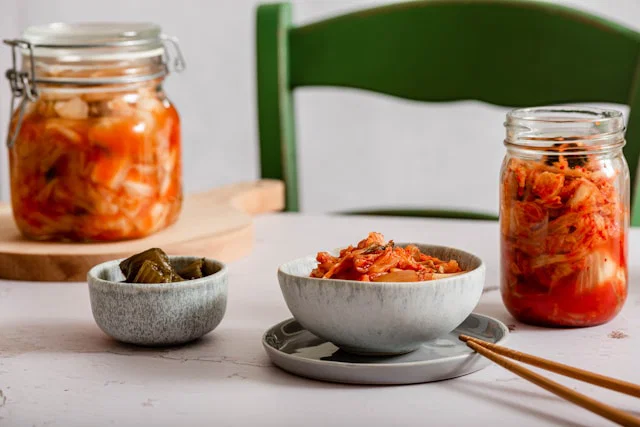
Kimchi is made by fermenting vegetables like cabbage with beneficial bacteria, which naturally grow during fermentation and contribute to its tangy flavor and potential health perks.
Probiotics have long been studied for their role in supporting digestion, immunity, and gut health. Some strains even help inhibit harmful microbes in the digestive tract.
In this study, researchers aimed to determine if the kimchi-derived bacteria could attach to nanoplastics and help remove them from the body.
Led by Drs. Se Hee Lee and Tae Woong Whon, the team tested how effectively the bacterium could bind to polystyrene nanoplastics under various lab conditions.
Polystyrene is a common plastic found in food containers, packaging, disposable cups, and insulation.
Results showed impressive binding capability. In laboratory tests, the kimchi bacteria achieved an 87% attachment rate to nanoplastics, meaning it successfully adhered to most particles.
They also compared this bacterium to another probiotic strain, Latilactobacillus sakei CBA3608. Under standard conditions, both performed similarly. But when simulated to mimic the human digestive environment, differences emerged.
In conditions resembling the human intestine, the reference probiotic’s binding ability dropped dramatically to just 3%. Meanwhile, the kimchi-derived strain maintained a strong binding rate of 57%, suggesting it could still attach to nanoplastics during digestion.
Further testing in germ-free mice showed promising results. Mice that received the probiotic had more than twice the amount of nanoplastics in their feces compared to mice that did not get the bacteria. This suggests the probiotic may help trap nanoplastics in the gut and facilitate their elimination through waste.
These findings add to growing evidence that beneficial microbes from fermented foods could have roles beyond digestion—potentially interacting with environmental toxins and pollutants inside the human body.
Dr. Sehee Lee noted that plastic pollution is increasingly becoming a public health concern, not just an environmental issue, as more evidence shows plastic particles entering our food supply and tissues.
The scientists believe that microbes from foods like kimchi could someday offer new biological strategies to combat plastic pollution internally.
This research also emphasizes the importance of the human gut microbiome—the trillions of bacteria and other microorganisms inside our digestive tracts. Experts now think the microbiome impacts many aspects of health, including digestion, immunity, metabolism, mental health, and inflammation.
However, the researchers caution that this is still early-stage work. The experiments were primarily conducted in the lab and in mice, so it remains unclear whether similar effects would occur in humans. More studies are needed to determine if long-term probiotic use can effectively and safely reduce nanoplastic buildup.
Future research will also need to explore how different plastics interact with gut bacteria, and whether factors like diet, age, or overall health influence the probiotic’s effectiveness.
Although these findings are promising, they are preliminary. More evidence is required before probiotics can be recommended as a means to reduce plastic absorption in people.
Scientists also still need to better understand how long-term exposure to nanoplastics affects human health. Until then, further research will clarify whether probiotic approaches can be a viable solution.
If you’re interested in nutrition, consider reading about the vital role of vitamin K for seniors or find out how certain snack foods might disrupt heart rhythms. Stay informed with recent studies on vitamins that may help protect against type 2 diabetes, and learn about common food chemicals that could influence blood pressure.
Source: World Institute of Kimchi.
 ChatGPT
 Perplexity
 Gemini AI
 Grok AI