
Select Language:
Can a computer truly determine what is beautiful? A recent study indicates that the answer is more complex than many assume.
Researchers from the University of Virginia’s Data Science School discovered that using artificial intelligence to assess human beauty may reveal more about dataset biases than any objective standard of attractiveness.
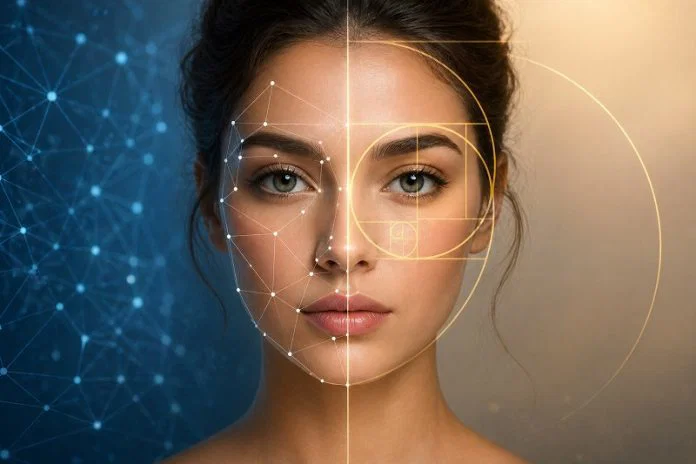
For decades, some have argued that beauty can be explained by the Golden Ratio—a mathematical pattern found in nature and art. This ratio has often been used to suggest that certain facial proportions are inherently more appealing. The study tested whether this concept holds up when analyzed with the latest AI technology.
The scientists employed computer vision and statistical analysis to scrutinize a large collection of facial images. They compared faces that aligned with the Golden Ratio to those that did not, applying methods like regression analysis and clustering to identify patterns in how AI judges attractiveness.
The findings were conclusive: instead of unveiling a universal beauty standard, the data revealed that differences among demographic groups played a significant role. The AI’s assessments were heavily influenced by the characteristics of the faces it was trained on, rather than any mathematical ideal.
In essence, what the AI considered “beautiful” was shaped by the makeup of the training data. If certain groups were overrepresented or underrepresented, it skewed the AI’s outcomes, reflecting those biases.
This suggests that popular ideas about beauty might not be as objective as they appear but are instead influenced by cultural and social factors. It highlights a key limitation of artificial intelligence: despite perceptions of neutrality, AI systems learn from human-generated data, which can embed biases. If the training data is skewed, the AI can perpetuate or even amplify those biases.
As AI technologies become more integrated into daily life—through tools like social media filters, facial recognition, and image analysis—there’s a risk of reinforcing narrow or unfair beauty standards, impacting how people see themselves and others.
The study also emphasizes the complexity of beauty as a deeply personal and cultural experience. While mathematical patterns describe certain aspects of the natural world, individual perceptions are shaped by background, culture, and personal taste. What one person finds beautiful could be entirely different from another’s view.
Ultimately, the research suggests that beauty cannot be boiled down to a single formula or a set of numbers. Instead of relying solely on AI for judgments of attractiveness, it’s important to appreciate the rich diversity of human perspectives and the cultural factors that influence our sense of beauty.
 ChatGPT
 Perplexity
 Gemini AI
 Grok AI