
Select Language:
For millions of Americans, migraines aren’t just bad headaches. They can be intense, disabling episodes that disrupt daily routines and leave individuals unable to function for hours or even days.
Before the pain starts, many migraine sufferers experience heightened sensitivity to light and sound, nausea, or unusual visual disturbances.
Recent research from Stanford Medicine suggests migraines may actually come in at least two biologically different forms, based on a comprehensive brain imaging study published in Cephalalgia.
This breakthrough could help doctors move beyond the current trial-and-error approach used to treat migraines.
Migraine affects more than 10% of the U.S. population and ranks as a leading cause of disability worldwide. Yet, experts still lack a complete understanding of why migraines differ so much from one person to another.
While some patients experience infrequent attacks, others endure frequent, incapacitating episodes. Response to medication varies, with some finding relief and others seeing little benefit despite multiple treatments.
Diagnosing migraines primarily depends on symptoms reported by patients. Currently, they are classified as either episodic or chronic based mainly on the number of headache days per month. Over 15 days of headaches monthly classify a person as having chronic migraines, who often are prescribed preventive medications to reduce attack frequency.
However, many researchers question whether this frequency-based classification truly captures the biological diversity of migraines.
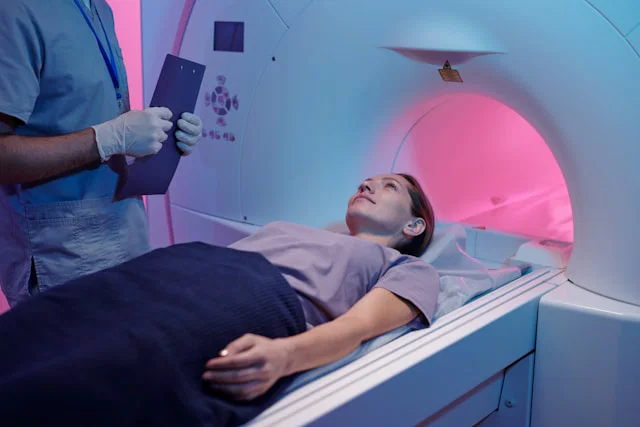
To explore this, Stanford scientists conducted the largest functional MRI (fMRI) migraine study to date, including 111 migraine patients and 51 healthy volunteers without migraines. Detailed data were collected on symptoms, age, medical history, and disability levels.
Participants underwent two types of brain scans: one to examine brain structure and another, called functional MRI, to analyze activity patterns and communication between brain regions.
Instead of starting with preconceived ideas, researchers used computer algorithms to identify natural groupings in the imaging data, revealing two distinct migraine subtypes.
One group exhibited brain activity patterns more similar to healthy individuals, typically experiencing milder migraines. The other showed significant alterations in how different brain areas communicate, especially those involved in sensory processing and pain perception.
It’s believed that these patients may process sensory information differently—overreacting to light, sound, movement, or odors. Normally, pain signals serve as warnings to protect us, but in severe migraine sufferers, the brain may overrespond to normal sensory stimuli.
This heightened sensitivity could explain why migraines often feel overwhelming and disabling even without clear external triggers.
The second group also tended to be older, endured longer-lasting migraines, and experienced more severe disability related to their condition. Interestingly, both groups had similar migraine frequency, suggesting that the biological differences are not solely related to how often migraines occur.
Dr. Robert Cowan, senior author of the study and a headache specialist, noted that current treatments are often guided by guesswork because no reliable biological markers are available. This leads to years of trial-and-error in identifying effective medications.
A more precise classification system based on biological subtypes could revolutionize personalized treatment approaches, allowing doctors to tailor therapies based on a patient’s specific brain activity patterns.
For instance, some who have episodic migraines but belong to the more severe biological subtype might benefit from preventive meds sooner, even if their headache days are relatively few. This is especially significant given that insurance coverage for preventative treatments often depends on a diagnosis of chronic migraine.
Researchers are now working to find blood markers and clinical profiles linked to the brain imaging subtypes, aiming to develop simpler, less expensive ways to categorize patients without relying on costly MRI scans.
While functional MRI isn’t feasible for routine diagnosis, these findings could mark a pivotal change in migraine research. Historically viewed as a single disorder with varying severity, migraines may instead comprise different biological pathways affecting the brain uniquely.
If validated in future studies, this insight could lead to targeted therapies and improved predictions about which patients are at risk of developing severe, disabling migraines.
Further research might also reveal whether certain biological subtypes respond better to specific medications, paving the way for truly personalized migraine care.
This study challenges traditional classifications, proposing that a focus on underlying biological markers could enhance understanding and management of migraines. Instead of primarily considering how often headaches occur, clinicians may eventually use biologically-based criteria to understand each patient’s unique condition.
However, researchers emphasize that further work is necessary before these findings translate into everyday clinical practice. Larger studies are needed to confirm the brain imaging patterns and determine their usefulness in guiding treatment decisions.
If you’re interested in pain management research, consider reading about studies linking vitamin K deficiency to a higher risk of hip fractures in older adults, or research showing that vitamin supplements might help reduce bone fractures.
For more wellness updates, check out recent research indicating that krill oil could boost muscle health in seniors, or that consuming yogurt is associated with decreased frailty among the elderly.
This research was published in Cephalalgia, with information provided by Stanford Medicine.
 ChatGPT
 Perplexity
 Gemini AI
 Grok AI