

Select Language:
Scientists have discovered a new way to produce ultra-thin materials like graphene using simple vibrations at room temperature. This approach could greatly speed up production, reduce costs, and lessen environmental impact, paving the way for broader applications in electronics, energy systems, and cutting-edge technologies.
Led by Jason Stafford at the University of Birmingham, the research, published in Small, aims to improve the manufacturing process for two-dimensional (2D) materials—extremely thin sheets made from just a few layers of atoms. These materials, such as graphene, are valued for their unique properties that are not found in traditional materials. They are highly conductive, incredibly strong, and ideal for next-generation devices including flexible electronics, sensors, and energy storage solutions. Other notable 2D materials include hexagonal boron nitride, which acts as an insulator, and molybdenum disulfide and tungsten disulfide, which are used in advanced optical and electronic applications.
Although scientists have known how to create these materials in labs for years, scaling up production for industrial use has remained a major challenge. Conventional techniques often involve intense mechanical forces, lengthy processing times, and large quantities of chemical solvents—methods that are slow, expensive, environmentally damaging, and can compromise material quality by causing defects or contamination.
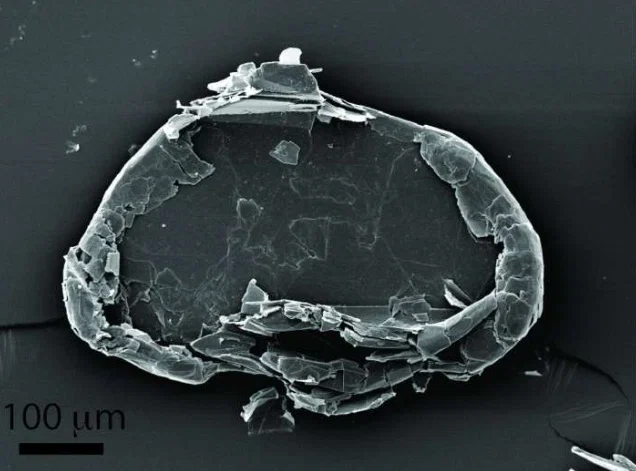
This innovative method shifts away from harsh mechanical or chemical processes. Instead, researchers apply high-frequency vibrations to gently separate layers from bulk materials within a liquid environment. The process takes place at room temperature, using water and a natural compound called tannic acid, which is affordable and eco-friendly. When vibrated in this medium, particles bend and fold at their edges, eventually splitting into thinner layers and peeling off into nanosheets only a few atoms thick. Remarkably, visible changes occur within minutes.
Using advanced imaging techniques and computer models, the team confirmed the mechanism behind this process. They observed that vibration enhances the yield, producing larger quantities of material at higher concentrations compared to traditional methods. Importantly, the quality of the nanosheets remains high, free from defects commonly introduced by more aggressive procedures.
This breakthrough addresses one of the biggest hurdles in the field: producing graphene and similar materials on a scale large enough for real-world applications. Existing production methods are costly and inconsistent, limiting industrial uptake. The new vibration-based approach offers a faster, cleaner, and more scalable alternative, enabling easier integration of 2D materials into products like electronics, advanced coatings, and catalysts.
The research team plans to collaborate with industry partners to further refine and scale up the technology. If successful, this simple vibration method could be crucial in transitioning advanced materials from the lab to everyday devices, shaping the future of technology and manufacturing.
 ChatGPT
 Perplexity
 Gemini AI
 Grok AI

