
Select Language:
When you first enter the main hub area of Mouse: P.I. For Hire, which is your office, you’ll unlock several features. This includes a shop where you can buy ammo and missing collectibles, a weapons upgrade workshop, and a bar where you can relax and play Baseball Cards.
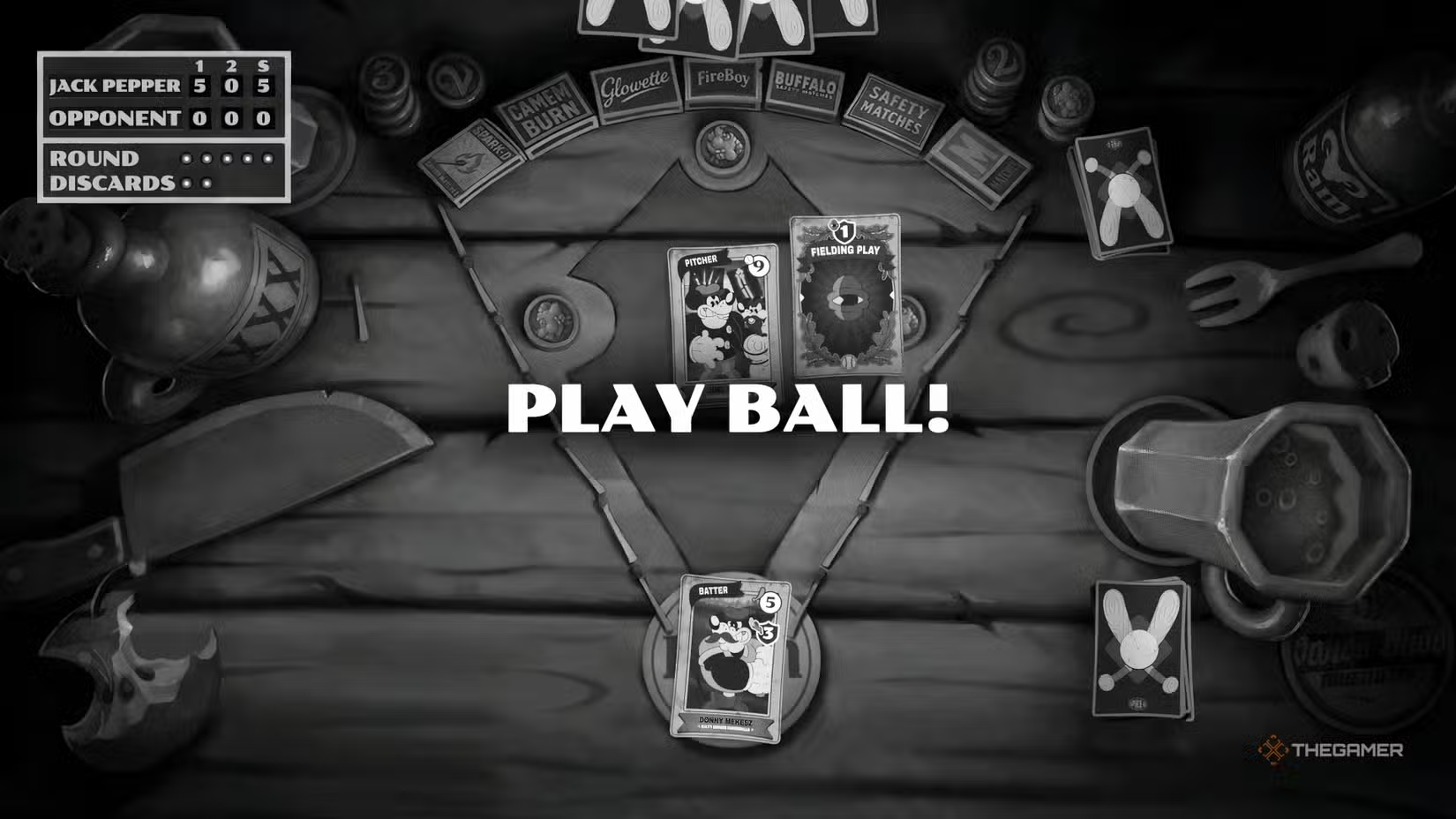
Baseball Cards is just what it sounds like. It’s baseball, but instead of a ball, bat, and mitt, you play with a deck of playing cards. The game plays similarly to traditional baseball—the goal as a batter is to hit home runs, while as a pitcher, your aim is to throw the ball and prevent the batter from scoring. It’s tougher than it sounds.
How to Play Baseball Cards
If you’ve tried playing before, you know it seems simple but can be quite challenging. The same mouse is always your opponent, with a deck that’s heavily upgraded, making it hard to beat until you get some new cards. Your objectives can change during the game, so it’s important to understand what you need to do at each stage.
Note: You do not earn Tokens for a tie; Tokens are only awarded when you win a match.
You always start as the batter. You’ll play five rounds batting, then switch to pitch for five more rounds. The total is ten rounds. During batting, your goal is to hit home runs; during pitching, you try to stop the opponent from scoring.
Unlike real baseball, there are only two innings—one batting and one pitching. The game ends after those two innings. Striking out doesn’t affect your score apart from the points you earn during batting. You will always play all ten rounds, five as batter and five as pitcher.
This order matters because it lets you see how many points your opponent can score before your turn ends. For example, if you score 5 points during your turn, and your opponent can only score 4, you win. If you score just 1 point, you need to prevent them from scoring any points to win.
How to Get More Cards
To build a strong deck before spending money, complete missions and find collectibles. Typically, each mission has two or three collectibles, which you add to your deck when found. If you miss them, you can buy these collectibles afterwards from the shop in town, but you’ll have to pay for them.
The shop also sells booster cards for your batter and pitcher, but they’re expensive and not necessary. It’s better to save your money for collectibles. The cards you get from missions usually have enough high stats to be effective, so extra booster cards aren’t essential.
How to Score Home Runs
When you’re batting, your main goal is to hit home runs. This means hitting the pitch and making your players (cards) travel around the bases back to home plate. Once a player crosses all three bases and reaches home, you earn a point.
Any players left on the field at the end of your five rounds are discarded once a new inning begins—they won’t earn any points.
Your success depends on both the card you play and what your opponent plays. Since you can’t see their cards until both are chosen, you need to pick your best option. There are three card types to pay attention to:
| Card Type | Explanation |
|---|---|
| Batters | These are your players when batting. They display two numbers. The top is for Power Swing, the bottom for Speed Boost. Power Swing decides if you hit the ball; Speed Boost determines how far they run. |
| Power Swing | An extra point added to the batter’s Power Swing number. You can play one per turn, but not both Power Swing and Speed Boost cards on the same turn. |
| Speed Boost | Adds extra points to the batter’s Speed Boost number. Like Power Swing, only one boost card can be played per turn. |
| Pitchers | These are your players when pitching. They have two numbers: Pitch Focus and Fielding Play, which influence whether you strike the batter out and how your fielding affects hits. |
| Pitch Focus | Adds points to your pitcher’s Pitch Focus. Only one per round, cannot combine with Fielding Play. |
| Fielding Play | Adds points to your pitcher’s Fielding Play. Only one per round, cannot combine with Pitch Focus. |
Each round, you can play one batter card and optionally boost either Power Swing or Speed Boost. If you believe your batter’s stats are already high enough, you might skip boosts, but boosting is recommended because your opponent tends to have strong pitching stats, and you’ll draw more cards each turn.
For hitting, your batter’s Power Swing needs to be higher than the opponent’s Pitch Focus. If it’s exactly equal, a coin toss determines the outcome. If your Power Swing exceeds their Pitch Focus by three points or more, you score an automatic home run. Achieving those high numbers boosts your chances of scoring.
If your Power Swing isn’t higher, you’ll strike out, and all your cards will be discarded for that round. A successful hit moves your batter the number of bases on the bottom, plus any Speed Boost. The pitcher can reduce this movement by subtracting their Fielding Play from your batter’s speed, and this applies to any runners already on bases. High Fielding Play can even prevent your batter from advancing or cause them to stay on base.
To maximize home run chances, prioritize high Power Swing for your players. Speed is secondary—most low-speed batters tend to have high Power Swing stats, and vice versa. Boosting your high Power Swing batter’s Speed can help them reach the bases faster.
How to Stop the Batter from Scoring
Defensively, your goal is to prevent the opponent from scoring. Just like batting, your pitcher has three card options: the main pitcher card and two optional boost cards. Focus on playing a pitcher with the highest Pitch Focus possible. If the Pitch Focus is over 8, enhancing your Fielding Play will also be important, especially if there are runners on base.
Even if the opponent doesn’t hit, any runners on bases will still attempt to steal bases based on their Speed minus the Fielding Play. It’s crucial to assign some Fielding Play value to slow their advance.
If they hit a home run, everyone on the field scores, regardless of speed, so don’t assign a low Pitch Focus to your pitcher without boosts. Having a Pitch Focus below six is risky unless you boost it.
Once you get the hang of it, stopping your opponent is generally easier than scoring points yourself. Pay attention, play your best cards, and even scoring two or three points during your turn can give you an advantage.
Inside the Prize D-Spenser
Besides the satisfaction of winning, the game offers a reward for winning Baseball Cards matches. This requires winning 20 matches—more than just one—since you need 30 wins to unlock the associated achievement. Once you do, you’ll receive 20 Tokens to use on the Prize D-spenser located at the bar corner.
Inserting tokens will unlock the X1 D-Mousifier, a powerful ray gun, which is a great addition to your weapons collection. This also unlocks the achievement called “Everyone Loves Raygun.”
 ChatGPT
 Perplexity
 Gemini AI
 Grok AI