Select Language:
A lot of new lore for Magic: The Gathering was revealed during MagicCon Vegas, focusing on the upcoming Reality Fracture set. One new universe introduced is the Echoverse, a creation of Jace Beleren that feels somewhat self-indulgent. Within this universe lies Hexhaven, a mirror image of the beloved Strixhaven College, which we recently explored in Secrets of Strixhaven.
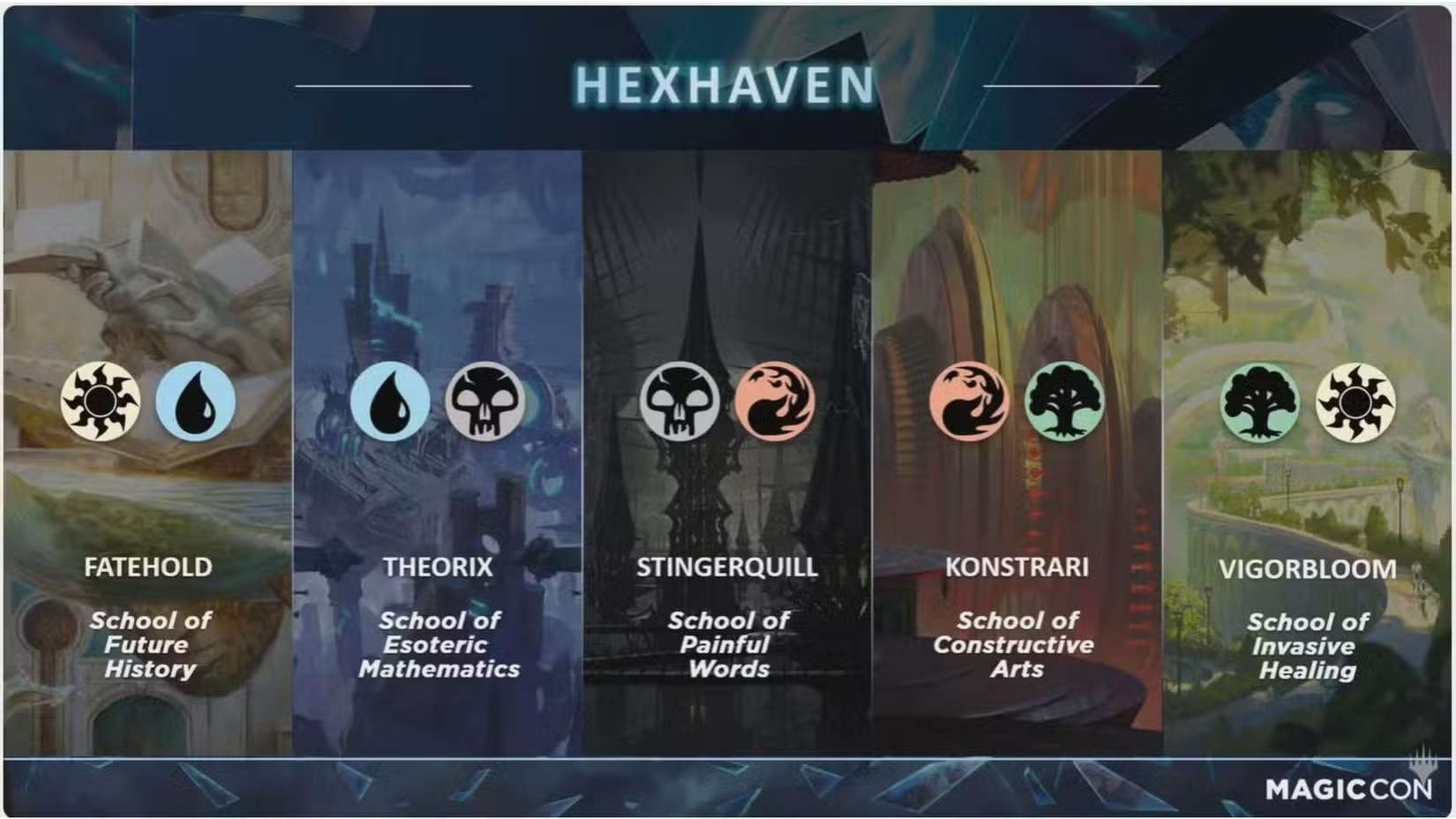
Hexhaven is a school with five colleges, each mirroring one of Strixhaven’s original colleges. Here’s an overview of each one, including their names, mana identity, and what they represent.
Theorix
School of Esoteric Mathematics
Theorix is the mirror image of Quandrix, but instead of being green and blue, it is blue and black. The description of this college is a little vague, but since it shares a focus on esoteric mathematics with Quandrix, we can expect similar themes. The main difference is the color shift from green to black, which likely means more spells that target creatures’ power and toughness rather than adding counters to them.
Each of the Hexhaven colleges keeps one part of Strixhaven’s color identity but flips the other into a contrasting color. Outside of Hexhaven and Strixhaven, black and blue usually represent the Dimir guild, which often focuses on milling and surveil mechanics. Whether new mechanics will be introduced to help Theorix establish its own identity remains to be seen, especially if colleges become a significant part of the set.
Stingerquill
School of Painful Words
Stingerquill is the red and black counterpart of Silverquill, which is typically black and white. Where Silverquill emphasizes using words to avoid trouble, Stingerquill might lean toward taunting opponents—forcing them to attack or send creatures into battles they wouldn’t normally choose.
Mark Rosewater has hinted that Reality Fracture won’t develop the colleges with as much depth as Strixhaven did, so these might be more straightforward archetypes. Rakdos decks, for example, tend to focus heavily on sacrificing creatures and self-damage to boost attacks and spells, but those themes might not fit perfectly with a Silverquill mirror like Stingerquill.
Konstrari
School of Constructive Arts
Konstrari is the red and green mirror of Prismari, swapping out blue for green. This college is expected to focus heavily on spell-slinging, with a likely emphasis on artifacts. The name “Konstrari” hints at construction, perhaps involving vehicles or other construct-themed mechanics, especially since the Gruul identity often revolves around building and crew-based strategies.
Images suggest a vibrant, vehicle-heavy theme, with plenty of art and construction motifs. It’s expected that spells and artifacts will play a major role in Konstrari’s identity.
Vigorbloom
School of Invasive Healing
Vigorbloom is the inverse of Witherbloom, adopting a green and white color identity instead of black and green. The name “Invasive Healing” suggests an interesting combination—perhaps involving lifelink, creature combat, and healing strategies that can be perceived as invasive.
Green often focuses on beefing up large creatures, while white can emphasize lifelink and damage prevention. Combining these themes could lead to a deck that uses aggressive creature combat to gain life, providing a counterbalance to Witherbloom’s sacrificial and decay theme.
Fatehold
School of Future History
Fatehold is the white and blue counterpart of Lorehold, which uses red and white. The term “Future History” hints at mechanics like scry and foretell—playing into themes of future planning and manipulating the top of your deck.
We haven’t seen foretell mechanics since Kaldheim, but it’s a sound mechanic that allows players to set aside spells for later turns. The combination of scry and foretell suggests that Fatehold might focus on planning and anticipation, allowing players to prepare spells in advance and manipulate their decks to gain an advantage.
Each college in Hexhaven offers a fresh twist on familiar themes, with color substitutions and new mechanics likely to make for exciting gameplay and storytelling.
 ChatGPT
 Perplexity
 Gemini AI
 Grok AI