Select Language:
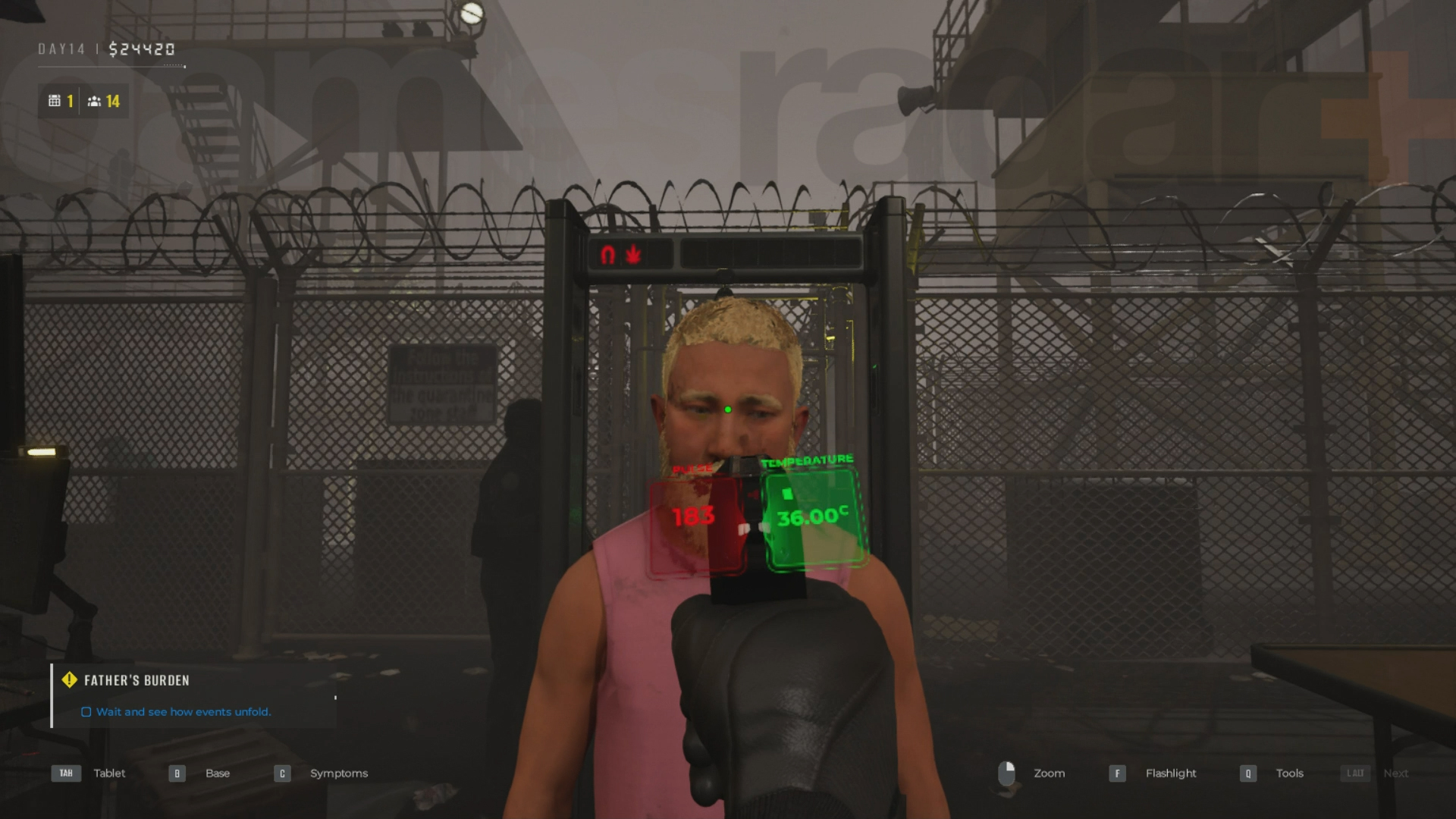
Knowing the symptoms to watch for in Quarantine Zone is essential to keeping your camp safe. Only let survivors into your area if you are reasonably sure they are not infected with the deadly virus. Identifying these symptoms can be tricky since new signs appear as the days go by, and you need fresh tools to detect disease mutations. To stay ahead, here’s a list of all symptoms you might encounter in Quarantine Zone and how to identify them out with the Laboratory.
Have you uncovered who the mysterious skeleton guy in Quarantine Zone is, or found all the “Ask Your Mom” poems hidden around the camp?
Symptoms to Watch Out For in Quarantine Zone
The list of symptoms will grow as you progress and unlock new equipment. Some signs you’ll need to research in the Laboratory by sending a survivor exhibiting those symptoms. Here’s a full rundown to help you keep track:
Appearance – Face (Visual Clues)
- Yellow Eyes (Safe): White of the eyes is yellow; the Matioscope shows internal eye is yellow.
- Conjunctivitis (Quarantine): Red edges around the eyes; no internal changes in the Matioscope.
- Red Eyes (Infected): Bright red whites; inner eye appears red under the Matioscope.
Appearance – Eyes (Advanced Scanning)
- Yellow Eyes (Safe): Same as above.
- Conjunctivitis: Red edges with no internal changes.
- Red Eyes: Bright red whites with internal redness.
Appearance – Skin Color (Visual, later confirmed Using Scanner)
- Bruises (Safe): Green, blue, or yellow patches on skin.
- Freckles (Safe): Small spots on cheeks and nose.
- Herpes (Safe): Dark red or brown patches without spots (unlocked through Lab).
- Red Bruise (Quarantine): Deep red patches.
- Skin Cuts (Quarantine): Scratches with a little redness.
- Skin Rash (Quarantine): Red area covered with spots (unlocked through Lab).
- Bite Mark (Infected): Dark red teeth marks.
- Necrosis (Infected): Black patches of dead tissue.
Body Temperature – Thermopulsometer
- Normal: No change.
- Fever: Elevated readings indicating infection.
Using Medical Tools
-
Stethoscope:
- Normal (Safe): Weak limb response. When hit, limb does not react.
- Quarantine: The survivor strikes back when hit.
- Infected: Opposite limb reacts to being struck.
-
Objects to Find or Use:
- Baggage (Safe): Survivor carries a bag.
- Weapon (Safe): Confiscated or found weapon.
- Contraband (Safe): Hidden internal contraband detected by X-Ray.
- Contaminated Baggage (Infected): Zombie parts found, send to Liquidation.
-
Hammer:
- Normal: Limb barely moves when hit.
- Quarantine: Survivor fights back.
- Infected: Opposite limb moves in response.
-
Matioscope (Advanced Scan)
- Safe: Body has adenoviral or ocular parasites.
- Quarantine: Indicators like chromatic bacteria or phage structures.
- Infected: Signs include necrosis or abnormal eye/infection markers.
-
X-Ray:
- Safe: Organ shows signs like fatty Hepatosis or internal bleeding.
- Quarantine: Purple or pink discolorations.
- Infected: Necrotic organs with black patches.
-
UV Light:
- Safe: Glow around survivor, possibly with buzzing flies.
- Infected: Green glowing spots on backpacks or bite sites.
How to Identify New Symptoms Using the Laboratory
If a survivor shows signs you haven’t identified yet, send them to the Laboratory for further study. Approach the computer inside and use the laser to burn away excess organs, revealing the one you need to analyze. Only destroy organs marked in orange, not red—destroying a red-marked organ risks failing the procedure. If you target the green-organ, hold E to extract it before time runs out to gain extra points. Afterward, collect a blood sample and analyze it; if a new symptom was present, it will add to your list for future identification.
 ChatGPT
 Perplexity
 Gemini AI
 Grok AI