Select Language:
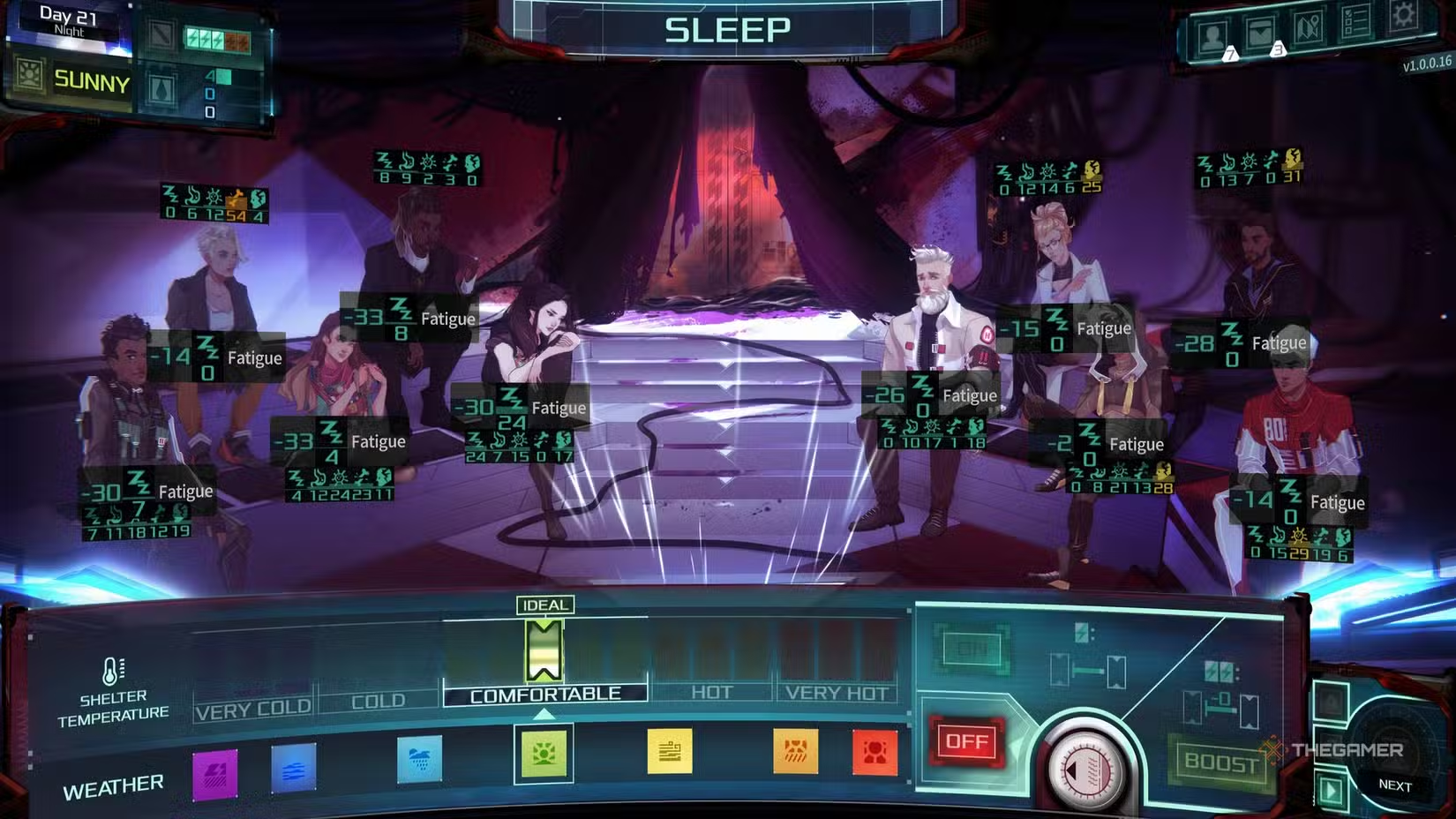
In Dead in Antares, your main responsibility will involve monitoring the condition of your crew members. Each crew member has five different survival stats to keep an eye on, and these stats change based on various factors, either decreasing or being replenished.
Each stat has four levels. As a stat worsens, the crew member’s skills decrease by a certain percentage. The top level, if not addressed, will reduce skills by up to 20%, and if a stat hits 100, that crew member will die.
Fatigue
Fatigue is the most common stat to fluctuate for every crew member. Every task—whether operating a station or going on a trip—wears them out. Usually, fatigue improves somewhat each night, but overworking crew members can cause serious issues. When a crew member gets too tired, their skills suffer, with the impact increasing the more exhausted they become.
You can reduce fatigue by letting crew members rest at night. If a crew member is highly fatigued, it’s best not to use them during the day. Keeping them inside the shelter allows them to rest naturally during each phase.
You can craft healing resources at the Forge to help lower fatigue as well, but you’ll need the right materials for this.
Hunger
Hunger is another stat that steadily decreases each day, regardless of activities. Every night, crew members experience an increase in hunger, generally around 20 units, which you can offset by feeding them with the supplies you have. Crew members who work during the day may get hungrier, too, apart from the nightly increases. If you can’t feed your crew, hunger remains the same the next day, but this can affect their sleep and stress levels.
Hunger also impacts skills—specifically, it penalizes Scientific Skills. To fix hunger, you’ll need to build food-producing stations like Gathering, Hunting, or Fishing Camps. Without the Pro Cooker station, food might cause sickness, and if your shelter isn’t upgraded with a freezer, uneaten food can spoil.
Sickness
Sickness is less common but can appear after eating raw food or contracting a disease. It generally only becomes serious if ignored, and treating it isn’t always straightforward. It reduces survival skills, with the level of penalty proportional to how sick the crew member is.
Treat sickness mainly by crafting healing supplies at the Forge early on, or by using the Infirmary once it’s built. The Infirmary is the best place to treat sickness; William, with his Dedicated Doctor trait, can also treat other injuries and reduce fatigue and stress for both himself and others. When using the infirmary, make sure to have the necessary supplies and set it to focus on either Injury or Sickness based on the need.
Injury
Injury is less frequent than Fatigue or Hunger but more common than Sickness. Injuries often happen while working at stations or in combat situations. Damage sustained in fights is transferred to the injury meter afterward. Serious injuries can be harmful, so avoid sending injured crew members on expeditions.
Injuries reduce physical skills, with the severity tethered to how hurt the crew member is. You can treat injuries with healing items crafted at the Forge or the Infirmary, but resources are limited. William’s presence in treatment can also help, as his trait speeds up recovery and reduces fatigue and stress.
Stress
Stress builds up quite easily and can be one of the hardest stats to lower. It increases from working at stations, bad weather, expeditions, or certain conversations. Crew members can also become stressed just from game events or dialogue. Since stress affects mental skills, managing it is crucial.
You can’t prevent stress entirely, but you can be mindful of activities that worsen it. Most importantly, using the Recreation Area regularly helps significantly reduce stress. This station allows crew members to relax, chat, and relieve tension. The effectiveness depends on their communication skill, so pairing crew members with good communication is better. The Recreation Area also helps cure some ailments affecting the crew.
 ChatGPT
 Perplexity
 Gemini AI
 Grok AI