
Select Language:
The Magic: The Gathering crossover with Final Fantasy introduced a variety of characters, including the infamous Kefka, the main villain of Final Fantasy 6. Kefka is renowned as one of the most iconic antagonists in the franchise. Like many beloved characters, he boasts numerous cards and unique artworks.
One of the main Kefka cards available is Kefka, Court Mage. As a Grixis (blue/black/red) character, Kefka specializes in forcing opponents to discard cards while enabling you to draw multiple cards, keeping your hand stocked while depleting your foes’. His gameplay is highly controlling, preventing opponents from executing their strategies.
Decklist
|
Commander: Kefka, Court Mage // Kefka, Ruler of Ruin |
|||||
|---|---|---|---|---|---|
|
Liliana of the Veil ADVERTISEMENT |
Archfiend of Ifnir |
Archon of Cruelty |
Baleful Strix |
Sheoldred, Whispering One |
Bone Miser |
|
Dauthi Voidwalker ADVERTISEMENT |
Displacer Kitten |
Fate Unraveler |
Fell Specter |
Harmonic Prodigy |
Kefka, Dancing Mad |
|
Kroxa, Titan of Death’s Hunger |
Kuja, Genome Sorcerer // Trance Kuja, Fate Defied |
Magus of the Wheel |
Nicol Bolas, the Ravager // Nicol Bolas, the Arisen |
Phyrexian Metamorph |
Psychosis Crawler |
|
Rankle, Master of Pranks |
Sangromancer |
Scrawling Crawler |
Spark Double |
Tinybones, Bauble Burglar |
Tinybones, Trinket Thief |
|
Y’shtola Rhul |
Afterlife from the Loam |
Blasphemous Act |
Dark Deal |
Irenicus’s Vile Duplication |
Molten Psyche |
|
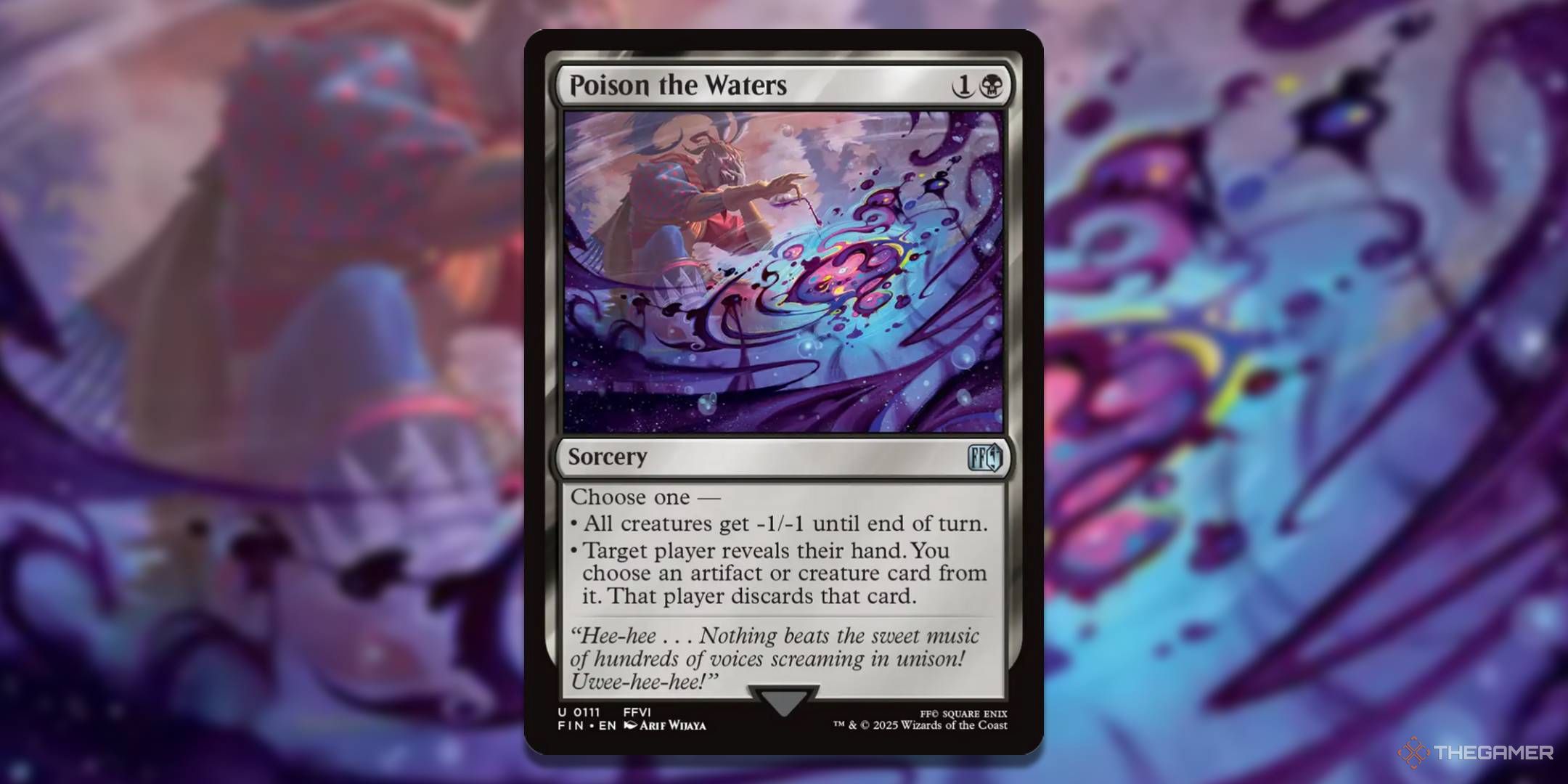
Poison the Waters |
Reanimate |
Rise of the Dark Realms |
Syphon Mind |
Toxic Deluge |
Whispering Madness |
|
Windfall |
An Offer You Can’t Refuse |
Arcane Denial |
Chaos Warp |
Espers to Magicite |
Essence Flux |
|
Laughing Mad |
Saw in Half |
Terminate |
Arcane Signet |
Commander’s Sphere |
Conjurer’s Closet |
|
Fellwar Stone |
Geth’s Grimoire |
Panharmonicon |
Sol Ring |
Talisman of Dominance |
Talisman of Indulgence |
|
Thought Vessel |
Animate Dead |
Bandit’s Talent |
Court of Ambition |
Liliana’s Caress |
Megrim |
|
Oppression |
Painful Quandary |
Raiders’ Wake |
Waste Not |
Command Tower |
Crumbling Necropolis |
|
Dragonskull Summit |
Drowned Catacomb |
Exotic Orchard |
Geier Reach Sanitarium |
Haunted Ridge |
x5 Island |
|
x4 Mountain |
Reliquary Tower |
Riptide Laboratory |
Rogue’s Passage |
Shipwreck Marsh |
Shivan Reef |
|
Smoldering Marsh |
Stormcarved Coast |
Sulfur Falls |
Sulfurous Springs |
Sunken Hollow |
x7 Swamp |
|
Underground River |
|||||
This deck list features one planeswalker, 24 creatures, 12 sorceries, 9 instants, 10 artifacts, 9 enchantments, and 34 lands. Many cards here force your opponents to discard, while also supporting reanimation tactics.
Key Cards
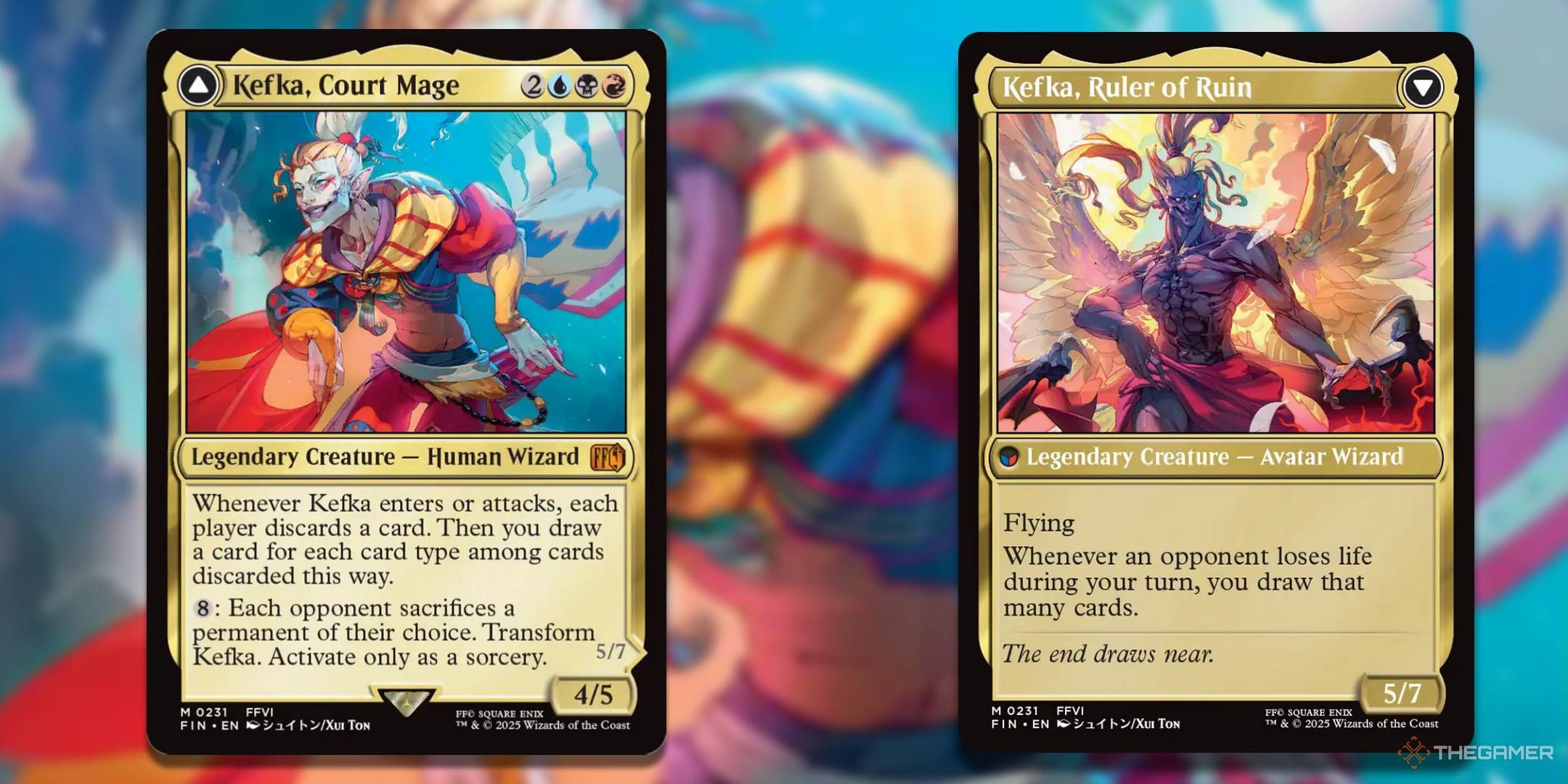
Kefka, Court Mage // Kefka, Ruler of Ruin
Kefka, Court Mage is a prime method for forcing your opponents to discard cards. When they discard, you can draw even more cards than they lost, depending on the types of cards they send to the graveyard. While you also discard, you will always draw at least one card.
For commander damage calculations, it tracks the card itself rather than just the name. Attacks with either side of Kefka count towards the 21 damage needed to eliminate an opponent with commander damage.
By paying eight mana, you can transform Kefka into his other form, Kefka, Ruler of Ruin. This version allows you to continuously refill your hand every time an opponent loses life. Given the frequent forced discards, the ability to draw cards with Ruler of Ruin is invaluable, ensuring you never run out of your best cards.
Y’shtola Rhul

Y’shtola Rhul is a special creature that can blink any creature you control at the beginning of your end step. This ability lets you repeatedly blink Kefka, enabling you to leverage his enter-the-battlefield effect time and again.
Keep in mind that if you blink a transformed card, it will revert to its original form when it returns to the battlefield.
Y’shtola can blink a creature twice, providing an extra end step for additional blinks. However, this benefit only applies to the first end step, preventing you from stacking Triggers.
Oppression
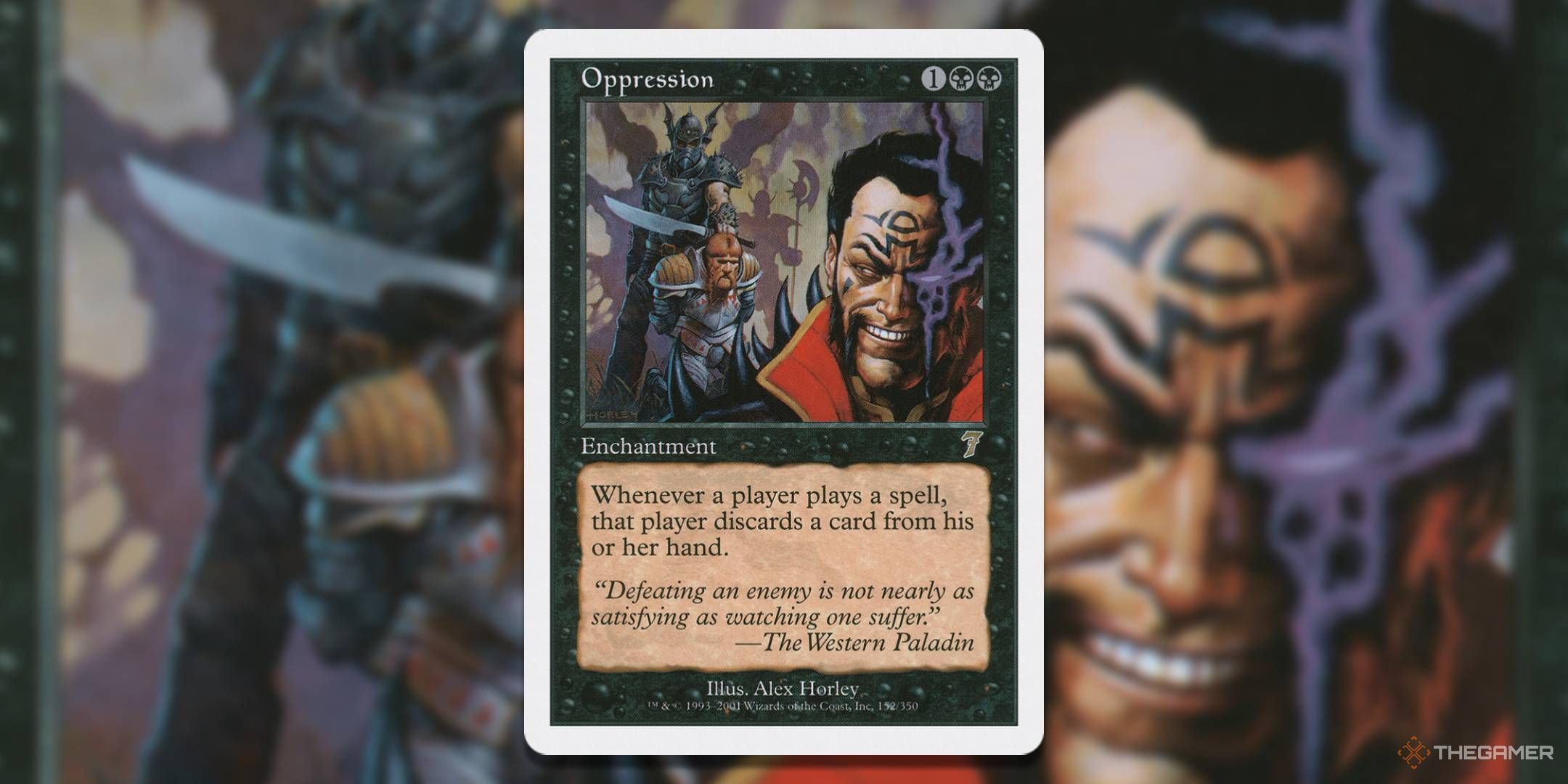
Oppression turns any spell cast into a discard effect. It functions as a pseudo-stax piece, potentially locking opponents out from casting spells if they lack cards in hand. However, it affects all players, so expect to discard as well to play spells. Fortunately, Kefka can help maintain your card advantage.
If a player tries to cast a spell without any cards in hand, they can still do so; Oppression does not counter spells but adds a tax to their casting cost. If a player can’t meet the cost, the spell still resolves. The real power of Oppression lies in its ability to drain hands while your numerous draw effects keep you safe.
Waste Not
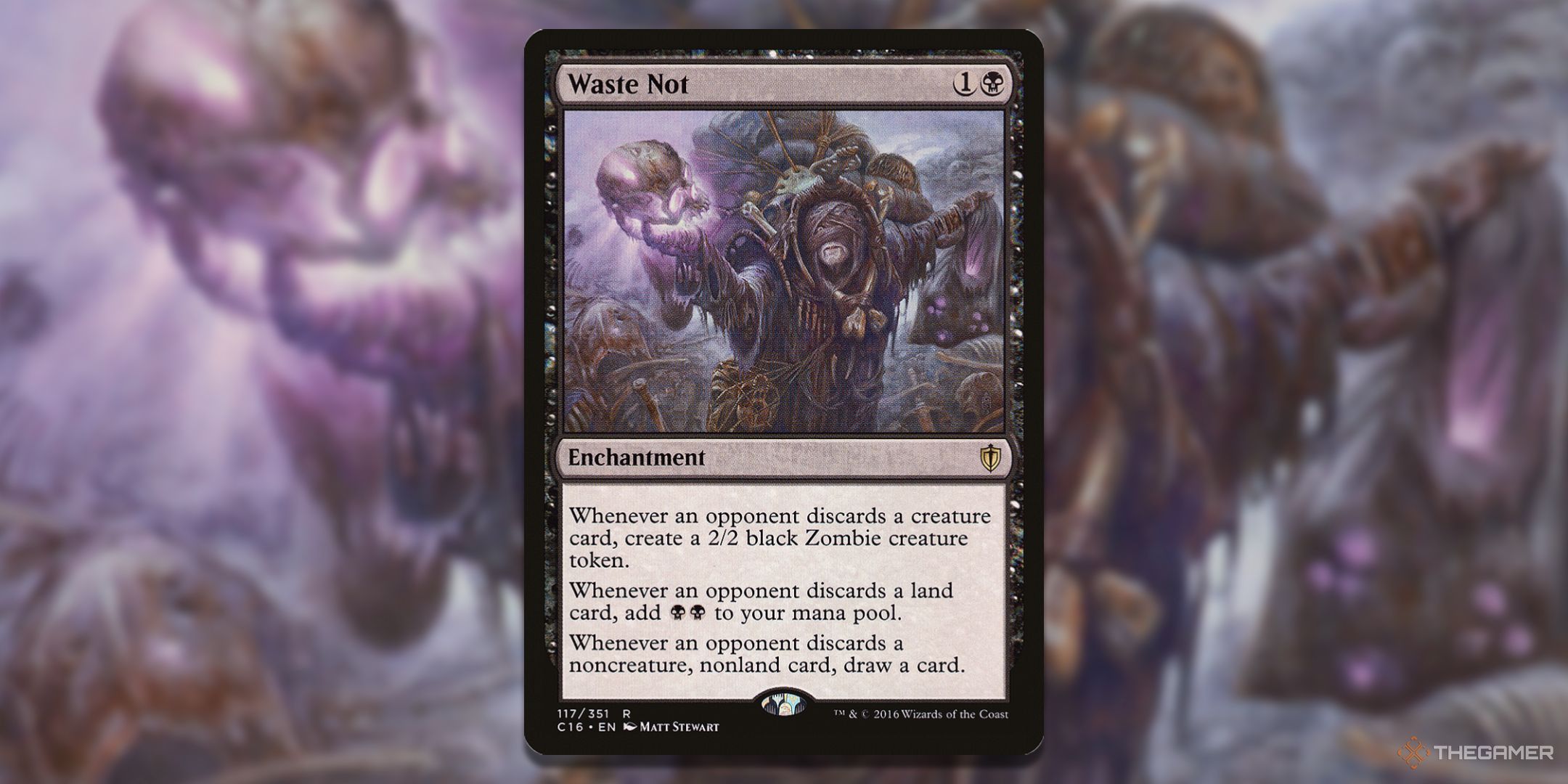
Your opponents will frequently be forced to discard cards, making Waste Not especially powerful in this deck. Depending on what gets discarded, it generates one of three effects: you could create tokens, gain black mana, or draw cards.
Another creature with a similar effect to Waste Not is Bone Miser. If both are on the battlefield, they will trigger independently, effectively doubling your benefits.
Waste Not serves as the greatest asset in your deck. A common pitfall of discard-heavy strategies is running out of steam; Waste Not compensates for this by providing various forms of card and mana advantage.
How to Play the Deck
General Game Plan

Using a Kefka, Court Mage Commander deck involves continually forcing your opponents to discard their hands. Your goal is to remove their options and keep them in a “top-deck mode,” where they can only play the cards they draw each turn.
Since much of the forced discard affects you too, cards like Waste Not, Bone Miser, Bandit’s Talent, and Kefka, Ruler of Ruin are crucial for maintaining a full hand.
The deck emphasizes a control strategy, featuring board wipes and counterspells to deter your opponents from deploying significant threats. The forced discard helps eliminate their best cards, especially when they must discard multiple cards at once.
Because opponents will be frequently discarding, the deck contains a reanimation sub-theme. Cards like Rise of the Dark Realms, Reanimate, and Animate Dead allow you to bring creatures from any graveyard to the battlefield under your control, letting you utilize your opponents’ best cards if they find their way into the graveyard.
Win Conditions and Flaws
The deck’s main strategy focuses on combat victories. Kefka is a formidable card, capable of draining resources while dealing massive damage. You’ll typically want to transform Kefka when you’re ready to start closing out games, as he becomes a more evasive threat in his second form.
The biggest drawback of this strategy is its dependency on Kefka. Forced discard can hurt all players, and if you don’t have Kefka to draw cards and refill your hand, you may run low on resources just like your opponents. Waste Not and Bone Miser can act as backups, but without them, relying on forced discard becomes risky.
 ChatGPT
 Perplexity
 Gemini AI
 Grok AI