
Select Language:
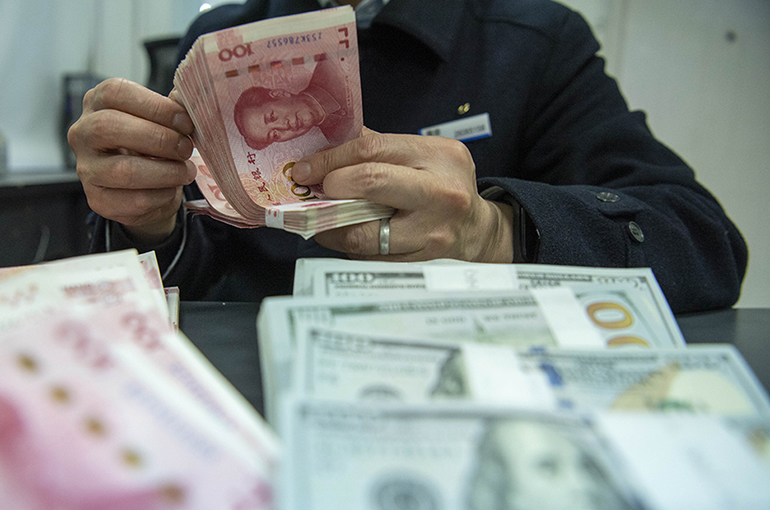
The Chinese yuan has appreciated over 6 percent against the U.S. dollar over the past year, surpassing the 6.82 level this month. Investments denominated in dollars, once considered a safe and reliable option, are now causing many Chinese investors to realize paper losses.
Li Wei, based in Shenzhen, converted 87,000 yuan into $12,000 at the start of last year when the exchange rate was approximately 7.27 yuan to the dollar. Today, with the rate at 6.82, his initial investment is only worth about 82,000 yuan. At that time, the yield on dollar investments was roughly 3.5 percent, compared to around 2 percent on yuan-based products. However, the 1.5 percentage point interest rate gap isn’t enough to compensate for his losses.
Since the Federal Reserve lowered interest rates three times last year, yields on dollar-denominated investments in China have declined. According to financial data platform PY Standard, the average annualized return on local dollar cash management products dropped to 3.6 percent as of March 31, down from above 4 percent a year earlier.
The environment that once allowed investors to earn “easy profits” has drastically shifted, industry analysts say. Federal Reserve rate cuts, declining yields on dollar deposits, and a strengthening yuan have all reshaped the market. Some believe the yuan could appreciate further and advise investors to be more cautious with dollar assets.
Experts attribute the recent yuan appreciation to a combination of domestic and external factors. Guan Tao, the chief economist at BOC International China, highlights the weakening of the U.S. dollar as a key external driver. Since Donald Trump’s return to the presidency, global policy uncertainty has increased, causing the dollar index to fall 9.4 percent—the worst annual decline since 2018.
Meanwhile, improving domestic fundamentals also play a role. The strengthening of the yuan reflects both the dollar’s decline and China’s improving economic data, including strong export growth in the first quarter and a rebound in consumption and investment, explains Wang Qing, chief macroeconomic analyst at Golden Credit Rating International.
Despite ongoing geopolitical tensions in the Middle East and volatility in the foreign exchange markets, the yuan is expected to remain relatively stable, supported by export recovery and supportive domestic policies, Wang added.
Some institutions also observe that the yuan has demonstrated notable resilience amid geopolitical conflicts. China’s dependence on energy imports is relatively low at 27.5 percent, compared to a global average of 55.5 percent, which helps lessen vulnerability during crises in the Middle East, according to a recent report by Shenwan Hongyuan Securities.
Looking ahead, the macroeconomic team at Industrial Securities anticipates that the yuan will continue to appreciate this year, although the sharpest gains may have already occurred. They note that the central bank aims to avoid encouraging expectations of persistent one-way appreciation. Given China’s ongoing growth challenges and the importance of exports for economic expansion, a substantial strengthening of the yuan could potentially hamper export growth.
 ChatGPT
 Perplexity
 Gemini AI
 Grok AI