Select Language:
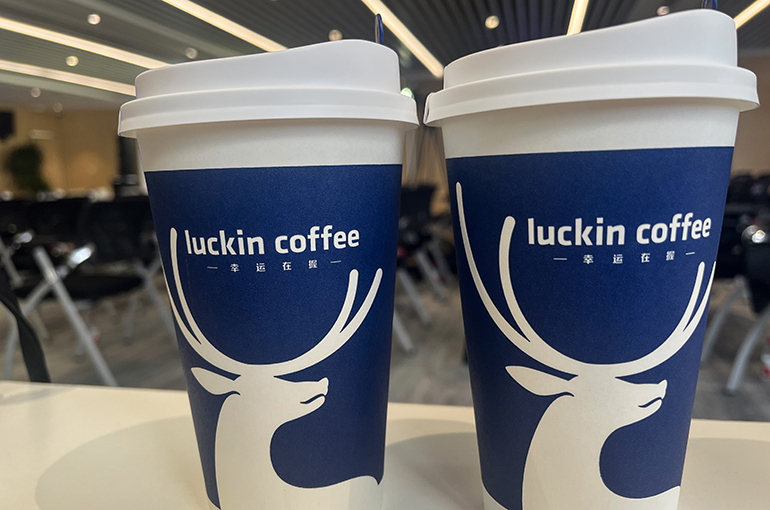
In the first quarter, the Chinese coffee chain reported a decline in net profit despite significant revenue growth fueled by an accelerated store opening strategy and a rise in the number of monthly active customers.
Net profit decreased by 3.6 percent year-over-year to CNY510 million (approximately $74.6 million), according to the company’s recent report. Meanwhile, revenue surged by 35.3 percent to CNY12 billion (around $1.7 billion).
The company’s profitability was impacted by a slight decrease of 0.1 percent in same-store sales, which measures sales at existing locations. This contrasts with a 9.2 percent increase in same-store sales during the same period last year.
The rapid increase in coffee consumption across China last year, driven by fierce competition within the food delivery sector, allowed for swift expansion, and this momentum carried into the first quarter of 2026, stated the CEO during the earnings call. In this context, the variations in same-store sales are considered to be in line with market expectations.
During last year’s second and third quarters, competition among delivery platforms was particularly intense, the CEO noted. As the ongoing price war diminishes, short-term performance metrics may continue to fluctuate.
As of March 31, the company operated 33,596 stores worldwide, reflecting an 8.2 percent increase from the previous quarter. The average number of customers making purchases each month jumped 25.3 percent compared to the previous year, reaching 93.09 million.
The company stepped up its international expansion efforts in the first three months, opening 17 new stores abroad, bringing the total number of global locations to 177.
However, the CEO indicated that the company does not plan to accelerate its international growth. Instead, with the support of a systematic middle-office system, the focus will be on deepening existing overseas markets by enhancing localized operations, boosting individual store performance, and gaining operational insights and user feedback before further scaling.
In addition, the company entered the bottled coffee market amid increasing competition in fresh beverages. On April 28, it launched three bottled coffee products designed for long-term sale. Distribution channels include select convenience stores in Beijing, with prices ranging from CNY7 ($1) to CNY10, positioning these products between offerings from Starbucks and Nestlé.
Furthermore, the company announced its first share repurchase program, planning to buy back up to $300 million worth of shares over the next year.
 ChatGPT
 Perplexity
 Gemini AI
 Grok AI