
Select Language:
The same nations have experienced significant deficits over the past four decades due to fundamental flaws within the international monetary system, according to the governor of China’s central bank.
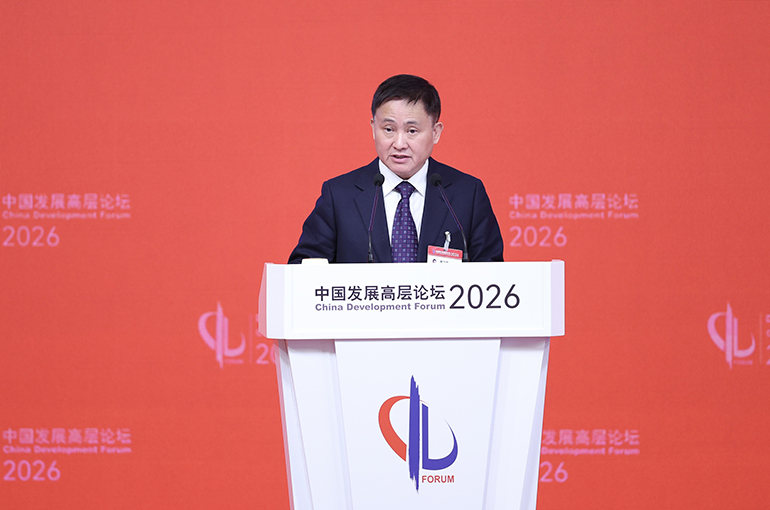
In a monetary system primarily controlled by a single sovereign currency, the issuer of the main reserve currency can sustain long-term fiscal deficits at relatively low borrowing costs, exporting its currency through substantial current account shortfalls, stated Pan Gongsheng yesterday during the China Development Forum.
Persistent capital inflows can further lead to an overvaluation of this key reserve currency, which consequently diminishes the manufacturing competitiveness of the issuing country, Pan explained in a speech entitled “China’s High-Quality Development and Global Economic Rebalancing.”
Since the beginning of this century, the global economy has undergone three major rebalancing cycles. The first occurred from 2001 to 2007 following China’s accession to the World Trade Organization. The second took place from 2008 to 2017 after the global financial crisis, and the third cycle emerged after the COVID-19 pandemic.
China has also experienced significant structural reform. Last year, consumption’s contribution to GDP growth increased to 52%, up from 37% in 2010. Meanwhile, the country’s current account surplus relative to GDP decreased to an average of less than 2% over the last decade from about 10% in 2007.
China’s industrial strength is anchored by four main advantages: an expansive domestic market, a comprehensive industrial and supply chain network, a highly skilled workforce exceeding 72 million workers, and sustained investments in research and development. In fact, China’s R&D spending ranked second globally last year, with research intensity surpassing the average among Organization for Economic Cooperation and Development countries.
In response to external criticisms suggesting that China’s competitive edge relies on unfair government subsidies, Pan encouraged skeptics to visit China more frequently to gain a more accurate and complete understanding of the nation’s industry.
He also emphasized the importance of considering non-economic factors. Last year’s tariffs and trade disputes spurred a rush to export, while broader definitions of national security led to increased export controls. These measures impacted business and household expectations, disrupting the global economic balance.
At a time when trade fragmentation threatens the foundations of free trade, Pan stressed the value of stable, rational, and predictable international cooperation. “We must more decisively oppose all forms of trade protectionism, strengthen and develop the WTO-centered, rule-based multilateral framework, and promote inclusive and equitable economic globalization,” he stated.
 ChatGPT
 Perplexity
 Gemini AI
 Grok AI