
Select Language:
Thailand is intensifying its efforts to draw Chinese investments into green industries and emerging technologies, such as batteries and artificial intelligence, as part of its Eastern Economic Corridor project aimed at moving beyond traditional manufacturing sectors.
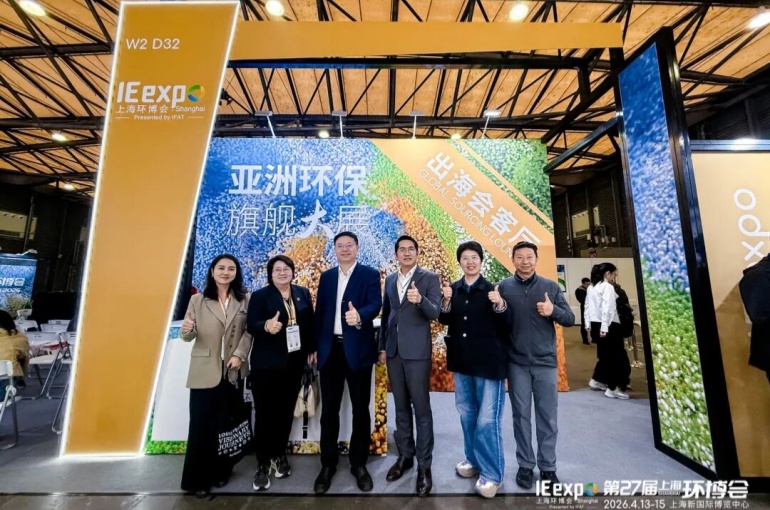
“We are highly impressed with Chinese technology,” said Angsutorn Wasusun, the executive director overseeing the bio-circular-green economy at the EEC Office. He shared these comments at the upcoming IE Expo China in Shanghai. “Many promising technologies could be implemented in Thailand, especially in green investment.”
Launched in 2017, the EEC project encompasses the three eastern provinces of Rayong, Chonburi, and Chachoengsao, with five main goals: promoting modern and eco-friendly economic activities, streamlining government services, building efficient infrastructure and utilities, ensuring appropriate land use, and developing livable and business-friendly cities.
Angsutorn, one of the Thai representatives at the expo, highlighted that Thailand has transitioned from traditional manufacturing to sectors such as electric vehicles, batteries, the circular economy, and AI-enabled infrastructure.
“Chinese investments constitute over 16 percent of total investment in the EEC, indicating that a robust ecosystem from Chinese companies is already established,” he explained. The next stage will depend on whether this ecosystem can evolve into higher-value, greener industries.
Initially, the focus was on supply chain investments, especially in automotive, metal, chemical, and traditional industries. The second wave included printed circuit boards, smart electronics, and data centers. The third wave saw companies like BYD entering the electric vehicle market, while the upcoming phase will revolve around batteries, the circular economy, and AI.
He also mentioned the potential for sodium-ion batteries, which could become a major industry within Thailand.
“There is a clear trend of consumers shifting from internal combustion engines to electric vehicles,” Angsutorn noted. “This year, we’ve observed growth of more than 10 percent.”
Last year, Thailand registered 120,301 battery-powered vehicles — an 80 percent increase compared to 2024. Over the next three to five years, demand for recycling car batteries is expected to rise, supporting the development of the circular economy.
Investors remain cautious and are evaluating opportunities. Some Chinese companies expressed concerns about market demand and the stability of electricity prices. A wastewater treatment equipment manufacturer questioned if market needs justify investment, while a plastics recycling firm raised concerns about the competitiveness of electricity costs.
Angsutorn emphasized that a complete supply chain is crucial for foreign investors. Many look to relocate manufacturing to Thailand and aim to adopt greener solutions to improve energy efficiency and competitiveness.
The Rayong circular economy pilot has recycled over 2,900 tons of plastic and reduced emissions by approximately 3,000 tons of CO₂ equivalent. Local authorities aim for all plastics to be fully recyclable by 2027.
To address energy costs, the Industrial Estate Authority of Thailand has introduced a “Utility Green Tariff,” priced at 4.55 Thai baht (about 14 US cents) per kilowatt-hour, inclusive of renewable energy certificates, helping exporters meet European green standards.
This participation in the expo is part of a broader regional initiative, supported by the China-based Lancang-Mekong Cooperation Special Fund and organized by the Mekong Institute, which was established in 1996 by China, Cambodia, Laos, Myanmar, Thailand, and Vietnam. The goal is to promote green investment and sustainable development within special economic zones across the region. Insights gained from the expo will contribute to a regional Green SEZ Forum and Investment Tour scheduled for October 2026, where targeted Chinese investors will engage directly with Thailand’s industrial estates and infrastructure projects, including U-Tapao Airport and Laem Chabang Port.
The EEC offers select investors up to 15 years of corporate income tax exemptions under the EEC Act, especially for green technology initiatives.
“Our incentives are customized,” Angsutorn said. Qualified investors also benefit from import duty waivers on machinery and raw materials, customs treatment similar to free-trade zones, dedicated visas, work permits, and land ownership rights. The EEC Office can issue permits across 14 laws, streamlining procedures that traditionally delayed factory setup in Thailand.
Additional support is available for projects involving research and development, energy storage, carbon capture, or collaborations with Thai universities. “Investing in innovation, like energy storage and carbon capture, is also supported here.”
“Businesses interested in setting up in Thailand must work with designated organizations,” said Buppa Kawinvasin, deputy governor for sustainability at the Industrial Estate Authority. This is because some areas are designated solely for industrial use, and factory establishment in other zones requires special approvals.
Thailand’s Free Trade Agreement network covers 24 countries, allowing companies like BYD and other Chinese brands operating there to produce for local markets and export globally.
Geopolitical tensions, especially in the Middle East, have increased demand for renewable energy solutions.
The country’s current energy mix relies heavily on fossil fuels, producing only about 15 percent of electricity from renewable sources. However, the upcoming National Energy Plan 2026 aims to increase renewable energy contributions to 50 percent by 2050.
The Industrial Estate Authority is shifting its role from regulator to facilitator to help meet these goals, focusing on assisting exporters, particularly in sectors such as aluminum recycling, to comply with the European Union’s Carbon Border Adjustment Mechanism.
Companies are encouraged to look beyond Thailand’s domestic market and consider the broader Southeast Asian region. Using Thailand as a strategic base can facilitate co-creation initiatives and regional expansion opportunities.
 ChatGPT
 Perplexity
 Gemini AI
 Grok AI