Select Language:
The Asia-Pacific region is likely to feel the impact of energy supply disruptions caused by the ongoing conflict in the Middle East more acutely than Europe, according to an industry expert. The available energy resources in Asia-Pacific are limited, he explained, and while Southeast Asian countries are geographically closer to Europe and the Middle East, they remain relatively distant from the Americas. As a result, these nations are heavily reliant on Middle Eastern energy supplies, and this dependence is unlikely to decrease in the near future.
East Asian countries, including China, Japan, and South Korea, face a similar situation, with their dependency on Middle Eastern crude oil remaining substantial and unlikely to shift soon. Consequently, the geopolitical events in the Middle East are more directly influencing Asia than Europe.
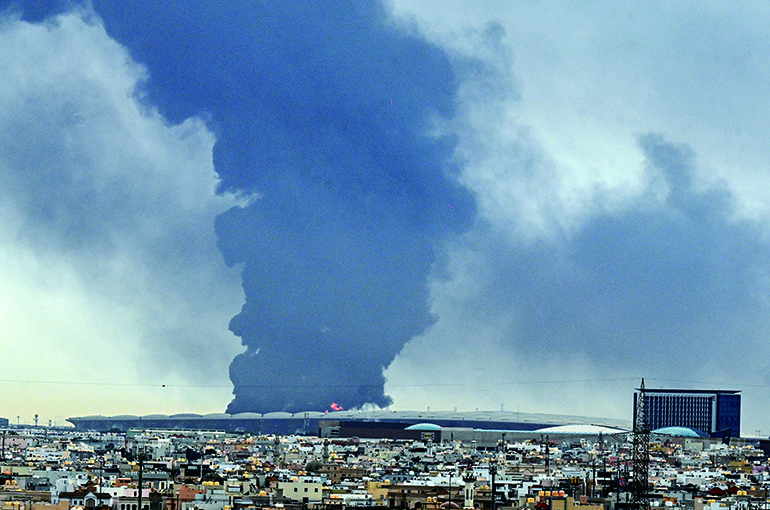
Recently, Iran effectively blocked the Strait of Hormuz after the U.S. and Israel launched airstrikes targeting Iran’s energy infrastructure. With ceasefire negotiations failing, the U.S. announced plans to impose a blockade starting April 13. However, since then, several vessels linked to Iran, along with a Chinese vessel, have still navigated through the strait.
Approximately 10 million barrels of oil pass through the Strait of Hormuz daily, representing about 22% of the world’s seaborne oil trade, according to the expert. Around 60% of Saudi Arabia’s crude exports transit this route, making it a vital artery for global energy supplies.
Europe has already reshaped its energy import strategies following the Russia-Ukraine conflict, and now Asian-Pacific nations face similar pressures to modify their energy sourcing, although options remain limited. Despite the close connection between energy security and the stability of supply chains, most foreign investors appear to remain committed to their long-term plans in the region. Investment cycles often span decades, so many companies have not yet altered their strategic operations in Asia in response to the current conflict, which is seen as a temporary disruption.
To mitigate energy risks stemming from the Middle East, China is advised to accelerate the development of alternative energy sources and increase domestic crude oil production. The Xinjiang Uygur Autonomous Region presents significant potential, having produced 66 million metric tons of crude oil last year—roughly 30% of China’s total—with ample room for growth.
Iran has proposed imposing transit fees on ships passing through the strait, but under international law, waterways like Hormuz are open to free navigation, and coastal states do not have the right to levy such charges. The expert anticipates that this issue will remain a topic of negotiation, with the outcome depending on whether regional stability can be maintained over the long term.
 ChatGPT
 Perplexity
 Gemini AI
 Grok AI