Select Language:
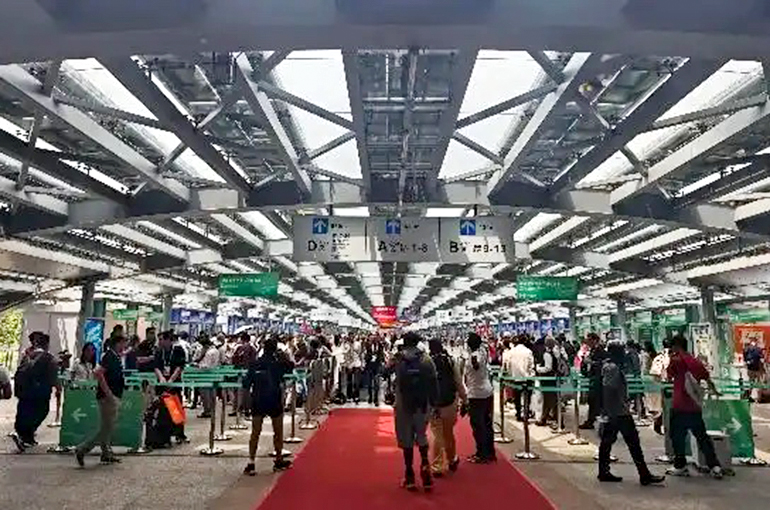
Overseas interest in Chinese green energy products has surged sharply as oil and energy prices spike due to ongoing conflicts in the Middle East, industry insiders report. Batteries are now seen as an essential necessity rather than a luxury, said He Xiaozhu, an international sales engineer at a major Chinese lithium-ion battery manufacturer, during this year’s spring session of the China Import and Export Fair, also known as the Canton Fair.
Demand for lithium and semi-solid-state batteries has skyrocketed since early last month, with companies working extra hours to expedite deliveries becoming commonplace. One company is even arranging shipments to clients in Iraq by rerouting vessels around the Strait of Hormuz due to ongoing shipping route disruptions.
Amid the Middle East crisis, rising oil prices, and supply chain disruptions, international buyers now view green energy equipment as vital not just for energy transition but also for security and resilience. This shift has significantly boosted China’s exports of solar panels, batteries, and electric vehicles.
Recent policy changes, including the elimination of value-added tax rebates on photovoltaic exports starting April 1, along with the planned phase-out of VAT rebates on lithium batteries beginning January 1 next year and increasing construction costs, have led to a sharp rise in export prices for solar and energy storage products. Despite this, demand from overseas markets remains strong.
Zhangzhou Huawei Power Supply Technology reports a 50 to 60 percent increase in orders for home energy storage systems since last month, especially from Europe and the Middle East. Customers are now more attentive to battery lifespan and supply stability amid rising prices, according to Yuan Fukang, the project director.
Prices for PV lighting and energy storage equipment from Shandong Lanjing Yitan New Energy have increased by over 10 percent, but customers have come to expect such hikes and have accepted the higher costs, explained Marketing Director Liu Jing.
Fu Siwen, foreign trade director at a Guangdong-based electronics firm, shared that inquiries for hybrid solar inverters—used as emergency power supplies in disaster recovery efforts—have increased significantly from Middle Eastern countries. Although no deals have been finalized due to logistical issues, demand is expected to grow at least 50 percent.
The widespread deployment of PV systems abroad has also heightened the need for ancillary services. Many exhibitors noted strong interest in solar panel cleaning drones and robotic mowing equipment for site maintenance.
SaData Robotics’ mowing robots, designed to remove weeds beneath solar panels, help reduce labor costs and improve safety by minimizing risks like snake bites or injuries from tools, said Shan Chaoqun, deputy general manager of the company.
 ChatGPT
 Perplexity
 Gemini AI
 Grok AI