Select Language:
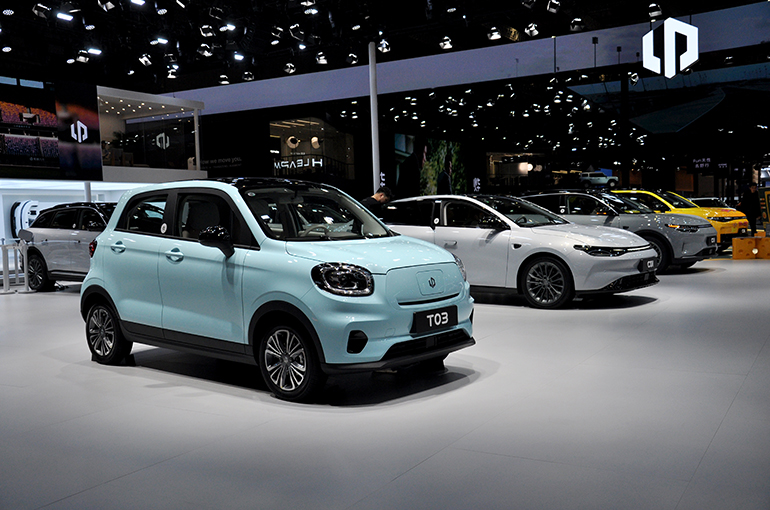
Zhu Jiangming, the founder and chairman of Leapmotor Technology, expressed confidence that the Chinese electric vehicle manufacturer can sell 150,000 units internationally this year, describing this goal as “very achievable.” During a media briefing yesterday, Zhu pointed out that political instability in the Middle East has created challenges in certain overseas markets. However, rising oil prices caused by the ongoing crisis have also increased demand for electric vehicles. The Hangzhou-based high-tech EV brand had previously set an ambitious target of selling one million vehicles by 2026, including between 100,000 and 150,000 units abroad, with a net profit goal of 5 billion Chinese yuan (about 720 million USD).
Last year, Leapmotor sold approximately 596,600 vehicles, with 67,000 of those being exported. The company also reported a net profit of 540 million yuan (roughly 78.1 million USD), becoming the second EV startup in China to turn a profit for the year, after Li Auto. Zhu highlighted that increased sales will generate scale benefits, helping to reduce costs related to research and development, marketing, and administration, thereby supporting the company’s profit ambitions for this year.
Yesterday, Leapmotor launched its new SUV model, the A10, which features parking-to-parking navigation-assisted driving technology. This marks the company’s first entry into the global economy segment with a vehicle priced below 100,000 yuan (around 14,466 USD), making advanced driver assistance systems accessible in affordable models.
Zhu anticipated that competition within China’s NEV market will increasingly focus on vehicle intelligence, particularly advanced driver assistance systems. He emphasized that making these features available in lower-priced models will help accelerate industry adoption.
Additionally, Zhu mentioned that Leapmotor has been investing heavily in intelligent-driving technology since 2024. The company’s autonomous driving team now numbers over 700 employees, supported by nearly 600 training servers, which allows the firm to maintain full in-house development capabilities.
He also cautioned that China’s NEV landscape is crowded with too many brands, and that Leapmotor must sustain a sense of urgency and continual improvement each year to avoid being pushed out of the market.
 ChatGPT
 Perplexity
 Gemini AI
 Grok AI