
Select Language:
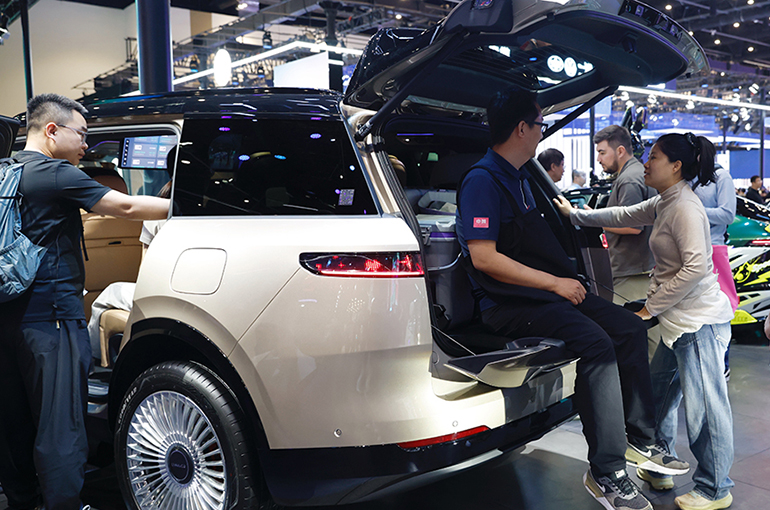
Driven by market demand, new electric vehicle models in China are becoming larger and heavier. Industry experts suggest implementing a vehicle tax reform that ties taxes such as purchase and consumption taxes to the vehicle’s weight, aiming to curb excessive vehicle sizes.
Officials recommend that taxes on new energy vehicles should be adjusted based on their weight to ensure heavier vehicles contribute more to road maintenance costs. Ji Xuehong, head of the Automotive Industry Innovation Research Center at North China University of Technology, emphasized that linking taxes to weight could promote smaller, more efficient vehicles.
Between 2012 and 2024, the average curb weight of new energy vehicles in China has increased nearly 30%, primarily due to larger battery packs and the rising popularity of SUVs. However, this trend brings downsides like higher energy use, increased road damage, faster tire wear, and reduced braking performance.
To address this, industry leaders propose implementing tiered taxes based on vehicle weight, discouraging overweight models and encouraging the adoption of lightweight, energy-efficient vehicles. Cui Dongshu, secretary general of the China Passenger Car Association, advocates for policies favoring lighter Vehicles to counteract industry tendencies toward heavier sizes.
Experts also recommend revising current vehicle consumption taxes, which are based on engine size, to instead consider curb weight. Additionally, they suggest taxing based on daily electricity consumption, as heavier vehicles generally require more energy for charging.
Han Zhiyu from Tongji University pointed out that past taxation policies effectively curbed large vehicle production, but recent tax exemptions and subsidies for new energy vehicles have inadvertently encouraged manufacturers to produce heavier, larger models. Now is a crucial time to establish balanced tax regulations aligning both traditional fuel vehicles and electric vehicles.
Li Bin, founder of a leading Chinese EV startup, warned that if all passenger vehicles in China were converted to heavy-duty models, road infrastructure would be severely strained. He emphasized the importance of government intervention in restricting vehicle weight rather than relying solely on automaker self-discipline.
Current policies set limits on the energy consumption of new energy vehicles. For example, recent purchase tax incentives for battery electric vehicles over 2,710 kg restrict energy consumption to 19.1 kWh per 100 km to qualify for discounts. While somewhat effective, these measures are not sufficient to prevent unnecessary weight increases.
The average curb weight of new energy vehicles in China climbed to around 1,704 kilograms in 2024, nearly 400 kg more than in 2012. Prominent models from major manufacturers now exceed 2.2 tons, with some new models surpassing three tons—more than many small trucks.
The rising weight is attributed to larger batteries—often 500 to 600 kg—driven by the popularity of SUVs and the desire for longer range. Additional features such as smart cabins and advanced driver-assistance systems also add substantial weight. Upgrading safety standards has led to the increased use of high-strength steel or aluminum in vehicle frames and batteries. Furthermore, the expanding array of onboard configurations, including multiple airbags, massage chairs, refrigerators, and televisions, continually adds to vehicle weight.
Although these features enhance comfort, they contribute to heavier vehicles. Consumers’ preferences for larger cars, driven by evolving lifestyles and a desire for social status, motivate automakers to produce bigger, more profitable models.
Increased vehicle weight results in higher energy consumption, more emissions, faster wear on roads and tires, and increased maintenance costs. It also diminishes braking efficiency and road safety, while complicating recycling and disposal processes after vehicles are retired.
Experts warn that the trend toward heavier vehicles not only jeopardizes infrastructure and safety but also imposes environmental and resource strains, emphasizing the need for balanced, weight-based taxation policies to guide sustainable industry growth.
 ChatGPT
 Perplexity
 Gemini AI
 Grok AI