Select Language:
After losing significant market share to local new energy vehicle brands, the foreign automaker joint ventures in China, including brands like Nissan, Volkswagen, and General Motors, have begun to respond by launching their own NEV models over the past week.
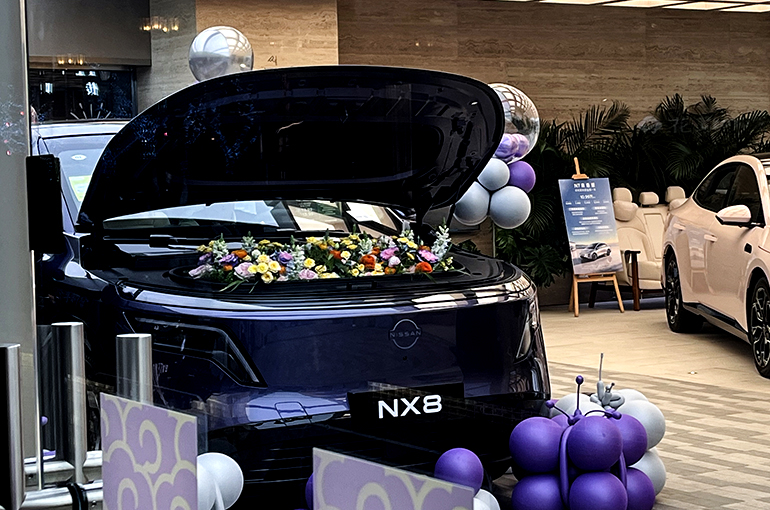
On April 8, Dongfeng Nissan introduced its new SUV, the NX8. Simultaneously, Volkswagen China hosted an event unveiling three upcoming models from its joint ventures, including FAW-Volkswagen’s ID.Aura T6.
By April 10, GM’s Buick brand had started pre-sales of the Zhijing E7, the first SUV from its premium NEV sub-brand Zhijing. That same day, Hyundai launched its electric vehicle brand, Ioniq, along with two concept cars—the Venus and the Earth—specifically tailored for the Chinese market.
All these new models focus on a “China-centric” approach, utilizing locally sourced supply chains and products designed specifically for Chinese consumers. For example, the NX8 features batteries from leading Chinese supplier CATL, advanced smart-driving technology from Momenta, and a smart cockpit collaboratively developed by Qualcomm and iFlytek.
This strategic push is driven by both market dynamics and government policies. Over the past five years, joint venture brands have seen their market share decline from 64% in 2020 to 35% last year, while China’s NEV adoption rate has soared from under 6% to 54%. Last month, Chinese brands accounted for 74% of NEV sales, capturing nearly 67% of the electric vehicle market, according to the China Passenger Car Association. Meanwhile, mainstream joint venture brands only held a market share of about 6.2% among EVs and 3.4% in total sales.
Additionally, policies are compelling joint ventures to accelerate their transition to NEVs. The government employs a points-based system to evaluate automakers each year, considering factors like fuel efficiency, NEV sales share, and overall compliance. Companies with negative points must rectify the situation within 90 days, either by applying positive points from previous years or purchasing credits from other automakers. Failure to comply results in penalties.
Last year, out of 87 manufacturers and 21 importers, 25 received negative points for poor fuel consumption ratings, and 15 missed their NEV sales targets. Notably, joint venture brands comprised a large portion of these groups.
In this environment, delaying the shift to new energy vehicles isn’t just risking market share—it’s threatening their very survival. “Joint venture brands need to act quickly, better understand the Chinese market, and be willing to take bold steps,” said Xin Yu, general manager of Dongfeng Nissan.
To maintain their competitive edge, most of the newly launched JV NEVs are now priced competitively alongside domestic brands, moving away from premium pricing strategies. While market prices are determined by supply and demand, production costs can be reduced through technological advances, economies of scale, and integrated supply chains. Xin emphasized that favorable supply chain pricing generally only occurs when sales volume reaches a certain threshold.
 ChatGPT
 Perplexity
 Gemini AI
 Grok AI