Select Language:
Dongguan, a southern Chinese city often referred to as the “world’s factory,” is shifting away from traditional low-cost contract manufacturing and moving toward innovation-driven models. Companies are increasing investments in research and development and establishing their own brands in order to advance up the value chain, addressing labor shortages and changing market demands.
In the first half of the year, around 64 publicly listed companies in Dongguan collectively spent approximately CNY 3.71 billion (about USD 521 million) on R&D, marking a growth of over 30% compared to the previous year, according to a recent survey.
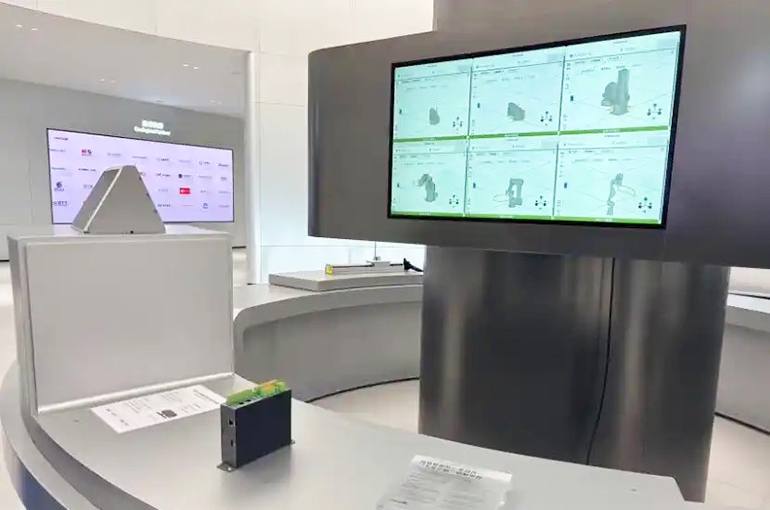
One notable example is Guangdong Topstar Technology, where R&D expenditure reached CNY 138 million (roughly USD 19.4 million) last year, representing 3.8% of the company’s annual revenue. Data from Choice shows this was an increase from CNY 109 million in 2022. During a visit to their exhibition hall, a robot was observed executing various tasks via voice command.
Historically, Dongguan’s textile, toy, and electromechanical industries experienced rapid growth fueled by the city’s labor advantages, according to Chen Yingyi, deputy director of the regional development planning research department at a Chinese development institute. However, demographic shifts and a decline in young workers willing to undertake factory jobs have made the industrial upgrade necessary not only for transformation but also as a solution to labor recruitment challenges.
Local companies are actively moving beyond traditional original equipment manufacturing (OEM) models, where they produce components for other firms. Instead, they are overcoming technological barriers and developing their own brands to climb the value chain.
Zhong Liuxuan, the public relations manager at Dongguan Weishi Culture Technology—known for trendy toys—stated that the company has successfully transitioned from an OEM to managing its own brand. Today, its toys are exported to more than 100 countries and regions.
“The company initially operated solely as an OEM for some foreign partners, but we later decided to develop our own brand,” Zhong explained. “Since then, several of our products have become highly popular and trending in the market.”
Chen highlighted that in the Guangdong-Hong Kong-Macao Greater Bay Area, where Dongguan is situated, manufacturing is characterized by rapid product iteration and quick responsiveness to market trends. As consumer preferences increasingly emphasize youthfulness and personalization, businesses in Dongguan need to closely monitor market developments to stay competitive.
 ChatGPT
 Perplexity
 Gemini AI
 Grok AI