
Select Language:
January 28 — As the world’s largest producer of electric vehicle batteries, the company plans to actively promote sodium-ion batteries, which are beginning to achieve scalable production in certain sectors as viable alternatives to lithium-ion batteries. This marks the start of a broader shift in the energy landscape, according to the company’s chief technology officer.
Sodium-ion batteries offer distinct advantages but also face certain drawbacks when compared to lithium-ion counterparts. Gao Huan, speaking in a recent interview, highlighted that sodium availability is more accessible than lithium, and these batteries perform better at low temperatures, are safer, and exhibit less temperature rise during rapid charging. However, they are more expensive to industrialize, have less mature supply chains, and generally deliver lower energy density, he explained.
The industry has been abuzz with sodium-ion battery developments, especially after the release of the latest solutions for light commercial vehicles. Notably, the low-temperature variant is the first widely available, mass-produced sodium-ion battery on the market.
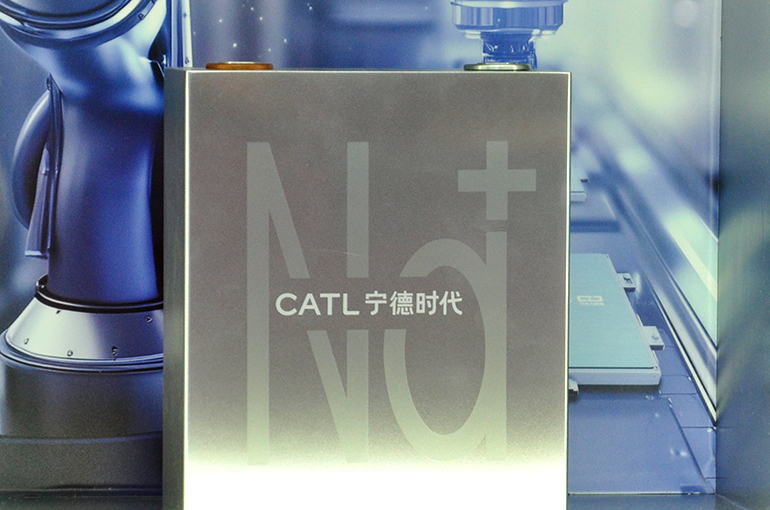
The company introduced its sodium-ion battery brand last April, with products becoming the world’s first high-density, mass-produced models of their kind. Industry insiders view this as a significant step toward sodium-ion batteries entering commercial markets more broadly.
Yet, Gao emphasized that sodium-ion batteries are still in their early development phase. While their growth trajectory will likely mirror that of lithium-ion batteries, progress might be faster. The company aims to have sodium-ion batteries match lithium-ion batteries in cost and energy density within three years, Gao stated.
During a conference at the end of last year, the company announced intentions for sodium-ion batteries to see broad adoption in battery swapping stations, passenger cars, commercial vehicles, and storage systems this year. This move is expected to foster a dual-track development approach for both sodium-ion and lithium-ion technologies.
The joint project between JD.com, GAC Group’s new energy vehicle division GAC Aion, and the company will reportedly launch a sodium-ion version of the Aion UT Super, with mass production scheduled to start in the second quarter.
Market forecasts by China EV100 indicate that shipments of sodium-ion batteries for automotive and non-automotive applications could surpass 100 gigawatt-hours by 2030.
Financial analysts predict that as manufacturing capacity expands over the next three years, the cost of sodium-ion batteries will decrease more rapidly. When production hits 100 GWh, these batteries could be over 30% cheaper than lithium iron phosphate variants.
 ChatGPT
 Perplexity
 Gemini AI
 Grok AI