
Select Language:
Published: August 24, 2025
KARACHI:
Just like any other morning in Pakistan’s largest city, Karachi residents headed out for work on August 19, following their usual routines. The return trip home, often slowed by congested traffic, was a familiar frustration for those accustomed to city life. Karachi isn’t known for frequent rainfall—showers usually occur during the monsoon season—and this year, residents had been enjoying overcast skies for weeks. However, that evening, as thunderclouds gathered overhead, few could have predicted how drastically the day would end.
Rain was forecasted, but most people didn’t take it seriously. The Pakistan Meteorological Department’s predictions are often inaccurate, leading many to go out to work regardless—either by choice or because employers expect their employees to be present at all costs. Working remotely isn’t always dependable in Karachi, where internet connectivity is patchy even on clear days. Pakistan’s internet penetration and speeds lag significantly behind other countries, and when seasonal rains are combined with regular power outages, the connectivity becomes even more fragile.
What no one anticipated was that the heavy downpour in Karachi would do more than flood streets and cause power outages; it would also cripple the internet across the city and beyond. In some areas, connections slowed to a crawl; in others, services completely went offline. Businesses, students, and households found themselves cut off, raising a question few had considered before: how could a weather event in Karachi knock Pakistan’s internet infrastructure to its knees? This story aims to answer that question.
The Extent of the Outage
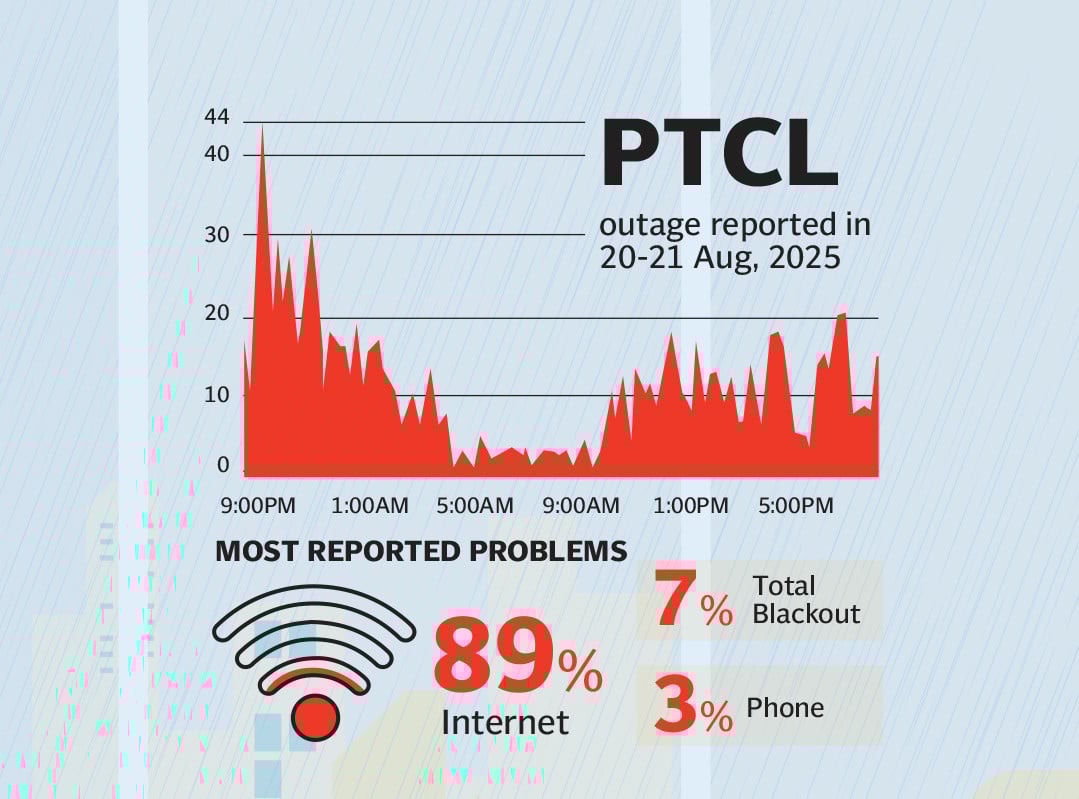
By the evening of August 19, reports of sluggish or failed internet connections had escalated into a nationwide crisis. Connectivity plummeted to just 20% of normal levels, causing a digital blackout from Karachi to Peshawar, Lahore to Quetta. Users couldn’t participate in video calls, upload assignments, or complete routine banking and online shopping transactions.
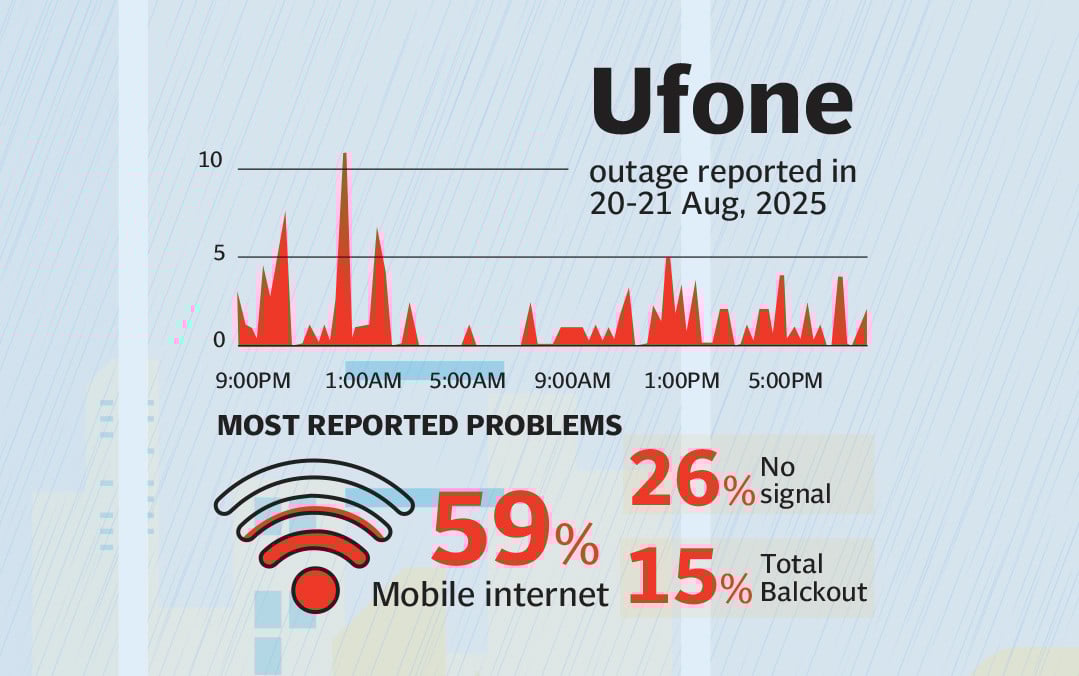
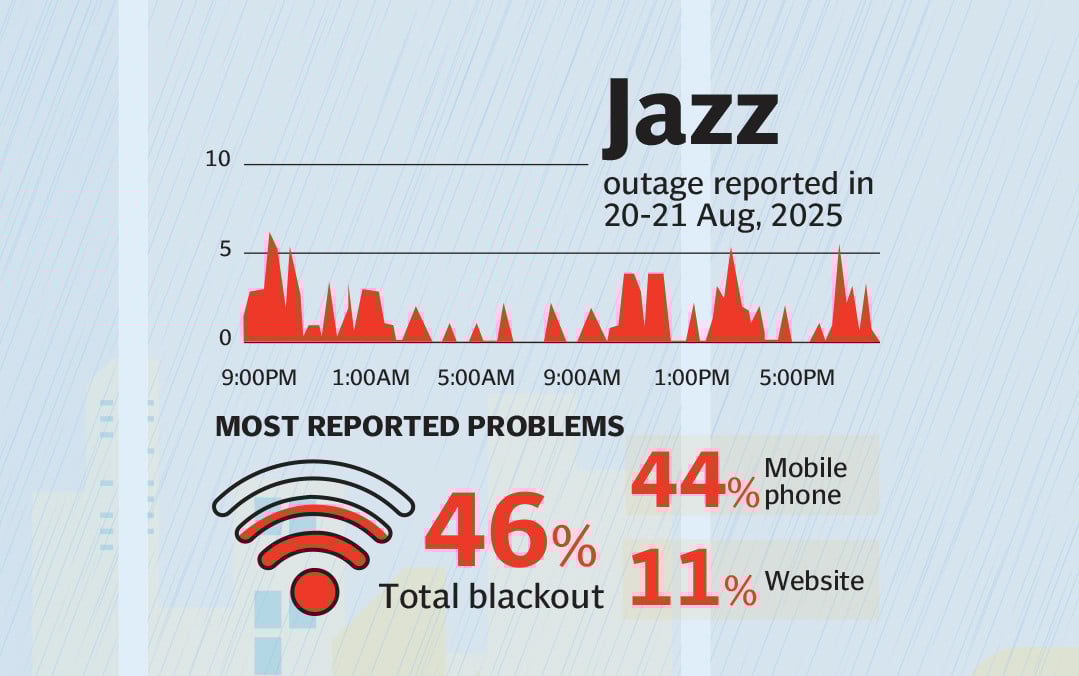
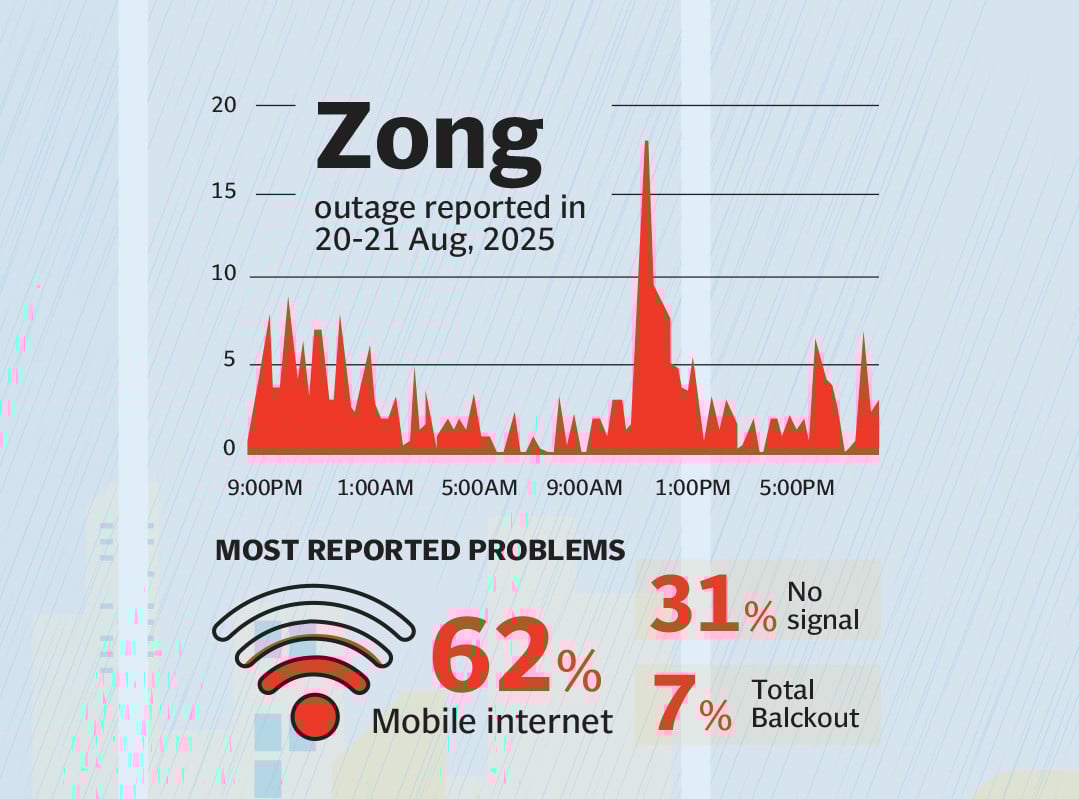
The impact varied across regions. In many places, the internet slowed near to a halt; in others, it was completely out. Major providers like PTCL and Ufone were hit hardest, but even companies such as Jazz, Zong, and Telenor struggled because their reliance on PTCL’s infrastructure meant that the failure cascaded across the country.
Shahzad Arshad, Chairman of the Wireless and Internet Service Providers Association of Pakistan, called the disruption “a national failure,” warning that “Internet outages are no longer rare accidents. They’ve become a recurring problem. For two-thirds of the country to go dark on the same day, just as in 2022, should trigger immediate concern among all levels of government.”
With over 116 million internet users in Pakistan, the consequences extended beyond technology—impacting the economy deeply. Freelancers missed deadlines for international clients, hospitals lost access to digital records, banks faced transaction failures, and e-commerce platforms froze orders mid-process. Previous estimates suggested internet disruptions cost the economy around $1.62 billion annually. The August 19 outage, however, revealed just how fragile Pakistan’s digital infrastructure remains under environmental stress.
There was also debate among experts regarding the extent of damage in Karachi. Some insisted only about 22% of cell towers were affected by flooding and outages, claiming most continued functioning. However, reports from neighborhoods like Gulshan, Clifton, Korangi, and North Karachi painted a different picture: nearly three-quarters of residents reported complete outages or extremely slow internet speeds.
This discrepancy highlights underlying issues in infrastructure resilience and transparency during crises. As Arshad warned, “Every hour offline costs Pakistan millions and hampers our international reputation.” For a country increasingly dependent on digital connectivity for its economy, education, and communication, such fragility cannot be sustained.
What Went Wrong?
The internet outage that spread across Pakistan on August 19 wasn’t caused by a single failure point but by a series of interconnected vulnerabilities collapsing once the heavy rains hit Karachi. The initial problems emerged with widespread power outages. Telecom towers are designed to switch to backup generators automatically when mains power fails; however, these generators only run if fuel supplies are maintained. When roads flooded and fuel trucks couldn’t reach the towers, the generators ran out of fuel and shut down. Consequently, large areas lost connectivity. A resident from Gulshan explained, “My phone had full bars after the rain, but I couldn’t load a single webpage. Later, I found out the nearby tower ran out of fuel.” In Korangi, another user said, “My internet was out for two days because the fuel truck got stuck in the water. We felt cut off from the rest of the city.”
Solar-powered towers offered some resilience, as they continued running even when the grid failed and fuel was unavailable. Still, their numbers are minimal and cannot serve the majority of the population. An engineer noted, “We have only a few solar towers in Karachi. They survive when everything else fails, but there are not nearly enough to make a difference.”
The situation worsened as many users tried to stay online simultaneously. As network services flickered on and off, users reloaded pages, rejoined meetings, or switched to mobile data—overloading the already strained backbone infrastructure. IT Minister Shaza Fatima acknowledged this, stating the system was overwhelmed by “too many users pulling at a network that simply lacked the capacity.”
Additionally, the centralized design of Pakistan’s digital infrastructure played a significant role. Tens of thousands of telecom towers feed into a few core hubs, primarily located in Karachi. When one of those hubs fails—like during the rainstorm—the effects ripple throughout the entire country. The flood also physically prevented repair crews from reaching affected towers, as roads were underwater, further delaying restoration efforts. A freelancer from Lyari recounted, “Service was supposedly back, but I couldn’t upload files, and clients thought I’d disappeared.”
The failure of Karachi’s towers and the fragile backbone network quickly extended beyond the city. As generators failed, signals dropped, and overloaded systems faltered, the national impact grew. What started as a localized weather event turned into a chain reaction, silencing or slowing internet access across Pakistan, and affecting businesses, households, and daily life in ways never seen before.
Nationwide Consequences
What began as a weather-related crisis in Karachi quickly escalated into a nationwide disruption. Connectivity in Lahore, Islamabad, Quetta, and Peshawar slowed drastically or disappeared entirely, surprising many who believed only Karachi was affected. Their internet access was compromised despite no rain or outages in their regions.
This vulnerability was rooted in undersea cables. Pakistan’s international internet largely depends on three submarine cable providers—PTCL, Cybernet, and Transworld Associates—all of which operate hubs out of Karachi. PTCL, handling most of the traffic, means that when its systems fail, other providers are affected as well. The storm that flooded Karachi’s streets exposed how the country’s dependency on a single city for connectivity leaves everyone exposed.
The immediate consequences were evident. Freelancers in Islamabad and Rawalpindi lost hours of work. “I had two active projects, one for a US client and another for Europe, but I couldn’t upload files,” said digital designer Rahima. A resident of Lahore, Ali, said, “Though we had power, the internet just vanished. We checked our routers and phones, thinking it was an issue on our end, but it was everywhere.”
The disruption also impacted financial services—banks couldn’t process mobile transactions, online shopping slowed down, and e-commerce orders froze mid-process. Educational institutions, increasingly reliant on digital platforms, canceled or delayed online classes.
Frustration grew as services gradually resumed. Social media was flooded with complaints. “Karachi was supposed to be the only city affected by rain. So why did our internet go out in Lahore?” one user asked on X. Another added, “No rain, no power outage, but we were offline for hours. This isn’t weather, it’s poor planning.”
Calls for comprehensive reforms intensified, with digital rights groups and telecom associations urging the government to diversify infrastructure, enforce stricter policies, and build redundancies so that a problem in Karachi doesn’t bring the entire country to a halt again.
This crisis proved that the disruption wasn’t isolated but a collective failure, revealing how a storm in one city can cascade into nationwide shutdowns, affecting millions of lives and livelihoods. The cost of being offline—lost business, disrupted education, and shaken trust—was felt across the country. Ultimately, August 19 highlighted Pakistan’s vulnerable digital foundations and underscored the urgent need for resilient infrastructure to prevent future catastrophes.
Restoration and Response
Both PTCL and the Pakistan Telecommunication Authority (PTA) quickly acknowledged the disruption. PTCL issued a statement confirming issues due to “heavy rains and flooding in Karachi,” adding that their teams were actively working to restore services swiftly. The PTA also issued an update, identifying a “technical fault in the southern region” and assuring that efforts were underway to stabilize connectivity.
By the following morning, PTCL announced that nationwide services had been restored, with a statement confirming full operation after overnight efforts. The PTA reported that within hours, about 80% of Karachi’s telecom services were back online. Despite this, many users continued to report slow connections and lingering outages days later. A resident from Karachi’s Gulistan-e-Johar expressed frustration: “They said everything was fixed, but my connection has been slow for days. The outage never really ended for me.” Similar stories emerged from Malir, DHA, North Karachi, Nazimabad, and Gulshan-e-Iqbal, where services were technically restored but still practically unusable.
The official reports marked an end to the immediate crisis, but for the average user, the experience revealed a fragile and insufficiently prepared infrastructure. The disconnect between official statements and lived realities underscored Pakistan’s digital vulnerability. Each outage chipped away at public trust and highlighted how the country’s systems are unprepared for future shocks. Restoring service alone is not enough; the focus must now shift to strengthening and diversifying the infrastructure to ensure resilience against such crises.
Building Resilience & Future Strategies
If Pakistan hopes to prevent a repeat of this scenario, a fundamental overhaul based on redundancy, diversification, and resilience is essential. Other countries have already faced similar challenges. In the United States and Europe, backbones are intentionally spread across multiple cities and regions, allowing traffic to be rerouted instantly if one hub is compromised. Singapore’s flood- and disaster-resistant data centers are elevated above flood zones and backed by multiple power sources. Japan employs underground cable protection and decentralized hubs to ensure connectivity even after earthquakes or tsunamis.
Pakistan’s current approach—centering submarine cables and network hubs mostly in Karachi—makes the country overly dependent on one geographic area. Relying heavily on diesel generators and scattered solar-powered towers adds to the vulnerability. Countries like Germany and South Korea mix grid power, solar, and advanced batteries at towers to minimize downtime. Pakistan’s solar sites are few and scattered, insufficient to meet widespread demand.
The solution involves a multi-layered upgrade: diversifying submarine cable landing points beyond Karachi, deploying renewable energy backups for towers, and constructing flood-resistant data centers that incorporate global best practices. Regulations should mandate redundancy across all operators to prevent a single failure from cascading nationwide. Such investments would greatly enhance Pakistan’s digital resilience and security.
A Call to Action
The events of August 19 exposed a harsh reality: Pakistan’s digital infrastructure is dangerously fragile. A storm in Karachi cascaded into a nationwide blackout, disrupting countless lives. The reliance on a few critical hubs, the dependence on outdated backup solutions, and the lack of redundancy meant that the country was unprepared for environmental shocks. Official assurances of quick recovery fail to address the deeper systemic flaws.
Looking abroad, the solutions are well-understood and proven. Countries with similar climates and challenges have built resilient networks with layered defenses—elevated data centers, diverse submarine cables, hybrid backup systems, and decentralized infrastructure. Pakistan must adopt these strategies urgently. Internet access is no longer optional but vital for economic survival and societal stability. Without decisive action, every monsoon risks repeating this outage or worse, paralyzing the entire nation.
It is time for political resolve, industry accountability, and recognition that strengthening this critical infrastructure is a national priority. The lessons of August 19 must not fade into memory; rather, they should serve as a catalyst for meaningful reform. Diversify landing stations, equip towers with renewable and reliable backups, and enforce strict resilience standards. Only then can Pakistan build a sturdy digital backbone capable of withstanding future storms, both literal and figurative.
 ChatGPT
 Perplexity
 Gemini AI
 Grok AI