Select Language:
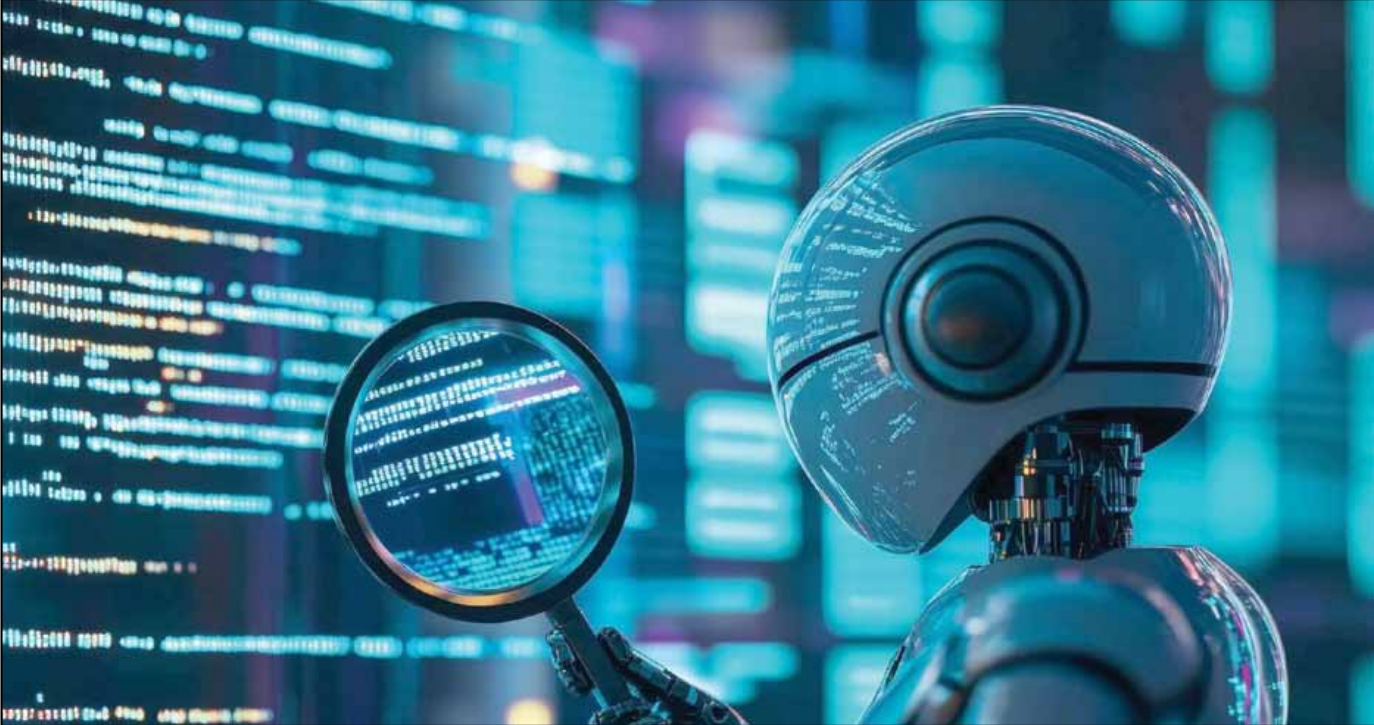
Beyond pressing issues like climate change, global warming, nuclear proliferation, and resource scarcity that threaten human society and the planet, the topic of artificial intelligence (AI)—its role and influence on holistic life—has been a recurring concern at various conferences for several years. Enthusiasm and ambitious ideas surrounding this groundbreaking technology are naturally mixed with growing fears and warnings. Recent sci-fi movies and real-world events have fueled fears of a future where scientific misadventures lead to biological monsters and robot overlords, potentially enslaving or tormenting humans. As Gemma Whelan aptly said, “I’m more frightened than interested in artificial intelligence — actually, perhaps fear and curiosity are closely linked.”
Historically, scientific advances over the past fifty years have predominantly helped humanity, bringing positive and manageable changes across domestic, business, and professional spheres. However, this time, the development of AI promises to fundamentally alter our social fabric, transforming arts, aesthetics, literature, education, and academic culture. Philosophers like Nick Bostrom have sounded alarms about super-intelligent AI systems that might act in ways misaligned with social values and human welfare.
A few months ago, at the International Conference on Evolving Technologies in Computing (MICETC), hosted by the Millennium Institute of Technology and Entrepreneurship in Karachi, experts engaged in lively debate about whether AI could someday dominate humans and their minds, or if society can prevent such a future. Some argued that human intelligence, endowed by the divine, innate creativity, and moral judgment, cannot be overtaken by machines—that computers operate purely on calculations and programmed logic. They emphasized that human thought remains unfathomable and rooted in spirituality and consciousness, and that AI, despite its rapid evolution, cannot create a human being. The consensus, however, acknowledged that AI’s advancements are unstoppable, and society must be prepared to harness this power responsibly through proper training, education, and ethical guidelines.
Professor Atta-ur-Rehman pointed out that scientific progress now explores the brain and mental processes through physics and quantum physics, suggesting that thoughts, emotions, and feelings are composed of fundamental particles like protons and neutrons. Future developments might see even human cognition and emotional expression subjected to scientific manipulation. While current AI systems are controlled by humans, the risk that they could eventually override human influence remains. The prevailing advice from the debate was to “hope for the best and prepare for the worst,” with widespread agreement that embracing change through education and skill development is essential to secure benefits while minimizing risks.
From a logical perspective, the impact of AI hinges on societal management of its development and application. Debates among economists and business leaders focus on whether technological progress will lead to long-term unemployment or create new opportunities after temporary disruptions. AI often favors skilled workers, potentially widening socioeconomic gaps, while automating repetitive manual tasks in industries like manufacturing and logistics, which could lead to job losses.
On a positive note, AI has enabled us to accomplish in minutes what previously took days or weeks—such as documentation, calculations, financial audits, filmmaking, complex communications, and transportation. It also improves safety by replacing hazardous jobs in sectors like mining or construction. Kai-Fu Lee, a Taiwanese entrepreneur and AI pioneer, succinctly states, “AI will not replace jobs, but it will change the nature of work.”
Over the past thirty years, many manual jobs in crafts, printing, publishing, and artisanship have become obsolete, leading to unemployment. However, new opportunities have emerged for those willing to adapt and learn new skills. For example, advances in printing and publishing technology now allow the production of refined books faster than ever before, but the traditional arts of calligraphy, drawing, and handcrafting are gradually fading due to technological proliferation. The historic centers of Lahore’s Anar Kali Bazaar, once vibrant hubs for calligraphers and artists, now stand as nostalgic remnants of a bygone era.
As AI rapidly advances in decision-making, creativity, and even emotional interactions, the risk of losing human control increases if regulation and oversight are not maintained. Dependence on AI for daily tasks and critical systems like banking, governance, and healthcare could unearth vulnerabilities, especially if malicious or overly manipulative AI systems are developed to exploit human psychology and biases. Their impact will depend heavily on policy measures supporting retraining, equitable access to technology, and inclusive economic strategies.
To mitigate potential harms, a human-centered approach is vital. Equipping workers for new roles requires effective training and reskilling programs. James M. Manyika, a leading expert in technology and labor markets, warns, “We will see enormous shifts in employment. Some jobs will grow, others will shrink. How can we support workers through this transition? We often lack effective mechanisms for rapid retraining, and the skill requirements will be substantial.”
Ultimately, AI can act as both an ally and adversary, reshaping our world—with unprecedented opportunities but also significant ethical, economic, social, and existential challenges. Creating truly intelligent machines involves teaching them to observe, hear, touch, taste, and smell—the way humans do. The key to integrating AI responsibly lies in a balanced approach rooted in education, ethical considerations, and proactive governance. Empowering youth with the knowledge to develop and use AI wisely is crucial, ensuring progress benefits all, while safeguarding against misuse and unforeseen consequences. Striking this balance will determine whether AI becomes humanity’s greatest tool or a Pandora’s box of unpredictable adversity.
 ChatGPT
 Perplexity
 Gemini AI
 Grok AI