Select Language:
Earlier this year, NASA administrator Jared Isaacman confirmed that astronauts aboard the Artemis II mission would be permitted to bring the latest smartphones along for the journey. Now, The New York Times has revealed the efforts involved in making this possible.
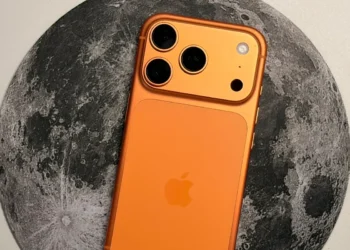
Currently, four iPhone 17 Pro Max devices are hurtling toward the moon at approximately 25,000 miles per hour. While this isn’t the first occasion an iPhone has traveled into space, Artemis II is notable for being the first mission where NASA provided each crew member with an iPhone specifically for capturing photos and videos.
Apple clarified that it was not involved in NASA’s process of approving the iPhones for the Artemis II mission. The company highlighted that this mission was the first to fully qualify an iPhone for extended use in orbit and beyond. However, the primary functions of the devices will be limited to photography and videography, as NASA confirmed they will not have internet connectivity or Bluetooth capabilities.
The process of readying the iPhones for spaceflight was complex, involving several steps. According to Tobias Niederwieser, an assistant research professor at BioServe Space Technologies, the procedure includes four key phases: introducing the hardware to a safety panel, identifying potential hazards such as moving parts or fragile materials, developing mitigation plans, and ultimately demonstrating that these plans are effective.
The iPhone 17 Pro Max features Apple’s Ceramic Shield 2 front cover and Ceramic Shield on the back, both touted as more durable than any other smartphone glass. Nonetheless, considerations extended beyond mere shatter-resistance. NASA had to evaluate how the phones would perform in the microgravity environment of space, where effects of gravity are drastically reduced. For instance, NASA discussed solutions like using Velcro to secure the devices within the spacecraft, as in the Orion capsule, at least one of the phones was stored in a zipped pocket on a flight suit prior to launch.
A tweet from Owen Sparks showcases the crew with their iPhones packed into their space suits, emphasizing the familiarity of the device’s look and the prospect of capturing lunar views with the same camera used daily on Earth. Similarly, NASA shared breathtaking images of Earth’s vibrant blues and browns lit by the atmosphere, highlighting the human connection through shared perspectives.
Whether the Artemis II astronauts will manage to take equally stunning photos on the lunar surface remains to be seen. To follow their journey and view their shared images, visit NASA’s official gallery.
For those interested in space and technology, there are notable products worth exploring on Amazon, offering the chance to learn more about devices and innovations related to this historic mission.
 ChatGPT
 Perplexity
 Gemini AI
 Grok AI