
Select Language:
The economy of China’s southwestern region experienced a 7.2% growth during the first half of this year, fueled by the development of several large-scale projects, including the world’s largest hydropower dam.
The regional gross domestic product reached CNY138.3 billion (roughly USD19.3 billion) in the six months ending June 30, according to local officials. This area has led the country’s GDP growth rate since 2023.
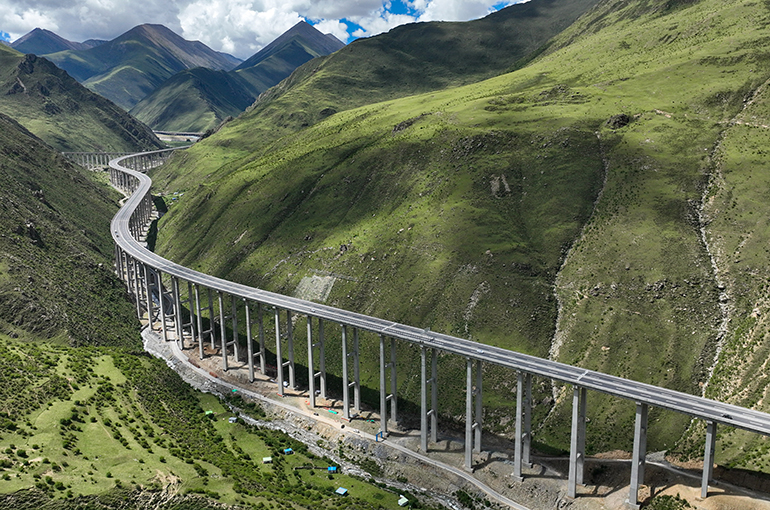
Recent infrastructure initiatives include the establishment of the Xinjiang-Tibet Railway by the China State Railway Group, aiming to connect Hotan in Xinjiang Uygur Autonomous Region with Shigatse and Lhasa in Tibet. Additionally, the Sichuan–Tibet railway project is expected to be completed around 2030. Work also began on a major CNY1.2 trillion (about USD167.1 billion) dam on the lower Yarlung Zangbo River on July 19.
This surge in infrastructure development is transforming the region, making Tibet more accessible to the rest of the country, securing energy supplies, and boosting industries such as construction materials and manufacturing equipment. These projects are also contributing to broader economic growth nationwide, according to industry analysts.
Investment in fixed assets in Tibet rose 25% in the first half of the year, maintaining strong double-digit growth following a 35% increase in 2023 (excluding the Ya’an–Nyingchi section of the Sichuan–Tibet Railway), and a 19.6% rise last year. The number of projects with budgets exceeding CNY50 million (around USD7 million) increased by 40% compared to 2023.
However, experts emphasize the importance of safeguarding Tibet’s delicate ecosystems. It is recommended that the region prioritize environmentally friendly industries and large-scale conservation efforts. Improving basic infrastructure could position Tibet as a hub for green technology, including data centers powered entirely by renewable energy sources.
 ChatGPT
 Perplexity
 Gemini AI
 Grok AI