Select Language:
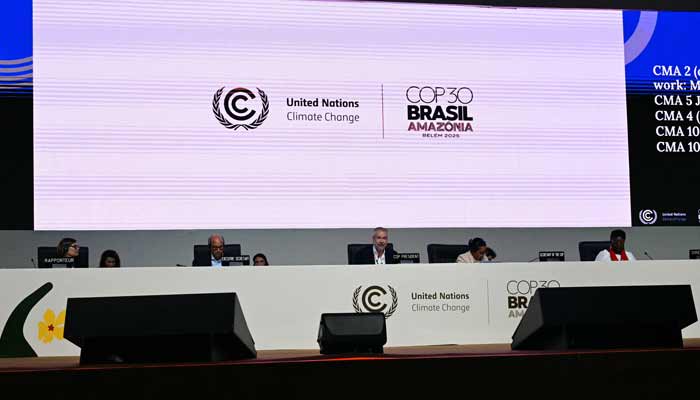
World governments reached a consensus Saturday on a compromise climate agreement at COP30 in Brazil, aimed at increasing financial support for vulnerable nations affected by climate change, while deliberately leaving out any reference to fossil fuels that contribute to the crisis. The talks, which extended into overtime after intense negotiations in Belem, revealed divisions between wealthy and developing countries, particularly on oil, gas, and coal policies. COP30 President Andre Correa do Lago admitted the negotiations had been challenging, noting some delegates had higher aspirations for certain issues.
The European Union was initially resistant to language advocating a shift away from fossil fuels but ultimately agreed to drop such language after a coalition of countries, including Saudi Arabia, insisted it was non-negotiable. Wopke Hoekstra, the EU’s climate commissioner, expressed support for the deal, emphasizing that it was a step in the right direction. Conversely, Panama’s climate negotiator, Juan Carlos Monterrey, criticized the outcome, saying, “A climate decision that doesn’t even acknowledge that fossil fuels are not neutral is essentially complicit. This process surpasses mere incompetence.”
The agreement also introduces a voluntary initiative to accelerate climate action and calls for wealthy nations to triple their financial contributions to help developing countries adapt to climate impacts by 2035. While existing commitments have already mitigated some temperature rise, they fall short of preventing a 1.5°C increase above pre-industrial levels, a threshold associated with catastrophic climate effects. Developing nations emphasize the urgent need for funds to cope with rising sea levels, heatwaves, droughts, and severe storms.
Avinash Persaud, a senior advisor at the Inter-American Development Bank, highlighted the importance of financial pledges amid escalating climate impacts but expressed concern that the world has not yet provided enough rapid grants to address loss and damage in vulnerable nations.
The deadlock over fossil fuel language delayed the negotiations past Friday, leading to intense, all-night discussions. A side document addressing fossil fuels and forest protection was issued amid the lack of consensus, with Correa do Lago encouraging ongoing dialogue on these issues during Brazil’s presidency.
Additionally, the agreement sets in motion a review process to align international trade with climate objectives, addressing concerns over rising trade barriers hindering the deployment of clean technology solutions.
 ChatGPT
 Perplexity
 Gemini AI
 Grok AI